Read a page of your comic.
Choose and read one page of a comic aloud, describe the characters, sequence the panels, and predict what happens next to practice reading and storytelling.


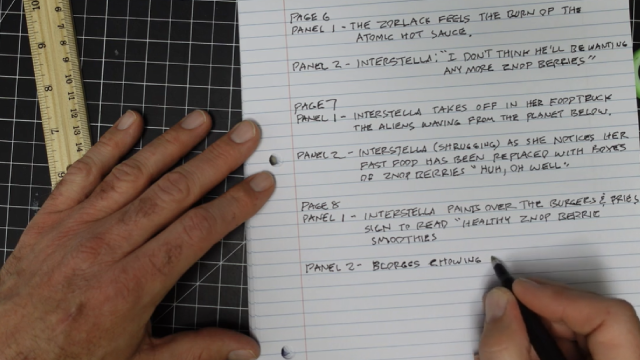

Step-by-step guide to read a page of your comic aloud
Step 1
Choose one page of a comic that you want to read aloud.
Step 2
Sit somewhere quiet with your comic page.
Step 3
Open the page so you can see all the panels clearly.
Step 4
Count the panels on the page and say the number out loud.
Step 5
Write the names of the characters you see on your paper.
Step 6
Read the page aloud from the first panel to the last panel.
Step 7
Write small numbers on separate pieces of scrap paper for each panel.
Step 8
Place each numbered scrap next to the panel that matches that order.
Step 9
Write one sentence predicting what will happen next in the story.
Step 10
Draw one new panel on your paper that shows your prediction.
Step 11
Color or add details to your drawn panel to make it look finished.
Step 12
Share your finished reading and drawing on DIY.org.
Help!?
What can we use if we don't have a printed comic page or scrap paper?
If you don't have a printed comic page use a screenshot on a tablet or print a page at the library, and replace scrap paper with sticky notes or cut-up cardboard like a cereal box for numbered pieces.
My child can't tell the order of the panels—how can we make counting and placing numbered scraps easier?
If panel order is unclear photograph the page and enlarge it or shine a lamp to see details, then follow speech-bubble flow to number panels and use larger sticky notes so each scrap fits next to its panel.
How can we adapt the activity for a preschooler versus a 10-year-old?
For preschoolers limit steps to counting panels, naming two characters, and drawing one simple colored prediction with crayons, while for a 10-year-old add a two-sentence prediction, a detailed drawn panel with shading, and a typed description to post on DIY.org.
What are some ways to extend or personalize the finished comic page before sharing on DIY.org?
Extend the activity by drawing two extra panels that show an alternate ending with speech bubbles and colored backgrounds, write a one-sentence character motive on your paper, and photograph the full page to upload to DIY.org.
Watch videos on how to read a page of your comic aloud
How To Do Comic Strips
4 Videos
How To Do Comic Strips
How To Make Your Own Comic Book
How To Draw A Kid Reading A Book
How To Create Comics | DIY Course
Facts about reading and storytelling for kids
🎭 Comics use exaggerated facial expressions and body language to help readers understand characters’ feelings instantly.
🖼️ A comic page can have anywhere from 1 to 9 (or more!) panels — artists change the number to control pacing and drama.
💬 Speech balloons and captions were popularized in the early 1900s and show who’s talking and how they’re saying it.
🔁 Reading comic panels in sequence is like following a visual timeline — the order tells you when things happen.
🔮 Comic creators often end a page with a mini cliffhanger to make readers eager to predict and turn the page.
How do I do the activity 'Read a page of your comic' with my child?
What materials do I need to read and analyze one comic page?
What ages is the 'read a page of your comic' activity suitable for?
What are the benefits of reading and predicting a comic page aloud?
