How to Draw a Police Car
Draw a police car step-by-step using basic shapes, adding windows, wheels, siren, and markings. Practice proportion, perspective, and coloring techniques.
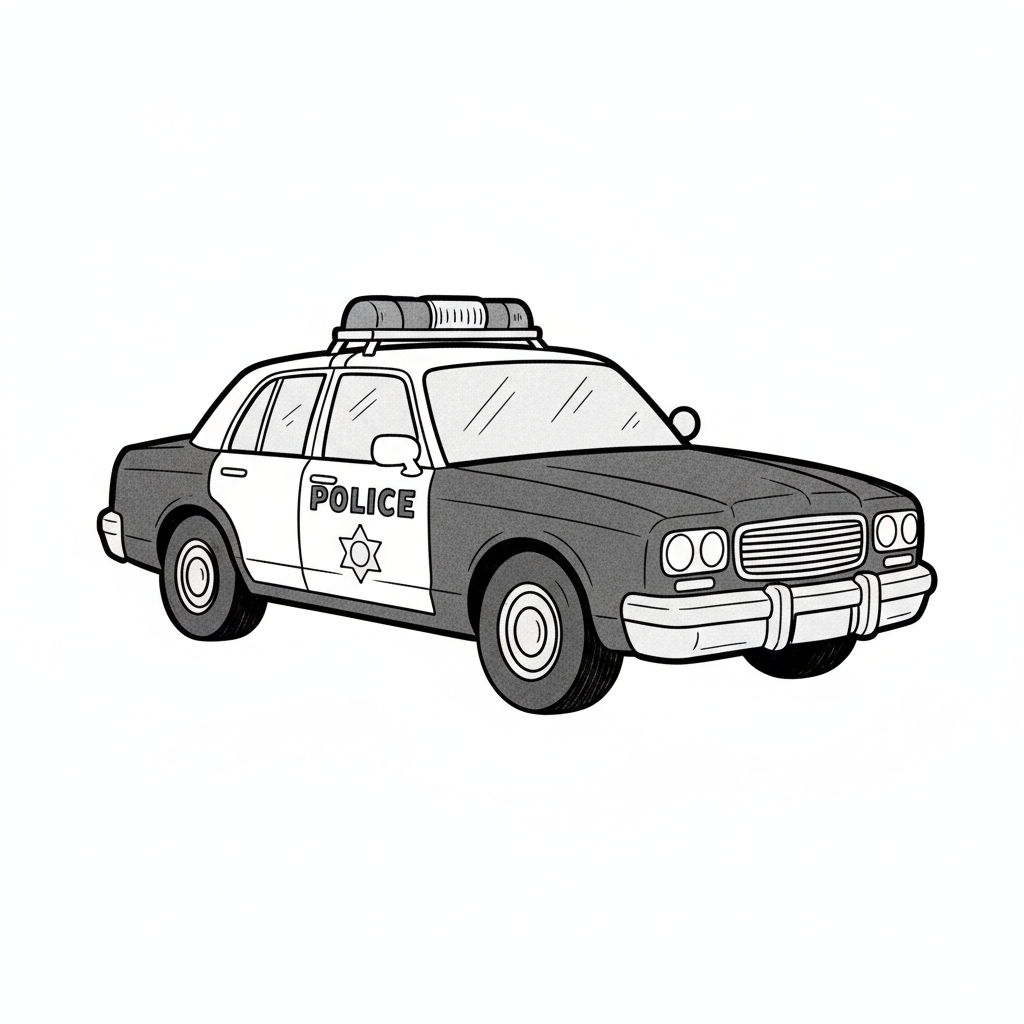
About this tutorial
Draw a police car step-by-step using basic shapes, adding windows, wheels, siren, and markings. Practice proportion, perspective, and coloring techniques.
What you need
Instructions
- 1
Step 1
Lightly draw a long horizontal rectangle near the middle of your paper for the car body.
- 2
Step 2
Draw a smaller rectangle on top of the back half of the first rectangle to make the cabin roof.
- 3
Step 3
Smooth the rectangles into a single car shape by drawing curved lines around the edges.
- 4
Step 4
Draw two circles under the body for wheels and make the far wheel slightly smaller to show perspective.
- 5
Step 5
Draw a smaller circle inside each wheel to make the hubcaps.
- 6
Step 6
Draw the front windshield as a slightly slanted rectangle at the front of the cabin.
- 7
Step 7
Draw a rounded rectangle behind the windshield to make the side window.
- 8
Step 8
Draw a small rectangle on top of the roof for the siren light.
- 9
Step 9
Draw a long horizontal stripe along the side of the car for the police marking.
- 10
Step 10
Write POLICE or draw a star badge inside the stripe to label the car.
- 11
Step 11
Draw headlights at the front and taillights at the back as small ovals.
- 12
Step 12
Draw a short ground line under the wheels and add a faint shaded area for shadows to show perspective.
- 13
Step 13
Erase the light pencil guide lines so only your final car lines remain.
- 14
Step 14
Color your police car using lighter shades for highlights and darker shades for shadows and keep your strokes in the same direction for smooth color.
- 15
Step 15
Share your finished police car drawing on DIY.org.
Get inspired
Fun facts
How do I teach my child to draw a police car step-by-step?
Start by sketching a long rectangle for the car body and a smaller rounded rectangle for the roof. Add two circles for wheels and smaller circles for hubs. Draw windows as rectangles with slightly rounded corners and a small siren dome on the roof. Add markings: doors, stripe, badge. Use light pencil lines for proportions, refine with darker lines, then color—blue, white, black—and add highlights and shading for depth.
What materials do I need to draw a police car with my child?
You'll need plain drawing paper, a pencil, eraser, sharpener, black marker for outlining, colored pencils/markers/crayons for coloring, ruler or straightedge for clean lines, a circular object or compass for wheels, and optional blending stump or cotton swab for shading. Choose washable, non-toxic markers for younger kids, and a scrap piece of paper for testing colors.
What ages is this police car drawing activity suitable for?
This activity suits ages 4 and up. Preschoolers (4–5) can trace basic shapes and color with supervision. Ages 6–9 should follow step-by-step shapes to add windows, wheels, and simple details, improving proportion and coordination. Ages 10+ can work on perspective, shading, and accurate markings. Adapt complexity and provide safety help with scissors or small tools when needed.
What are the benefits of drawing a police car with my child?
Drawing a police car builds fine motor skills, shape recognition, spatial reasoning, and following step sequences. It teaches proportion, perspective, and color choices, boosting confidence and patience. For social learning, discuss community helpers while drawing. Encourage creativity with different designs and promote calm focus. Use non-toxic art supplies and supervise small children to ensure safe use of scissors or sharp tools.
Watch & Learn
Need help?
What can we use if we don't have colored pencils or markers to color the police car?
Use crayons or watercolor paints to color the police car, applying lighter washes for highlights and darker layers for shadows while keeping your strokes in the same direction as the instructions.
My car looks flat—what step should I check to fix perspective or size issues?
Make the far wheel slightly smaller when you draw the two circles under the body, add the short ground line and a faint shaded area under the wheels to reinforce perspective, and erase guide lines only after those marks are in place.
How can we adapt this drawing activity for different age groups?
For younger kids, simplify by tracing coins for wheels and smoothing one big rectangle into a car shape before coloring, for elementary kids follow all steps including the slanted windshield and hubcaps, and for older kids add refined highlights, shadows, and detailed badge or stripe work.
How can we extend or personalize the police car drawing after finishing the basic steps?
Personalize the car by writing a custom police number on the stripe or drawing a star badge inside it, add a city skyline or road scene behind the short ground line, and try metallic pens on the siren before sharing the finished drawing on DIY.org.