How to Draw a Crescent Moon
Draw a crescent moon by overlapping circles and erasing shared areas. Practice outline control, smooth curves, and gentle shading for realistic form.
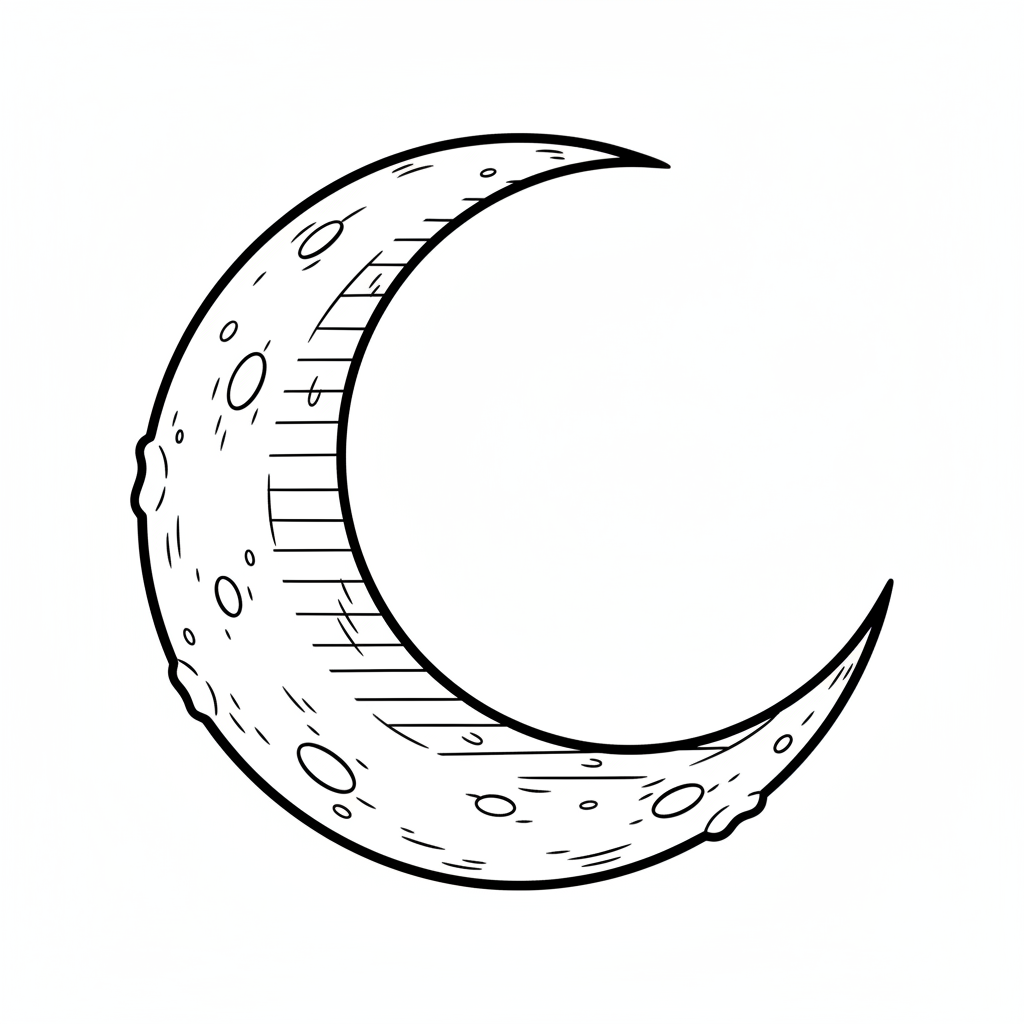
About this tutorial
Draw a crescent moon by overlapping circles and erasing shared areas. Practice outline control, smooth curves, and gentle shading for realistic form.
What you need
Instructions
- 1
Step 1
Place a clean sheet of paper on a flat table.
- 2
Step 2
Hold your pencil comfortably with a light grip.
- 3
Step 3
Lightly draw a large circle using a smooth steady motion.
- 4
Step 4
Lightly draw a second smaller circle that overlaps the first to make a crescent gap on one side.
- 5
Step 5
Trace the outer curve of the large circle where it sits outside the smaller circle to mark the crescent outer edge.
- 6
Step 6
Trace the inner curve formed by the smaller circle where it cuts into the large circle to mark the crescent inner edge.
- 7
Step 7
Erase the extra circle lines so only the two traced crescent edges remain.
- 8
Step 8
Smooth the crescent outline using short controlled pencil strokes to make the curves steady.
- 9
Step 9
Shade the crescent lightly with soft pencil strokes that follow the curve to suggest roundness.
- 10
Step 10
Gently blend the shading with a tissue or cotton swab to make the tone smooth.
- 11
Step 11
Create a thin highlight by rubbing the eraser gently along a curved strip near the outer edge.
- 12
Step 12
Share your finished crescent moon drawing on DIY.org.
Get inspired
Fun facts
How do I draw a crescent moon by overlapping circles?
Start by lightly sketching a large circle for the moon. Draw a second, smaller circle overlapping the first but offset to one side. Erase the overlapping curve of the larger circle so only the crescent shape remains. Refine the crescent’s outline for smooth, flowing curves, then add gentle shading along the inner edge and blend outward for a rounded, realistic form. Finish with small craters or surrounding stars if desired.
What materials do I need to draw a crescent moon?
You’ll need drawing paper, a range of pencils (HB for guidelines, 2B or darker for shading), a soft eraser or kneaded eraser, and a pencil sharpener. Optional helpful tools include a compass or round objects (cup, coin) to trace circles, a blending stump or tissue for smooth shading, and colored pencils or charcoal for contrast. A clean, flat surface and good light help younger artists stay steady.
What ages is this crescent moon drawing activity suitable for?
This activity adapts well across ages. Children 4–6 can try simple overlapping circles with adult help to cut or erase; ages 7–10 can manage tracing, erasing, and basic shading independently. Tweens and teens (11+) can practice refined outlines, smooth blending, and realistic shading. Adjust complexity and tools — younger kids may use crayons while older kids use graphite and blending tools.
What are the benefits and variations of drawing a crescent moon?
Drawing a crescent moon builds fine motor control, shape recognition, eye–hand coordination, and basic shading skills. It’s also good for patience and observational drawing. Variations include adding a face or craters, creating the moon phases series, painting the crescent with watercolors, turning it into a night-scene collage, or trying digital drawing apps to practice the same overlapping-circle method.
Watch & Learn
Need help?
What can we use if we don't have a tissue or cotton swab for blending the shaded crescent in step 9?
If you don't have a tissue or cotton swab for step 9, gently blend the shading with a clean fingertip, a folded paper towel, or a blending stump to smooth the pencil tone.
My crescent looks lopsided after drawing the two circles in steps 3–5—how can I fix it without starting over?
If the crescent is uneven because the large and smaller circles overlapped poorly in steps 3–4, lightly redraw the smaller circle using a coin or round lid as a guide and keep strokes light so you can erase extra lines in step 6.
How can I change this activity for younger or older children while still following the steps?
For younger children, let them trace large and small bowls for steps 3–4 and shade with soft crayons in step 8, while older kids can use short controlled pencil strokes in step 7, add detailed cross-hatching in step 8, and refine highlights in step 10.
What are some creative ways to extend or personalize the crescent moon drawing after completing step 10 and before sharing on DIY.org?
To personalize the drawing after step 10, add a dark pencil or watercolor sky, sprinkle tiny star dots around the crescent, or use a white gel pen for extra highlights before photographing and sharing on DIY.org as in step 11.