Wake Island is a remote coral atoll in the Pacific Ocean, known for its unique history, military significance, and delicate ecosystem.

Set reading age
View for Kids
Easy to read and understand
View for Students
Clear, detailed explanations
View for Scholars
Deep dives and big ideas
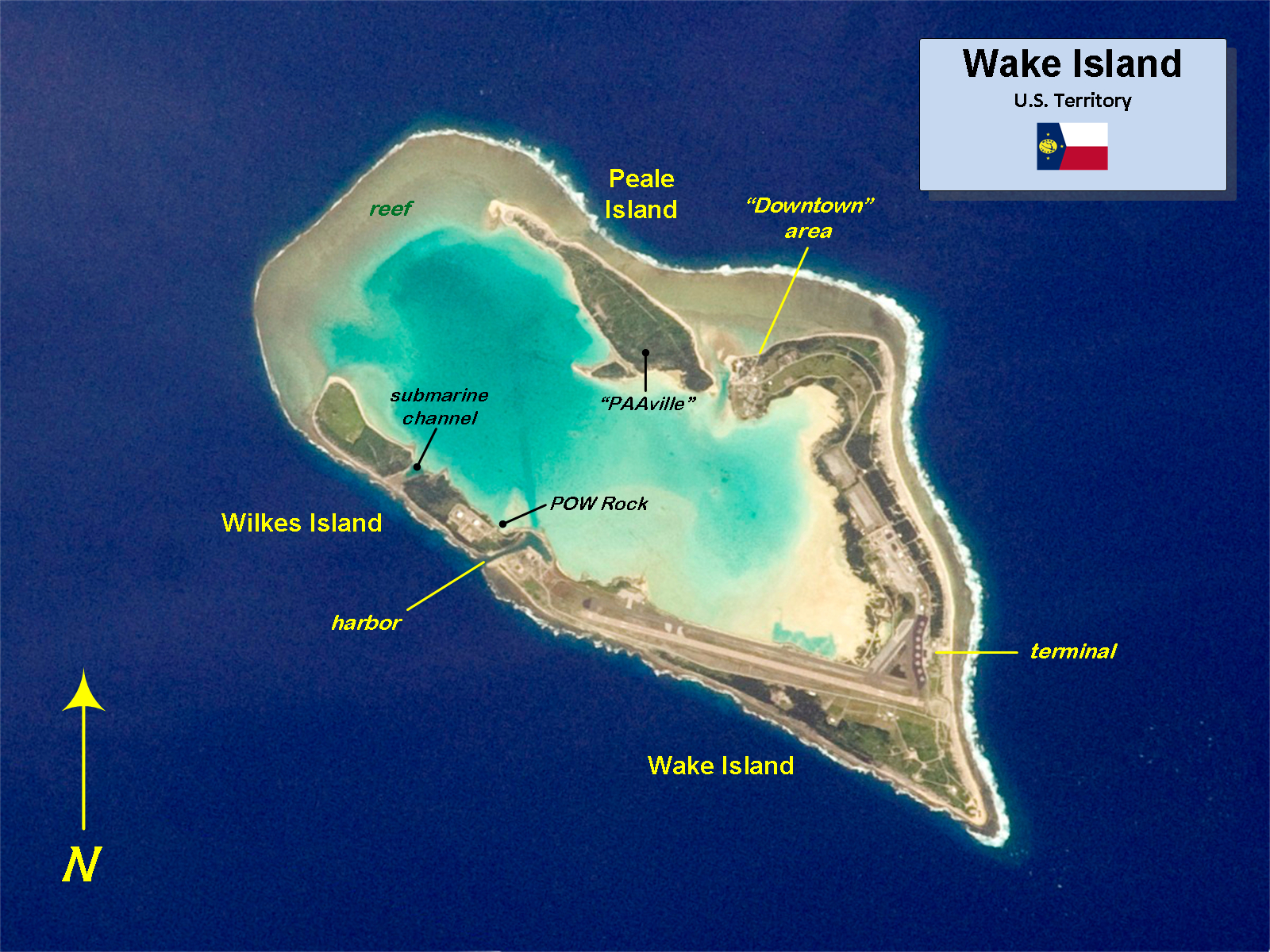
Wake Island, also known as Wake Atoll, is a beautiful coral atoll located in the Pacific Ocean! 🌊It's about 2,300 miles (3,700 kilometers) from Hawaii and is part of the United States. The island covers about 18.5 square miles (48 square kilometers) and is made up of three islands: Wake, Peale, and Wilkes. The island is mostly flat with lovely beaches, and it's surrounded by clear blue waters! People don’t live there permanently, but some workers do stay for a short time. Wake Island is a truly special place, rich in history and natural beauty. 🌺
Although no one lives on Wake Island permanently, it has a rich cultural history! The island was once home to workers and military personnel who played a vital role in its history. ⚓Before World War II, the indigenous people might have visited the island but didn’t stay long. The island’s military history is still remembered with monuments and monuments that honor troops who fought. 🎖️ Today, Wake Island holds a special place in American history as a symbol of courage and resilience, reminding everyone of the brave people who served there. 🏺
In recent years, there have been efforts to increase the awareness of Wake Island’s environmental significance. 🥽These efforts involve scientists studying coral reefs and marine life to protect the area from climate change. Additionally, the U.S. military continues to maintain the island and its facilities for military operations. 📡Tourists are sometimes welcomed for educational purposes, allowing more people to learn about this unique atoll! As we continue to watch the changes, Wake Island remains an important part of our Earth, reminding us to care for our oceans and islands. 🌊
Wake Island is very important for the military! ⚔️ During World War II, it served as a strategic base for air and naval operations in the Pacific. Today, it is still used by the United States Air Force mainly as a refueling stop for military planes and also for missile tests! ✈️ It acts as a communications hub for military activities in the area. The island has landing strips that accommodate military aircraft, making it an essential location for defense operations in the Pacific region. 🚀
Wake Island's ecosystem is truly unique! 🌿The only native plants are some grasses and a few small bushes, but it has many beautiful coral reefs. 🌊These reefs are home to colorful fish, sea turtles, and many types of marine life. 🐢While there are no native land animals, birds like the Pacific Golden Plover can be spotted on the island during their migration. Wake Island is also a place for seabirds to nest! 🌺This delicate ecosystem is important for both the animals that live there and for scientists studying coral reefs.
Like many islands, Wake Island faces environmental challenges. 🌍Since it's a coral atoll, climate change affects it significantly. Rising sea levels and warming ocean waters can endanger its coral reefs and unique wildlife. 🌊There’s also pollution from military activities that can harm the ecosystem. To protect its precious environment, scientists study the island to find ways to minimize damage and preserve its natural beauty. This important work ensures that Wake Island remains a beautiful, vibrant place for generations to come! 🌱
Wake Island is situated in the northern part of the Pacific Ocean, precisely between the Marshall Islands and the Northern Mariana Islands. It is part of a remote area known as Micronesia. 🌏The island is located at coordinates 19.3° N latitude and 166.6° E longitude. Unlike many other islands, it doesn't have many natural resources or plants, mostly because it's made of coral! 🌊The island measures about 2.4 miles (3.9 kilometers) long and is surrounded by a vibrant coral reef, which provides a home for many sea creatures. 🐠
Wake Island has a long and interesting history! The first people to see it were likely sailors from ancient Polynesia, but no one settled there. In 1899, the United States claimed it for itself! ⛴️ In World War II, the Japanese captured the island in 1941, but American soldiers bravely fought to get it back in 1943. In the years after the war, the U.S. used Wake Island as an important military base. It’s named after Captain William Wake, who helped survey the area in the 1800s. 📜
Wake Island is not a typical tourist destination because it has limited access. 🛩️ You cannot just hop on a plane to visit! Travel to the island is controlled by the U.S. Air Force, but sometimes people can visit on special flights or during unique events. Visitors can explore its beautiful beaches, though staying there is usually short. 🌴If you love adventure and nature, Wake Island is a unique place to visit, but remember, it's mainly for work and military purposes!
Wake Island is an unincorporated territory of the United States, which means it isn't a state but is still controlled by the U.S. government! 🇺🇸 The island is administered by the U.S. Air Force and is managed by a small group of military and contract workers. There are no permanent residents, but those who stay help maintain and operate the island’s facilities. The U.S. Air Force keeps the island running and ensures it's a safe place for military operations and wildlife research. 🏰