All Articles

Urdu

Urdu Facts For Kids

Urdu is an Indo-Aryan language primarily spoken in Pakistan and India, known for its poetic heritage and use of the Perso-Arabic script.

🎨 Reading age for 6-8
Background blob
Urdu
Urdu
Facts for Kids!

Do more with AI

Introduction

Urdu is a beautiful language spoken by millions of people! 🌏It is mainly spoken in Pakistan and India. Urdu is known for its poetic style and rich vocabulary. It uses many words from Persian and Arabic, making it unique! The language also has its own script, written from right to left. People communicate in Urdu at home, at school, and even in art! 🎨Learning Urdu can help you understand many cultures and connect with friends who speak it!

Images of Urdu

A multilingual New Delhi railway station board. The Urdu and Hindi texts both read as: naī dillī.Image by MikeLynch, licensed under Creative Commons Attribution-Share Alike 3.0

A multilingual New Delhi railway station board. The Urdu and Hindi texts both read as: naī dillī.

Urdu and Hindi on a road sign in India. The Urdu version is a direct transliteration of the English; the Hindi is a part transliteration ("parcel" and "rail") and part translation: "karyalay" and "arakshan kendra"

Urdu and Hindi on a road sign in India. The Urdu version is a direct transliteration of the English; the Hindi is a part transliteration ("parcel" and "rail") and part translation: "karyalay" and "arakshan kendra"

The phrase Zubān-e-Urdū-e-Muʿallā ("the language of the exalted camp") written in the Perso-Arabic script[240]

The phrase Zubān-e-Urdū-e-Muʿallā ("the language of the exalted camp") written in the Perso-Arabic script[240]

Lashkari Zabān title in Naskh script
Lashkari Zabān title in Naskh script

Photos of UrduImage by Kwamikagami at English Wikipedia, licensed under Creative Commons Attribution-Share Alike 3.0
The word Hindustani in the Devanagari and Perso-Arabic (Nastaliq) scripts.

The word Hindustani in the Devanagari and Perso-Arabic (Nastaliq) scripts.

Opening pages of the Urdu divan of Ghalib, 1821Image by Ghalib, licensed under Creative Commons Attribution-Share Alike 4.0

Opening pages of the Urdu divan of Ghalib, 1821

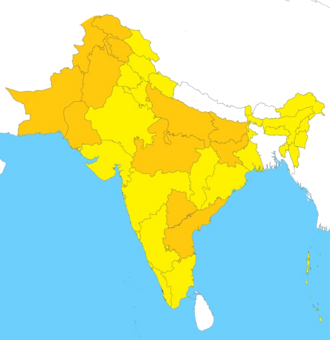
Geographical distribution of Urdu in India and Pakistan.

Geographical distribution of Urdu in India and Pakistan.

The proportion of people with Urdu as their mother tongue in each Pakistani district as of the 2017 Pakistan census.Image by Abbasi786786, licensed under Creative Commons Attribution-Share Alike 4.0

The proportion of people with Urdu as their mother tongue in each Pakistani district as of the 2017 Pakistan census.

A trilingual signboard in Arabic, English and Urdu in the UAE. The Urdu sentence is not a direct translation of the English ("Your beautiful city invites you to preserve it") or Arabic (the same). It says, "apné shahar kī Khūbsūrtīi ko barqarār rakhié, or "Please preserve the beauty of your city."Image by Syed Wamiq Ahmed Hashmi, licensed under Creative Commons Attribution-Share Alike 3.0

A trilingual signboard in Arabic, English and Urdu in the UAE. The Urdu sentence is not a direct translation of the English ("Your beautiful city invites you to preserve it") or Arabic (the same). It says, "apné shahar kī Khūbsūrtīi ko barqarār rakhié, or "Please preserve the beauty of your city."

A multilingual New Delhi railway station board. The Urdu and Hindi texts both read as: naī dillī.Image by MikeLynch, licensed under Creative Commons Attribution-Share Alike 3.0

A multilingual New Delhi railway station board. The Urdu and Hindi texts both read as: naī dillī.

Urdu and Hindi on a road sign in India. The Urdu version is a direct transliteration of the English; the Hindi is a part transliteration ("parcel" and "rail") and part translation: "karyalay" and "arakshan kendra"Image by Vinayaraj, licensed under Creative Commons Attribution-Share Alike 3.0

Urdu and Hindi on a road sign in India. The Urdu version is a direct transliteration of the English; the Hindi is a part transliteration ("parcel" and "rail") and part translation: "karyalay" and "arakshan kendra"

The phrase Zubān-e-Urdū-e-Muʿallā ("the language of the exalted camp") written in the Perso-Arabic script[240]

The phrase Zubān-e-Urdū-e-Muʿallā ("the language of the exalted camp") written in the Perso-Arabic script[240]

Lashkari Zabān title in Naskh script

Lashkari Zabān title in Naskh script

Grammar And Syntax

Urdu grammar has its own set of rules! 📚For example, sentences in Urdu often follow a Subject-Object-Verb pattern. This means you usually say who is doing something, what it is, and then the action. Words change form based on gender too; for example, "bacha" means child (male), while "bachi" means child (female). It's really fun to learn how sentences are built differently! And don’t worry—learning grammar gets easier with practice! ✍️

Dialectal Variations

Just like English has different accents, Urdu has dialects too! 🌍For example, in Pakistan, people might speak "Lahori Urdu" or "Karachi Urdu," which have their own unique words and sounds. In India, you can hear "Dakhni" or "Hindi Urdu," which also mix different languages! Even though there are variations, every dialect helps people connect with their culture. 🎉It's exciting to hear how the same language can sound different in every place!

Cultural Significance

Urdu holds a special place in many cultures! 🎉It connects people through music, films, and festivals. Songs in Urdu, like those from Bollywood, are loved by many! The language also plays a big part in traditions, such as weddings and celebrations. 🇵🇰🇮🇳 Speaking Urdu allows you to take part in cultural events, including poetry readings called "mushairas." It's not just a language; it’s a way to celebrate identity and heritage!

Literature And Poetry

Urdu is famous for its literature and poetry! 📖Many poets, like Allama Iqbal and Faiz Ahmed Faiz, wrote beautiful poems expressing feelings and ideas. Ghazals are a special type of poetry in Urdu, often focusing on love and beauty. 📜Books and stories written in Urdu help people learn about tradition and culture. You can find amazing stories from famous authors that will take you on exciting adventures! 🐉

Urdu In The Modern World

In today's world, Urdu is everywhere! 🌐You can find it in movies, songs, and on the internet. Many websites and apps help teach Urdu, making it easier and fun! 🌟Social media is also full of Urdu posts, with people sharing stories and jokes. Schools in Pakistan and some parts of India teach Urdu, helping students connect with their roots. Learning Urdu can give you a glimpse into a vibrant and exciting culture! 🎬

Resources For Learning Urdu

Learning Urdu can be easy and fun! 📚You can find many resources online, like apps and websites, that help you practice. Some popular apps include Duolingo and Rosetta Stone, which teach basic words and phrases. 📱You can also read children's books written in Urdu, listen to Urdu songs, or watch cartoons! Joining a local class or finding a friend who speaks Urdu is great too! Together, you can explore this beautiful language! 🏫

Urdu Script And Calligraphy

Urdu is written in a special script called Nastaliq! ✏️ This script is beautiful and curved, making it look like art. People write Urdu from right to left, which is different from English, where we write from left to right. Calligraphy, or fancy writing, is a big part of Urdu culture. 🎨Artists create amazing designs using Urdu words, making them more than just letters. If you learn to write in Urdu, you can create lovely art too!

History Of The Urdu Language

Urdu has an interesting history! 📜It developed around the 6th century in northern India. Soldiers and travelers from different regions spoke it, which created a mixture of languages! The name "Urdu" means "army" in Turkish, showing its roots! In the 19th century, Urdu became popular in literature and poetry, thanks to famous poets like Mirza Ghalib! 🖋️ Today, Urdu is an official language of Pakistan and is spoken by millions in India!

Urdu Quiz

Q1
Question 1 of 10

Learn more about Urdu

Ready to create?

Make

To create a safe space for kid creators worldwide!

Create

Vibe Coding

Kids GPT

All Tools

Kibu

Resources

Worksheets

SafeTube

Blog

FAQ

Account

Pricing

Log-in

Sign-up

Data Deletion

Company

About

Community Guidelines

Privacy Policy

Terms of Service

2025, URSOR LIMITED. All rights reserved. DIY is in no way affiliated with Minecraft™, Mojang, Microsoft, Roblox™ or YouTube. LEGO® is a trademark of the LEGO® Group which does not sponsor, endorse or authorize this website or event. Made with love in San Francisco.