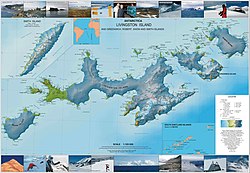
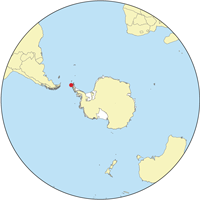
The South Shetland Islands are a group of Antarctic islands located in the Drake Passage, covering an area of 3,687 km² and known for their unique ecosystems and geological features.

Set reading age
View for Kids
Easy to read and understand
View for Students
Clear, detailed explanations
View for Scholars
Deep dives and big ideas
The South Shetland Islands are a fantastic group of islands located near Antarctica 🌏. They have a total area of 3,687 square kilometers, which is about 1,424 square miles! These islands are mostly covered in ice and snow, making them look very beautiful and magical 🌨️. They are surrounded by the cold waters of the Drake Passage, and teams of scientists explore these islands to learn more about our planet. There are different islands in this group, but the main ones include King George Island, Deception Island, and Livingston Island. Isn't that cool? 🏔️
Even though it's really cold, the South Shetland Islands are home to some amazing plants and animals! 🐧You can find moss, lichens, and a few types of flowering plants. Sea birds like petrels and gulls often nest here! The islands are also famous for their adorable penguins, like the Gentoo and Chinstrap penguins 🐧. Plus, you can see seals resting on the shores! The waters around the islands are rich with various fish and even whales. What an adventure it would be to visit them! 🌊
The weather in the South Shetland Islands is super cold! 🌬️ In summer, temperatures can reach about 6 degrees Celsius (43 degrees Fahrenheit) but often it's much colder. In winter, it can go down to -20 degrees Celsius (-4 degrees Fahrenheit)❄️. The islands experience strong winds and snow, especially during the winter months! Rain and fog are also common. Because of this chilly weather, only hardy animals and plants can survive in this icy land. 🌨️
The South Shetland Islands are made of volcanic rock, which means they were formed by eruptions a long time ago! 🌋Deception Island, one of the islands, has a volcanic crater that makes it special. The crater is called a caldera, and it even has hot springs! The islands have many glaciers, which are immense rivers of ice that slowly move and shape the land. It's fascinating to know that these geological features are key to understanding our Earth! 🌏
The South Shetland Islands are situated to the north of the Antarctic Peninsula. 🗺️ The islands are located at coordinates 62 degrees south latitude and 59 degrees west longitude. They are part of the Southern Ocean and are about 120 kilometers from the coast of Antarctica ❄️. The islands are mostly rocky and steep, which makes them look like giant ice sculptures towering over the ocean. King George Island is the largest, and it is home to several research stations! 🌊
The South Shetland Islands were discovered in 1819 by a British naval officer named Edward Bransfield. ⛵He and his crew were exploring the Antarctic region. Soon after, many explorers and scientists became interested in these islands! Over the years, whalers and sealers visited the area, using the islands as a safe stopping point. Today, many countries have research stations on the islands, helping us learn more about the chilly, mysterious world of Antarctica! 🌎
The South Shetland Islands hold special meaning to explorers and scientists. In the early 19th century, they were essential for whalers and sealers ⚓. Many famous Antarctic explorers started their journeys from these islands. Today, they remind us of the adventures humans have had in exploring our planet. The islands also serve as valuable research sites, helping us understand our environment and the effects of climate change. This blend of history and scientific discovery makes the South Shetland Islands a place of great importance! 📚
The South Shetland Islands are important for wildlife, which is why conservation is so crucial! 🦭Several countries have made agreements to protect the animals and plants living there. One big issue is climate change, which is affecting ice levels and animal habitats. Scientists monitor this closely, helping to create plans to protect the wildlife. Always remember to respect nature, especially in such beautiful and delicate areas! 🌍
Many scientists from around the world come to the South Shetland Islands to do research! 🧑🔬 Countries like Argentina, Chile, and the United Kingdom have research stations there. These stations are where scientists study climate change, penguin populations, and the amazing ocean life 🐠. Summer is the busiest time, with researchers conducting important experiments. Sometimes, tourists come too, but they must always follow rules to protect the wildlife! 🏕️
The South Shetland Islands have several important islands. King George Island is the largest and has many research stations 🏢. Deception Island is famous for its volcanic activity and beautiful landscapes. Livingston Island is home to many penguins and stunning glaciers ⛷️. Other notable islands include Elephant Island, known for its wildlife, and Greenwich Island, rich in history. Each island is unique and contributes to the incredible story of the South Shetland Islands! 🏝️


DIY is a creative community where kids draw, build, explore ideas, and share.
No credit card required