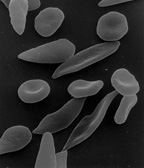
Sickle cell disease is an inherited blood disorder that causes red blood cells to become misshapen, leading to various health issues.


Set reading age
View for Kids
Easy to read and understand
View for Students
Clear, detailed explanations
View for Scholars
Deep dives and big ideas
Sickle Cell Disease (SCD) is a special blood condition that affects how red blood cells work. Instead of being round and flexible, like a doughnut 🍩, these cells can turn into a shape that looks like a sickle or crescent moon 🌙. The disease often affects people of African, Mediterranean, or Indian descent. In the U.S., approximately 100,000 people have sickle cell disease. It's important to learn about it so we can understand how our bodies work and help those who are affected!
Doctors can find out if someone has Sickle Cell Disease early on through a blood test called a hemoglobin electrophoresis test 🧪. This test looks for different types of hemoglobin in the blood. Many countries screen newborns for sickle cell using a simple blood test. If doctors detect SCD early, they can start treatment and support. It's super important to keep track of health when someone has this condition!
While there is no cure for Sickle Cell Disease, there are ways to make life easier and healthier 💊. Patients often take medications to reduce pain and prevent infections. Doctors may recommend blood transfusions to help with low red blood cell counts. Additionally, staying hydrated and resting can help avoid painful crises. Some kids also benefit from a special treatment called hydroxyurea, which helps make less sickle-shaped cells.
People with Sickle Cell Disease can feel quite tired because their bodies don't get enough oxygen 😴. They may also have painful "crises" when their sickled cells get stuck in blood vessels. Other symptoms can include swelling in the hands and feet, frequent infections, and yellowing of the skin or eyes (this is called jaundice) 😷. If you see someone looking sore or sluggish, it's important to help them get medical support right away!
Sickle Cell Disease is a health problem caused by the hemoglobin in our red blood cells. Hemoglobin is like a superhero for our cells; it carries oxygen to all parts of our body! 🦸♂️ In sickle cell disease, the hemoglobin can change shape, which means the red blood cells can get stuck and cause pain 😖. There are different types of sickle cell disorders, and the most common one is called Sickle Cell Anemia. People with SCD often need special care from doctors to stay healthy.
Scientists are always looking for better ways to treat and prevent Sickle Cell Disease 🔬. Newer treatments like gene therapy are very promising! Researchers are studying how to fix the sickle cell gene, which could help patients live healthier, longer lives 🌈. Clinical trials are also testing new medications to help with pain and complications. Education and awareness campaigns help more people learn about this important health issue!
Living with Sickle Cell Disease can be challenging, but many kids find ways to have fun and enjoy life! 🎉Staying active with light exercises like walking or swimming can be helpful. It’s important to listen to your body and take breaks when needed. Support from family, friends, and doctors makes a huge difference! Schools can also create a caring environment to help kids with SCD feel included and understood. 🌟
Genetic counseling helps families understand the chance of passing Sickle Cell Disease to children. 💖If parents know they carry the sickle cell gene, they can get advice on prenatal testing. In some cases, they may choose to explore options like In Vitro Fertilization (IVF) to prevent passing the gene on. Learning more about genetics can empower families to make informed decisions about health and family planning!
Sickle Cell Disease affects people not only in the United States but in many countries worldwide! 🌍It's especially common in places with malaria, like sub-Saharan Africa, where Sickle Cell can help people fight the disease. For instance, about 1 in every 4 people in Nigeria has sickle cell traits! Learning about SCD can help everyone understand and appreciate the diversity in health around the world.
Sickle Cell Disease is passed down from parents to children through special genetic instructions called genes 📜. Instead of having the "good" hemoglobin gene that makes cells round, a child with SCD inherits the "sickle" gene from one or both parents. This change makes the red blood cells not work as well. The gene for sickle cell is found on chromosome 11, and doctors can use tests to see if someone has the sickle cell gene.