Graffiti Facts For Kids
Graffiti is words or pictures people put on public walls to sign their name, share ideas, or decorate places, but it can be illegal.

Do more with AI
Images of Graffiti


Ancient Pompeii graffito caricature of a politician. Villa of the Mysteries.
Figure graffito, similar to a relief, at the Castellania, in Valletta
This is my own work. Photo by Gila Brand. Ancient graffiti on columns outside the Church of the Holy Sepulcher, Old City of Jerusalem

Graffiti presumably inscribed by Viking mercenaries on the second floor of the Hagia Sofia. Photo taken in May, 2005. Not home 21:29, 7 May 2007 (UTC)
Graffiti on the Mirror Wall, Sigiriya, Sri Lanka

Ancient Pompeii graffito caricature of a politician. Villa of the Mysteries.

Figure graffito, similar to a relief, at the Castellania, in Valletta

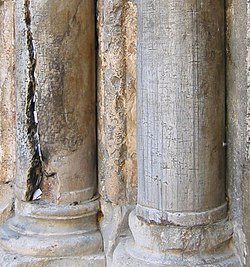
This is my own work. Photo by Gila Brand. Ancient graffiti on columns outside the Church of the Holy Sepulcher, Old City of Jerusalem
Graffiti presumably inscribed by Viking mercenaries on the second floor of the Hagia Sofia. Photo taken in May, 2005. Not home 21:29, 7 May 2007 (UTC)
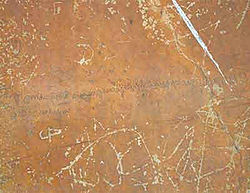
Graffiti on the Mirror Wall, Sigiriya, Sri Lanka
Ancient Pompeii graffito caricature of a politician. Villa of the Mysteries.
Figure graffito, similar to a relief, at the Castellania, in Valletta
This is my own work. Photo by Gila Brand. Ancient graffiti on columns outside the Church of the Holy Sepulcher, Old City of Jerusalem
Graffiti presumably inscribed by Viking mercenaries on the second floor of the Hagia Sofia. Photo taken in May, 2005. Not home 21:29, 7 May 2007 (UTC)
Graffiti on the Mirror Wall, Sigiriya, Sri Lanka
Ancient Pompeii graffito caricature of a politician. Villa of the Mysteries.
Figure graffito, similar to a relief, at the Castellania, in Valletta
This is my own work. Photo by Gila Brand. Ancient graffiti on columns outside the Church of the Holy Sepulcher, Old City of Jerusalem
Graffiti presumably inscribed by Viking mercenaries on the second floor of the Hagia Sofia. Photo taken in May, 2005. Not home 21:29, 7 May 2007 (UTC)
Graffiti on the Mirror Wall, Sigiriya, Sri Lanka
History
Some of the oldest graffiti we know was found on a Greek island around 500 BC. People then left short notes, jokes, and simple drawings, much like leaving a quick message today. In Ancient Rome, writing on walls was often a way to talk to neighbors and visitors, not always seen as bad.
Across later centuries, travelers and soldiers sometimes carved their names on monuments. In the 1900s, short drawings and signatures appeared on trains and on famous rocks. During World War II, the phrase “Kilroy was here” and a little doodle became a common mark left by many soldiers around the world.
Introduction
Graffiti means words or drawings put on walls or other surfaces in public places. You can see very simple graffiti, like a name written quickly, or very fancy pieces that look like paintings. People make graffiti for different reasons: to sign their name, to share an idea, or just to decorate a place.
Graffiti has been made for thousands of years — people in ancient cities wrote on walls, and new kinds of graffiti began in the 1960s and 1970s in cities like New York and Philadelphia. In most places, if you make graffiti where you do not have permission, it is seen as vandalism.
Types And Tools
Spray paint and markers are the most common tools people use for graffiti today. Artists also use paint markers, paint dabbers (small bottles with a sponge tip), and tools for scratching into a surface. Some companies, like Montana Colors, make spray cans and markers especially for street artists, and many big cities have stores that sell these supplies.
Different styles need different tools. A tag is a quick name or logo written with a marker or thin spray line. A "piece" is a large, colorful work made with many spray colors, rollers, and sometimes characters. Artists also use stencils — cut from stiff cardboard or plastic — to spray the same shape quickly. Stickers, called slaps, are another tool: artists draw on labels like Label 228 or the old "Hello my name is" tags and stick them up. Some stickers, called eggshell stickers, break into pieces when peeled off, so they stay behind.
Words And Origins
Graffiti is an Italian word that comes from a word meaning “scratched.” The deeper root is the Greek verb graphein, which means “to write.” So the word links back to the idea of writing or drawing on walls.
Long ago, people scratched messages into stone with sharp tools. Others used soft marks like chalk or coal. Today many artists use paint, markers, or stencils. Different tools make different styles, and the name of the thing — graffiti — comes from how people wrote on walls a very long time ago.
Purpose And Culture
Graffiti is a way people talk to others and show who they are. Many artists want their work to be seen by everyone on the street, not kept inside a museum. Because it is often made in public places, graffiti can be temporary — it might be painted over or cleaned away — and that makes each piece one-of-a-kind.
People disagree about graffiti. Some call it art because it adds color and ideas to public spaces. Others call it vandalism when it appears where it is not wanted. For this reason, many artists stay anonymous. A famous anonymous artist is Banksy, who makes stencil art that talks about politics and war. Cities sometimes protect certain works and sometimes remove them, and some artists do not want their designs used for ads without permission.
Graffiti And The Art World
Street art has a long and growing place in art history. In ancient places, people carved and wrote messages on walls, like at the Temple of Philae in Egypt and in Pompeii, where someone once wrote about love. Much later, in the 1980s, graffiti moved into galleries such as Fashion Moda in the Bronx and the Fun Gallery in Manhattan, so more people began to see it as art.
Photographers and museums helped too. Burhan Doğançay spent decades photographing walls around the world and showed his pictures in big museums like the Centre Georges Pompidou in Paris. In 2009 the Grand Palais in Paris displayed hundreds of graffiti works by many artists. Today art historians study graffiti as part of contemporary visual culture, and museums sometimes show it alongside other kinds of painting. Where would you display a wall you loved?
Global Spread And Movements
Different styles of graffiti grew in different places. In Paris, artists used cut-out shapes and paint to make quick pictures called stencils. These stencil artists, like Blek le Rat, worked before American subway graffiti reached Europe and were often linked to punk music scenes.
In the 1980s and 1990s, the look and ideas of graffiti moved around the world. American hip hop culture helped spread one style, while stencils and other methods traveled from Europe to cities in Australia and Eastern Europe. By the mid-1980s, photographers were already taking pictures of street art in many cities, helping people learn about each other’s work.
Did you know?
🏛 Ancient people left graffiti in places like Egypt, Greece, and the Roman city of Pompeii.
🗽 Modern graffiti began in the 1970s in New York City and Philadelphia before spreading around the world.
🕵️♂️ Banksy is a famous anonymous street artist known for political and satirical stencil art.
🎸 The phrase "Clapton is God" was a famous graffiti tag painted outside London in 1967.
🪖 The "Kilroy was here" graffiti became a popular symbol of American soldiers during World War II.
🧱 Artist Burhan Doğançay's "Walls of the World" project contains around 30,000 images of walls from 114 countries.
Graffiti Quiz
Learn more about Graffiti
Frequently Asked Questions