Mustelidae Facts For Kids
Mustelidae is a fascinating family of carnivorous mammals, including weasels, badgers, otters, polecats, martens, grisons, and wolverines, known for their agility, playful behavior, and diverse habitats worldwide.
Select reading age

Mustelidae Facts For Kids
Videos & Quizzesincluded
About this topic
The Mustelidae family is a group of cool animals! 🐾This family includes weasels, otters, badgers, and wolverines! They are known for being smart and agile. Mustelidae animals can be found all around the world, from forests to rivers! They usually have long bodies and short legs, which help them move quickly. Did you know that Mustelidae comes from the Latin word "mustela," meaning weasel? These animals are great hunters and have a keen sense of smell! Join us as we explore their amazing world! 🌍
Explore with ChatDinoKey Points
Did you know that the wolverine can run up to 30 miles per hour?
Many Mustelidae species face challenges in the wild, leading to various conservation statuses.
Mustelidae animals have inspired stories and legends around the world!
Mustelidae animals live in various habitats across the world!
Mustelidae animals come in all shapes and sizes!
Most Mustelidae animals are carnivores!
Mustelidae animals typically mate in the spring.
The Mustelidae family has a rich history dating back millions of years!
Mustelidae are part of the scientific category called Carnivora, which means they mostly eat meat.
Mustelidae animals have different social behaviors.
Photos of Mustelidae

Skeleton of a black-footed ferret (Mustela nigripes) on display at the Museum of Osteology
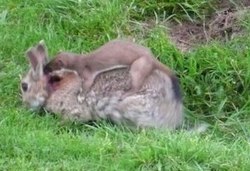
Stoat killing a rabbit

Mustelidae — photo 3

Detail from Leonardo da Vinci's Lady with an Ermine, 1489–1490

Mustelidae — photo 5

Mustelidae — photo 6
🏃♂️ Interesting Facts
Did you know that the wolverine can run up to 30 miles per hour? 🏃♂️ Or that the European badger can weigh up to 25 pounds? That's quite heavy for such a small animal! In addition to being great at hunting, otters are super social and work together to catch fish. 🌊Weasels can squeeze through tiny holes due to their flexible bodies! Last but not least, some mustelids can actually change color with the seasons. The stoat, for instance, turns white in the winter to blend in with the snow! ❄️
Go deeper🌿 Conservation Status
Many Mustelidae species face challenges in the wild, leading to various conservation statuses. 🌿The International Union for Conservation of Nature (IUCN) helps monitor the health of these animals. For instance, the European otter is recovering in many areas but still needs protection. On the other hand, the wolverine is classified as “near threatened,” meaning its population is at risk. 🌍Conservation efforts are essential to protect their habitats and ensure their survival for future generations. Every action counts, from building better habitats to keeping rivers clean!
Go deeper🦡 Cultural Significance
Mustelidae animals have inspired stories and legends around the world! 🦡In many cultures, otters are seen as playful creatures, often associated with joy and fun. Henjo, a mythical otter in Japanese folklore, is believed to bring good luck. Badgers hold health and strength in Native American cultures. In Europe, the mustelids were also used in coat-making for their beautiful fur! 🧥Many books and cartoons feature these animals too, showing kids their significance in our culture. It's important to appreciate their role not just in nature, but in stories and traditions!
Go deeper🌏 Habitat And Distribution
Mustelidae animals live in various habitats across the world! 🌏You can find them in forests, wetlands, mountains, and even grasslands! Otters love to live near rivers and lakes, while badgers dig homes underground called sett. 🏡Wolverines prefer colder areas like the snowy mountains of Canada. These animals can be found on almost every continent, except for Australia and Antarctica. Did you know that the least weasel (Mustela nivalis) is the smallest member of the family and can be found in North America, Europe, and Asia?
Go deeper🦡 Physical Characteristics
Mustelidae animals come in all shapes and sizes! 🦡Weasels are small, while wolverines are much bigger. Most of them have long, slender bodies, short legs, and thick fur. 🌟The fur helps keep them warm. Their coloring can vary too, from the dark brown of a weasel to the black and white of an otter! Many of them also have sharp claws for digging and climbing. The European Badger (Meles meles) has a distinctive black and white stripe on its face, making it easy to recognize!
Go deeper🐭 Diet And Feeding Behavior
Most Mustelidae animals are carnivores! They love to eat small animals like rodents, fish, and insects. 🐭🐟 Some, like otters, also enjoy fruits and plants! Otters are known as skilled hunters; they can even crack open crab shells with their strong teeth! 🦀Weasels sneak up on their prey with stealthy movements and lightning speed, making them awesome hunters. Badgers dig for foods like insects and berries, while wolverines hunt larger animals, like deer! Their sharp teeth help them tear into tough meat.
Go deeper🐾 Reproduction And Lifespan
Mustelidae animals typically mate in the spring. The female mustelids can have multiple babies, called kits or pups. 🐾For example, a female otter gives birth to up to six pups! After a few months, the young become independent. The lifespan of these animals varies; otters can live up to 15 years, while badgers often live around 14 years. 🦡Some species may live longer in the wild than others. The least weasel can live only about a year, while the wolverine can live up to 10 years!
Go deeper🏺 Fossil Record And Evolution
The Mustelidae family has a rich history dating back millions of years! 🏺Fossils show that their ancestors lived during the late Eocene epoch, roughly 40 million years ago. Scientists believe they evolved from a group of mammals known as miacids. Over time, they adapted to different environments and changed their sizes and shapes. Today, they have over 60 species! 🦦The fossil record helps researchers understand how these amazing animals evolved and adapted to both land and water. Each species provides a clue about the family tree of Mustelidae!
Go deeper🥩 Taxonomy And Classification
Mustelidae are part of the scientific category called Carnivora, which means they mostly eat meat. 🥩These mammals are divided into several groups called genera. For example, the weasel family is called Mustela, while the otter family is called Lutra. 🦦There are about 60 species in this family! Some of the most well-known members include the American Badger (Taxidea taxus) and the European Otter (Lutra lutra). Next time you see one of these animals, you can impress your friends with their scientific names!
Go deeper🦦 Social Structure And Behavior
Mustelidae animals have different social behaviors. Some, like otters, are very social and live in groups called rafts! 🦦They love to play, swim, and hunt together. Other animals, like wolverines, prefer to be alone and are more solitary. Their territories can be quite large! Badgers often live in family groups, sharing their sett and caring for their young together. 🏡Weasels are generally solitary but come together during mating season. Each mustelid has its own unique way of living and socializing in the wild!
Go deeper