Foot-and-mouth Disease Facts For Kids
Foot-and-mouth disease (FMD) is an infectious viral disease primarily affecting even-toed ungulates, causing significant suffering and economic impacts in livestock.
Select reading age
Foot-and-mouth Disease Facts For Kids
Videos & Quizzesincluded
About this topic
Foot-and-mouth disease is a serious sickness that mainly affects animals like cows, pigs, sheep, and goats.🐄🐖 It’s caused by a virus that makes them very sick and can even be deadly. The name comes from the sores that can appear on the animals' mouths and feet. This disease is most common in places like Asia, Africa, and South America, but it can happen anywhere. People can't get sick from it, but it can spread quickly among animals. The disease can hurt farms and the food these animals provide to us, like milk and meat! 🥛🍖
Explore with ChatDinoKey Points
Foot-and-mouth disease has a long history, and there have been many big outbreaks!
When an animal gets foot-and-mouth disease, it shows symptoms that help farmers know something is wrong.
Vaccination is a key tool in fighting foot-and-mouth disease.
Foot-and-mouth disease spreads very fast!
Although foot-and-mouth disease doesn't affect humans directly, it has significant implications for public health!
Foot-and-mouth disease can cause serious problems for farmers and the economy.
Scientists are always looking for ways to improve how we prevent and treat foot-and-mouth disease.
Keeping animals safe from foot-and-mouth disease is super important!
Foot-and-mouth disease is caused by a virus known as the foot-and-mouth disease virus (FMDV).
If animals get foot-and-mouth disease, their treatment options depend on their symptoms.
Photos of Foot-and-mouth Disease

Plum Island Animal Disease Center

FMD notice; Monmouthshire, Wales, 1872

Ruptured blisters on the feet of a pig

Foot-and-mouth Disease — photo 4

Foot-and-mouth Disease — photo 5
![Pork export from Taiwan during 1995 to 1998 shows the devastating drop.[53]](https://upload.wikimedia.org/wikipedia/en/thumb/b/b2/Where_did_Taiwan_export_Pork_to_between_1995_and_1998.png/960px-Where_did_Taiwan_export_Pork_to_between_1995_and_1998.png)
Pork export from Taiwan during 1995 to 1998 shows the devastating drop.[53]

Distribution of seven pools of foot-and mouth disease viruses
🚜 Historical Outbreaks
Foot-and-mouth disease has a long history, and there have been many big outbreaks! One notable outbreak happened in the United Kingdom in 2001, which affected about 2,000 farms. 🚜Many animals were culled, meaning they were sadly put down to control the disease. Another outbreak in South Africa around 1925 impacted thousands of cattle! 🌍Each time there’s an outbreak, farmers learn more to stop it from happening again. This teaches us how important it is to stay vigilant to protect our livestock. 🐖
Go deeper🐑 Symptoms And Diagnosis
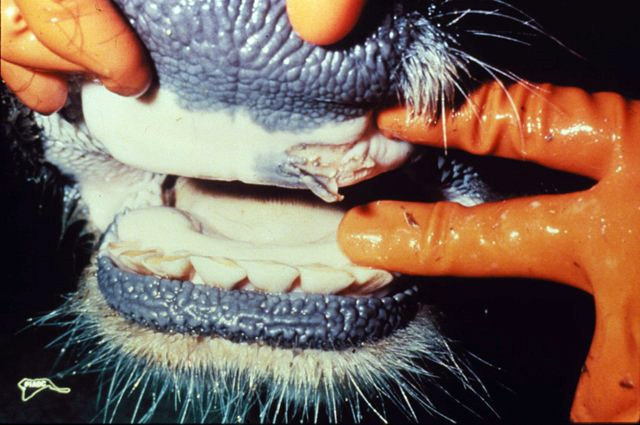
When an animal gets foot-and-mouth disease, it shows symptoms that help farmers know something is wrong. 🐑Common signs include fever, blisters in the mouth and on the feet, and drooling. Animals may also stop eating and look very sad or tired. 😔Farmers often look very closely at their animals and take samples of their saliva or blood to send to special laboratories for testing. Quick diagnosis is essential because if the disease is caught early, animals can be treated better. 🏥
Go deeper💉 Vaccination Strategies
Vaccination is a key tool in fighting foot-and-mouth disease. 💉Vaccines help animals build protection against the virus, reducing the chance of getting sick. There are different types of vaccines depending on the virus strain. Farmers are encouraged to vaccinate their livestock, especially in areas with a history of outbreaks. 🐑Countries often work together, sharing vaccines and knowledge to prepare better for potential outbreaks. By using vaccines wisely, we can protect animals and support farmers who rely on healthy livestock. 🎉
Go deeper🏃♂️ Transmission And Spread
Foot-and-mouth disease spreads very fast! 🏃♂️🐄 It can jump from one animal to another through direct contact, like when they lick or nibble each other. It can also spread through contaminated shoes, clothes, and vehicles—imagine stepping in a puddle and bringing it home! 🌧️ The virus can be carried by the wind over long distances too, making it even trickier for farmers to keep their animals safe. To prevent this, strict rules are set to control where animals go and how farms are cleaned. 🚜
Go deeper🌍 Public Health Implications
Although foot-and-mouth disease doesn't affect humans directly, it has significant implications for public health! 🌍If there’s an outbreak, there could be food shortages, leading to higher prices for meat and dairy products. It could also affect farmers’ livelihoods, making it harder for them to provide fresh food to communities. 🤝Governments monitor the disease closely to prevent it from spreading and assure everyone gets the food they need. This helps maintain a healthy economy and community! 🍽️
Go deeper💵 Economic Impact On Agriculture
Foot-and-mouth disease can cause serious problems for farmers and the economy. 💵Infected animals can't produce milk or meat, leading to a shortage of food. Countries often lose millions of dollars when outbreaks occur. Farmers might need to sell sick animals or stop raising them altogether! 📉Exports, which are when countries sell their food to other places, can also get affected. For example, in the UK, an outbreak in 2001 cost around £8 billion! That’s a lot of money! 🏦
Go deeper🔍 Research And Future Directions
Scientists are always looking for ways to improve how we prevent and treat foot-and-mouth disease. 🔍Research into vaccines is ongoing, with lots of new ideas about how to make them stronger and more effective! 🧪Also, tracking the virus better helps to quickly identify outbreaks. By working together around the world, researchers hope to find a way to eliminate the disease entirely. With advancements in technology and knowledge, the future looks promising for our animals! 🌈🐄
Go deeper🌟 Prevention And Control Measures
Keeping animals safe from foot-and-mouth disease is super important! 🌟Farmers can do a few things to help prevent it. They can regularly clean and disinfect their barns and equipment to get rid of germs. Also, keeping sick animals away from healthy ones is crucial! If there’s an outbreak, some animals may need to be vaccinated to protect them from becoming sick. The government can also help by creating boundaries around affected areas and keeping track of animals moving from farm to farm. 🏰
Go deeper🔬 Causes Of Foot-and-mouth Disease
Foot-and-mouth disease is caused by a virus known as the foot-and-mouth disease virus (FMDV). 🔬There are seven different types of this virus, identified by letters A, O, C, SAT 1, SAT 2, SAT 3, and Asia 1. Animals can catch the virus when they come into contact with other sick animals or contaminated materials. For example, if an infected animal touches the food or water, other animals could get sick too! This virus is very clever; it can survive in the environment for a long time, which makes it hard to control. 🌍🐾
Go deeper🏥 Treatment Options For Affected Animals
If animals get foot-and-mouth disease, their treatment options depend on their symptoms. 🏥Vets usually help by giving them medicine to reduce pain and swelling. Although there is no specific cure for the disease, good care can help animals recover. Keeping them comfortable and hydrated is very important! 💧If the disease spreads, farmers may need to separate infected animals from the healthy ones. It’s very serious, and farmers must act quickly to keep their herds safe! 🚨
Go deeper