All Articles

Cardiovascular Disease

Cardiovascular Disease Facts For Kids

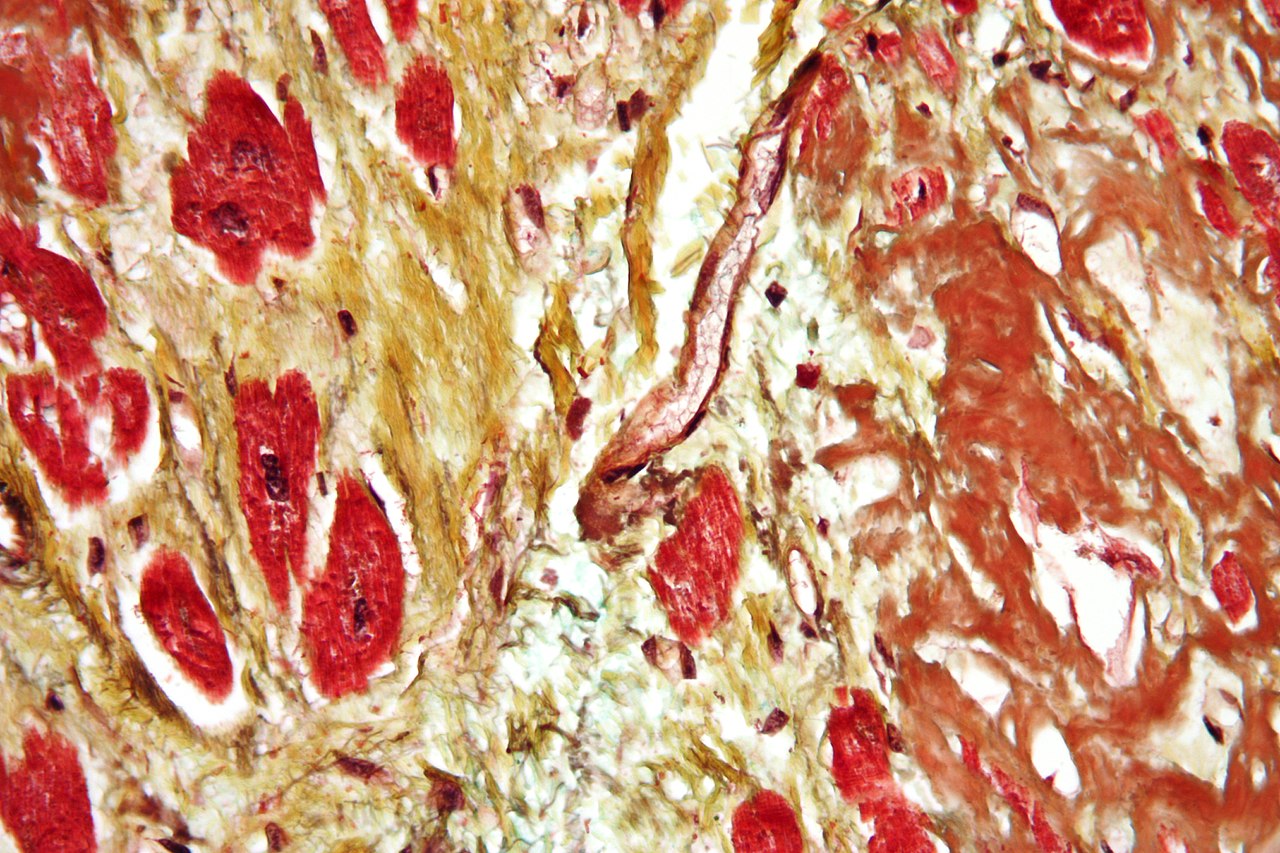
Cardiovascular disease (CVD) is any disease involving the heart or blood vessels that can affect how well they work.
🎨 Reading age for 6-8
Background blob
Cardiovascular Disease
Facts for Kids!
Image by Nephron, licensed under Creative Commons Attribution-Share Alike 3.0

Do more with AI

Introduction

Cardiovascular disease is a term that covers problems with the heart ❤️ and blood vessels. Imagine your heart as a hard-working pump that keeps blood flowing to every part of your body! Every time your heart beats, it sends oxygen-rich blood through your arteries (which are like delivery trucks). When blood vessels get blocked or your heart stops working well, that’s when cardiovascular disease can happen. In fact, it’s one of the leading causes of health issues around the world. Knowing about this helps us take better care of our hearts! 🫀

Images of Cardiovascular Disease

Disability-adjusted life year for inflammatory heart diseases per 100,000 inhabitants in 2004[17].mw-parser-output .div-col{margin-top:0.3em;column-width:30em}.mw-parser-output .div-col-small{font-size:90%}.mw-parser-output .div-col-rules{column-rule:1px solid #aaa}.mw-parser-output .div-col dl,.mw-parser-output .div-col ol,.mw-parser-output .div-col ul{margin-top:0}.mw-parser-output .div-col li,.mw-parser-output .div-col dd{page-break-inside:avoid;break-inside:avoid-column} .mw-parser-output .legend{page-break-inside:avoid;break-inside:avoid-column}.mw-parser-output .legend-color{display:inline-block;min-width:1.25em;height:1.25em;line-height:1.25;margin:1px 0;text-align:center;border:1px solid black;background-color:transparent;color:black}.mw-parser-output .legend-text{} No data Less than 70 70–140 140–210 210–280 280–350 350–420 420–490 490–560 560–630 630–700 700–770 More than 770Image by Lokal_Profil, licensed under Creative Commons Attribution-Share Alike 2.5

Disability-adjusted life year for inflammatory heart diseases per 100,000 inhabitants in 2004[17].mw-parser-output .div-col{margin-top:0.3em;column-width:30em}.mw-parser-output .div-col-small{font-size:90%}.mw-parser-output .div-col-rules{column-rule:1px solid #aaa}.mw-parser-output .div-col dl,.mw-parser-output .div-col ol,.mw-parser-output .div-col ul{margin-top:0}.mw-parser-output .div-col li,.mw-parser-output .div-col dd{page-break-inside:avoid;break-inside:avoid-column} .mw-parser-output .legend{page-break-inside:avoid;break-inside:avoid-column}.mw-parser-output .legend-color{display:inline-block;min-width:1.25em;height:1.25em;line-height:1.25;margin:1px 0;text-align:center;border:1px solid black;background-color:transparent;color:black}.mw-parser-output .legend-text{} No data Less than 70 70–140 140–210 210–280 280–350 350–420 420–490 490–560 560–630 630–700 700–770 More than 770

Calcified heart of an older woman with cardiomegalyImage by Nindasofia24601, licensed under Creative Commons Attribution-Share Alike 3.0

Calcified heart of an older woman with cardiomegaly

Density-Dependent Colour Scanning Electron Micrograph SEM (DDC-SEM) of cardiovascular calcification, showing in orange calcium phosphate spherical particles (denser material) and, in green, the extracellular matrix (less dense material)[84]Image by Sergio Bertazzo, licensed under Creative Commons Attribution-Share Alike 3.0

Density-Dependent Colour Scanning Electron Micrograph SEM (DDC-SEM) of cardiovascular calcification, showing in orange calcium phosphate spherical particles (denser material) and, in green, the extracellular matrix (less dense material)[84]

cardiovascular-disease-death-ratesImage by Our World In Data, licensed under Creative Commons Attribution 4.0

cardiovascular-disease-death-rates

Disability-adjusted life year for cardiovascular diseases per 100,000 inhabitants in 2004[17] no data <900 900–1650 1650–2300 2300–3000 3000–3700 3700–4400 4400–5100 5100–5800 5800–6500 6500–7200 7200–7900 >7900Image by Lokal_Profil, licensed under Creative Commons Attribution-Share Alike 2.5

Disability-adjusted life year for cardiovascular diseases per 100,000 inhabitants in 2004[17] no data <900 900–1650 1650–2300 2300–3000 3000–3700 3700–4400 4400–5100 5100–5800 5800–6500 6500–7200 7200–7900 >7900

Disability-adjusted life year for inflammatory heart diseases per 100,000 inhabitants in 2004[17].mw-parser-output .div-col{margin-top:0.3em;column-width:30em}.mw-parser-output .div-col-small{font-size:90%}.mw-parser-output .div-col-rules{column-rule:1px solid #aaa}.mw-parser-output .div-col dl,.mw-parser-output .div-col ol,.mw-parser-output .div-col ul{margin-top:0}.mw-parser-output .div-col li,.mw-parser-output .div-col dd{page-break-inside:avoid;break-inside:avoid-column} .mw-parser-output .legend{page-break-inside:avoid;break-inside:avoid-column}.mw-parser-output .legend-color{display:inline-block;min-width:1.25em;height:1.25em;line-height:1.25;margin:1px 0;text-align:center;border:1px solid black;background-color:transparent;color:black}.mw-parser-output .legend-text{} No data Less than 70 70–140 140–210 210–280 280–350 350–420 420–490 490–560 560–630 630–700 700–770 More than 770Image by Lokal_Profil, licensed under Creative Commons Attribution-Share Alike 2.5

Disability-adjusted life year for inflammatory heart diseases per 100,000 inhabitants in 2004[17].mw-parser-output .div-col{margin-top:0.3em;column-width:30em}.mw-parser-output .div-col-small{font-size:90%}.mw-parser-output .div-col-rules{column-rule:1px solid #aaa}.mw-parser-output .div-col dl,.mw-parser-output .div-col ol,.mw-parser-output .div-col ul{margin-top:0}.mw-parser-output .div-col li,.mw-parser-output .div-col dd{page-break-inside:avoid;break-inside:avoid-column} .mw-parser-output .legend{page-break-inside:avoid;break-inside:avoid-column}.mw-parser-output .legend-color{display:inline-block;min-width:1.25em;height:1.25em;line-height:1.25;margin:1px 0;text-align:center;border:1px solid black;background-color:transparent;color:black}.mw-parser-output .legend-text{} No data Less than 70 70–140 140–210 210–280 280–350 350–420 420–490 490–560 560–630 630–700 700–770 More than 770

Calcified heart of an older woman with cardiomegalyImage by Nindasofia24601, licensed under Creative Commons Attribution-Share Alike 3.0

Calcified heart of an older woman with cardiomegaly

Density-Dependent Colour Scanning Electron Micrograph SEM (DDC-SEM) of cardiovascular calcification, showing in orange calcium phosphate spherical particles (denser material) and, in green, the extracellular matrix (less dense material)[84]Image by Sergio Bertazzo, licensed under Creative Commons Attribution-Share Alike 3.0

Density-Dependent Colour Scanning Electron Micrograph SEM (DDC-SEM) of cardiovascular calcification, showing in orange calcium phosphate spherical particles (denser material) and, in green, the extracellular matrix (less dense material)[84]

cardiovascular-disease-death-ratesImage by Our World In Data, licensed under Creative Commons Attribution 4.0

cardiovascular-disease-death-rates

Disability-adjusted life year for cardiovascular diseases per 100,000 inhabitants in 2004[17] no data <900 900–1650 1650–2300 2300–3000 3000–3700 3700–4400 4400–5100 5100–5800 5800–6500 6500–7200 7200–7900 >7900Image by Lokal_Profil, licensed under Creative Commons Attribution-Share Alike 2.5

Disability-adjusted life year for cardiovascular diseases per 100,000 inhabitants in 2004[17] no data <900 900–1650 1650–2300 2300–3000 3000–3700 3700–4400 4400–5100 5100–5800 5800–6500 6500–7200 7200–7900 >7900

Impact On Health

Cardiovascular disease can significantly affect our overall health 🌈. When our heart isn’t strong, it can lead to tiredness, difficulty in playing sports, or even doctors’ visits! It can also impact our daily activities, like going to school or hanging out with friends. Furthermore, if left untreated, it might cause even more severe health problems, such as stroke or heart attacks. That’s why it’s so important to take care of our hearts early on. Long-term heart health means fun and active lives for years to come! 🥳

Treatment Options

If someone has cardiovascular disease, there are different ways to help. Doctors may prescribe medicines 🍎 to lower blood pressure or cholesterol. Sometimes, lifestyle changes like eating healthier foods and exercising can work wonders! In some cases, procedures or surgeries, like bypass surgery, can help blood flow better ❤️. Each treatment plan is unique, just like each person. It’s essential to follow a doctor’s advice for the best heart health! Keeping our hearts happy is the goal! 😊

Causes And Risk Factors

Several things can contribute to cardiovascular disease. Some risk factors, like high blood pressure or high cholesterol, can make our hearts work too hard! 🩸Eating too much junk food, not exercising enough, or being stressed can also play a role. Family history is important as well—if your parents had heart issues, you may be at risk too! Another big factor is smoking, which can be very harmful to your heart. Learning about these causes helps us stay healthy and keep our hearts strong! 💪

Diagnosis And Screening

To find out if someone has cardiovascular disease, doctors can perform several tests. One common test is called an electrocardiogram (ECG). This test records the heart's electrical activity. 🩺Another important test is called an echocardiogram, which uses sound waves to create pictures of the heart. Sometimes, blood tests might be done to check cholesterol levels too. Regular check-ups with a doctor can help keep track of heart health. Knowing how to detect problems early is key to staying healthy! 🏥

Statistics And Prevalence

Did you know that about 1 in 4 people in the United States have cardiovascular disease? 😮That means it’s super important for everyone to know about heart health! In 2021, the World Health Organization reported that over 17 million people die from heart disease each year worldwide. This highlights the need for prevention strategies! By learning about cardiovascular disease and taking action, like choosing healthy foods and being active, we can help decrease these numbers and keep our hearts happy and healthy! 🌍❤️

Current Research And Innovations

Scientists and doctors are working hard to understand cardiovascular disease better! 🧑‍🔬 They study how to prevent, detect, and treat heart issues effectively. Innovations like wearable heart monitors can help people track their heartbeats in real time! There are also new medicines being developed that help manage cholesterol more effectively. Research on genetics is being conducted to help understand how heart conditions can run in families. Every day, researchers are finding exciting new ways to keep our hearts healthy! 💖

Lifestyle Changes For Prevention

There are many fun ways to keep our hearts healthy! Eating a balanced diet with fruits 🍌, vegetables 🥦, and whole grains is essential! Regular exercise, like playing outside, riding a bike, or dancing, helps a lot too! Staying active for at least an hour a day can make our hearts strong! 🚴‍♂️ It’s also good to get enough sleep and drink plenty of water. Lastly, avoiding smoking is crucial for a healthy heart! By making these lifestyle changes, we can help prevent cardiovascular disease and live our best lives! 🌟

Types Of Cardiovascular Diseases

There are several kinds of cardiovascular diseases! Some of the most common include coronary artery disease, which affects blood flow to the heart, and heart failure, where the heart can’t pump enough blood. Other types include arrhythmia, where the heartbeat is irregular 🥁, and congenital heart disease, which some babies are born with. There's also stroke, which happens when blood flow to the brain gets blocked. Each type has its own challenges and ways to help! Understanding them can empower us to make healthier choices! 🚴‍♂️

Symptoms Of Cardiovascular Disease

It’s essential to recognize symptoms of cardiovascular disease. Sometimes, people may feel chest pain or tightness as if something is squeezing their heart. 🫀Other symptoms can be shortness of breath, feeling dizzy, or extreme tiredness. Some folks might also experience discomfort in their arms, back, or neck. If you ever feel funny or hurt in these areas, it’s important to tell a trusted adult. Remember, the earlier we notice the signs, the better we can help our hearts! 🚨

Cardiovascular Disease Quiz

Q1
Question 1 of 10

Learn more about Cardiovascular Disease

Ready to create?

Make

To create a safe space for kid creators worldwide!

Create

Vibe Coding

Kids GPT

All Tools

Kibu

Resources

Worksheets

SafeTube

Blog

FAQ

Account

Pricing

Log-in

Sign-up

Data Deletion

Company

About

Community Guidelines

Privacy Policy

Terms of Service

2025, URSOR LIMITED. All rights reserved. DIY is in no way affiliated with Minecraft™, Mojang, Microsoft, Roblox™ or YouTube. LEGO® is a trademark of the LEGO® Group which does not sponsor, endorse or authorize this website or event. Made with love in San Francisco.