Canadian Beaver Facts For Kids
The Canadian beaver (*Castor canadensis*) is a remarkable North American rodent known for its strong, flat tail and outstanding ability to build dams, playing a crucial role in creating wetland habitats in various ecosystems.
Select reading age
Canadian Beaver Facts For Kids
Videos & Quizzesincluded
About this topic
The Canadian Beaver, also known as the North American Beater, is a fascinating animal 🦫 found primarily in Canada and the northern United States! These furry creatures are known for their large teeth and flat tails, which they use for swimming and building dams. They can weigh up to 60 pounds (27 kg) and are about 3 to 4 feet (1 to 1.2 meters) long! These beavers play a crucial role in their ecosystems, making them an important part of nature. Let's learn more about these amazing animals and their world!
Explore with ChatDinoKey Points
Canadian Beavers were once nearly hunted to extinction for their fur and glands, but today they're doing much better!
Beavers are important in Canadian culture and history!
Beavers are known as “ecosystem engineers” because their activities help shape their environment!
Beavers are herbivores, which means they eat only plants!
1.
Canadian Beavers love to live near rivers, lakes, and ponds!
Canadian Beavers have thick brown fur that keeps them warm in water 🧥.
Canadian Beavers have a fascinating life cycle!
Canadian Beavers are social animals and often live in family groups called colonies.
Photos of Canadian Beaver

Canadian Beaver — photo 1

North American beaver skeleton (Museum of Osteology)

Lithograph of a Canadian beaver, 1819.

Beaver lodge, Ontario, Canada

Beaver dam, northern California, USA

Beavers use rocks for their dams when mud and branches are less available as seen on Bear Creek, a tributary to the Truckee River, in Alpine Meadows, California.

C. c. canadensis, feeding in winter

A group of Canadian beavers and their dam on a river.

Brooklyn Museum – American Beaver – John J. Audubon
👍 Conservation Status
Canadian Beavers were once nearly hunted to extinction for their fur and glands, but today they're doing much better! 👍They are now listed as "Least Concern" on the IUCN Red List. This means their population is stable in many areas. People protect beavers by creating safe environments in parks and reserves. However, local conflicts can arise when beavers build dams that flood roads or farmland. Wildlife experts often work to resolve these issues while ensuring beavers are safe! 🛣️
Go deeper🍁 Cultural Significance
Beavers are important in Canadian culture and history! 🍁They are a symbol of Canada and even appear on the country's nickel! Indigenous peoples have long recognized the value of beavers for their fur, meat, and the ecosystems they help create. They are also a popular figure in stories and folklore, teaching lessons about hard work and cooperation. In many ways, the beaver represents the spirit of teamwork and resilience! 🦫✨
Go deeper🛠️ Ecological Importance
Beavers are known as “ecosystem engineers” because their activities help shape their environment! 🛠️ When they build dams, they create ponds that provide homes for many other animals like fish, frogs, and birds. These ponds also help control floods by slowing down water flow. As beavers eat trees, they create open areas for new plants to grow, making the ecosystem healthier! 🌿Thanks to their hard work, beavers help create a diverse habitat where many species can thrive!
Go deeper🍃 Diet And Feeding Habits
Beavers are herbivores, which means they eat only plants! 🍃They especially love eating the bark and leaves of trees like willows, aspens, and birches. Beavers can consume up to 200 pounds (90 kg) of food in a year! To prepare for winter, they often gather branches and store them underwater near their lodges to munch on later. They have strong teeth that keep growing, so they must gnaw on wood regularly to keep their teeth from getting too long! 😄
Go deeper🪵 Fun Facts About Beavers
1. Beavers’ teeth never stop growing! That’s why they gnaw on wood. 🪵
2. A beaver’s coat is waterproof, thanks to special oils! 💧
3. Beavers can swim up to 5 miles per hour—fast for their size! 🏊♂️
4. They can hold their breath underwater for 15 minutes! 🌊
5. Beavers have special lip muscles that keep their mouths closed while chewing underwater! 🤐
6. Their dams can create habitats for over 400 other species! 🌍
7. Beavers are the second-largest rodents in the world, after capybaras! 🐹
8. Beavers can change the environment around them, helping plants and animals thrive! 🌱
Isn’t that amazing? Beavers are truly fascinating creatures!
Go deeper2. A beaver’s coat is waterproof, thanks to special oils! 💧
3. Beavers can swim up to 5 miles per hour—fast for their size! 🏊♂️
4. They can hold their breath underwater for 15 minutes! 🌊
5. Beavers have special lip muscles that keep their mouths closed while chewing underwater! 🤐
6. Their dams can create habitats for over 400 other species! 🌍
7. Beavers are the second-largest rodents in the world, after capybaras! 🐹
8. Beavers can change the environment around them, helping plants and animals thrive! 🌱
Isn’t that amazing? Beavers are truly fascinating creatures!
🌊 Habitat And Distribution
Canadian Beavers love to live near rivers, lakes, and ponds! 🌊They build their homes, called lodges, using sticks, mud, and stones. Most of them can be found throughout Canada, except in the north where it's too cold. They also roam parts of the northern United States, like Montana and Minnesota. Beavers are very adaptable and can live in various habitats, as long as there's water and plenty of trees nearby to munch on! 🌲
Go deeper🧥 Physical Characteristics
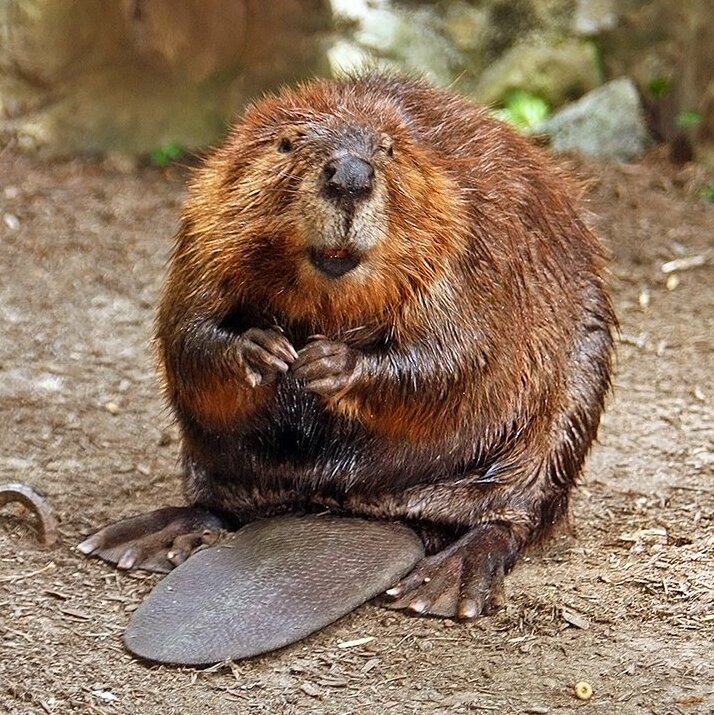
Canadian Beavers have thick brown fur that keeps them warm in water 🧥. They have webbed feet that help them swim fast! Their large front teeth are great for gnawing trees and branches—they can cut through wood like a saw! You're also likely to notice their broad, flat tails. These tails not only help with swimming but also act like a rudder when they dive underwater. A fun fact: they can hold their breath for up to 15 minutes when swimming! 🏊
Go deeper🐾 Reproduction And Life Cycle
Canadian Beavers have a fascinating life cycle! They typically mate in late winter, and after about 3 months, the female gives birth to 2-4 kits in the spring. 🐾The kits are born in their mother's lodge, and they stay there for a few months to learn how to swim and eat. Once they grow up, the young beavers are ready to leave the family and build their own lodges around 1-2 years old. Beavers can live up to 10-12 years in the wild, and sometimes even longer in zoos! 🎉
Go deeper🏠 Behavior And Social Structure
Canadian Beavers are social animals and often live in family groups called colonies. 🏠A typical colony may have 5-8 beavers, including parents and their kits (baby beavers). These families work together to build dams and lodges. Beavers communicate by using sounds like grunts, tail slaps, and even smells! 🦫When they slap their tails on the water, it warns others of danger. They’re very hard workers and can build a dam up to 1,000 feet (300 meters) long!
Go deeper