Americium Facts For Kids
Americium is a synthetic, radioactive element primarily used in smoke detectors and neutron gauges, notable for its long half-life and applications in nuclear science.
Select reading age
Americium Facts For Kids
Videos & Quizzesincluded
About this topic
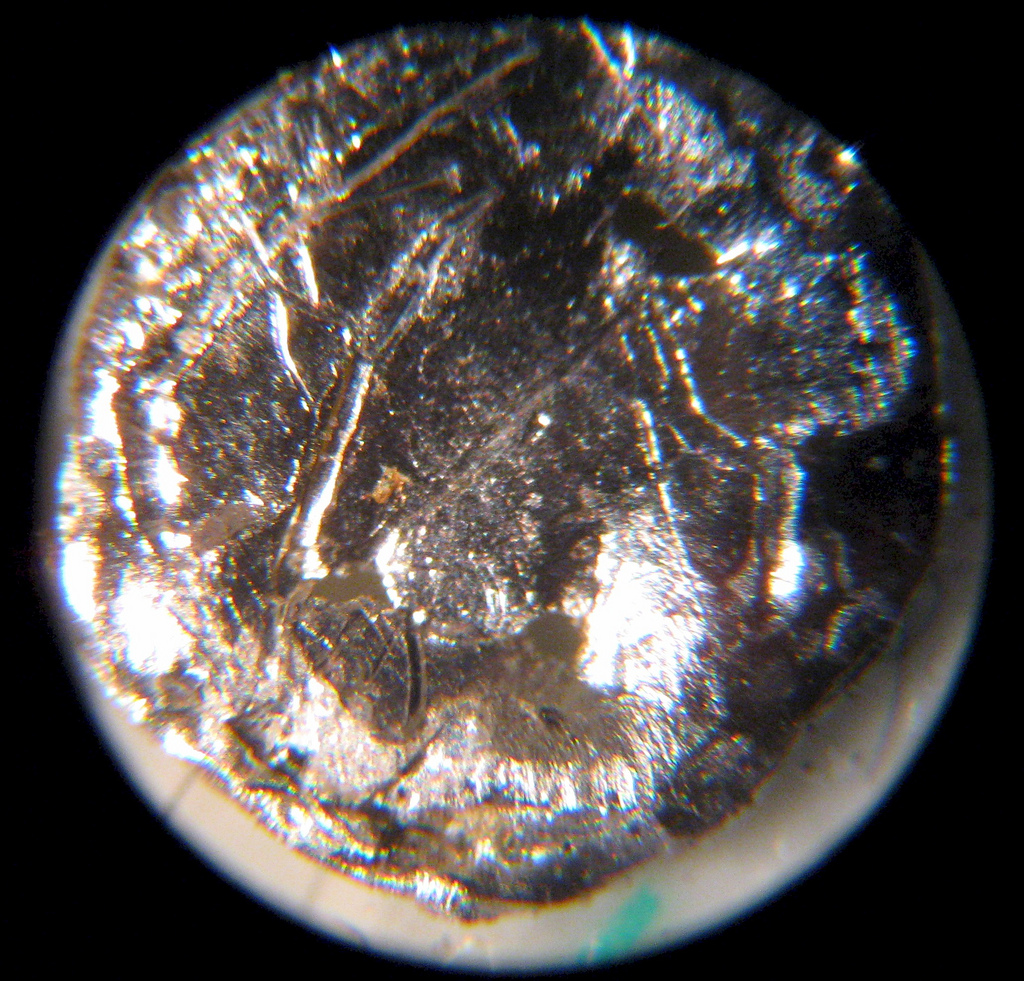
Americium is a shiny, silver-colored metal that is part of a group called actinides. It was discovered in 1944 by scientists Albert Ghiorso, Glenn T. Seaborg, and Emilio Segrè at the University of California, Berkeley. 🌟The name "americium" comes from the United States of America! 🇺🇸 This element has the symbol Am on the periodic table and its atomic number is 95. Americium is radioactive, meaning it gives off energy in the form of radiation. It is rare in nature but can be made in laboratories.
Explore with ChatDinoKey Points
Americium has many important uses, especially in technology!
Americium has some interesting chemical properties.
Americium is a solid at room temperature and is known for being radioactive.
The discovery of americium happened during World War II when scientists were investigating new elements for atomic energy.
Americium is mostly produced in nuclear reactors when uranium-238 absorbs neutrons.
Americium plays a crucial role in nuclear science and research.
Future research on americium aims to make it even more useful while keeping safety in mind.
While americium has useful applications, it can be dangerous if not handled properly.
Photos of Americium

Hexagonal crystal structure.

The 60-inch cyclotron at the Lawrence Radiation Laboratory, University of California, Berkeley, in August 1939

Americium was detected in the fallout from the Ivy Mike nuclear test.

Chromatographic elution curves revealing the similarity between the lanthanides Tb, Gd, and Eu and the corresponding actinides Bk, Cm, and Am

Double-hexagonal close packing with the layer sequence ABAC in the crystal structure of α-americium (A: green, B: blue, C: red)
![Predicted structure of amerocene [(η8-C8H8)2Am]](https://upload.wikimedia.org/wikipedia/commons/thumb/f/ff/Uranocene-3D-balls.png/960px-Uranocene-3D-balls.png)
Predicted structure of amerocene [(η8-C8H8)2Am]

Americium — photo 7

Inside an americium-based smoke detector
🚨 Uses Of Americium
Americium has many important uses, especially in technology! One of its most popular uses is in smoke detectors. 🚨These devices use a tiny amount of americium-241 to detect smoke. When smoke enters the detector, it stops the radiation from americium, sounding an alarm to alert people. Americium is also used in nuclear batteries that power spacecraft and medical equipment! 🚀Its unique properties help make these tools work reliably.
Go deeper🌬️ Chemical Properties
Americium has some interesting chemical properties. Its atomic number is 95, and it belongs to a group of elements called the actinides. This means it can easily combine with other elements like oxygen and chlorine! 🌬️ When it reacts with oxygen, americium forms americium oxide, which is a solid. Additionally, americium can form various compounds, including americium chloride. 🔬Scientists study these properties to understand how americium behaves and how it can be used safely.
Go deeper🔥 Physical Properties
Americium is a solid at room temperature and is known for being radioactive. It has a melting point of 1176 degrees Celsius (about 2169 degrees Fahrenheit)! 🔥Americium typically appears as a shiny, silver metal, often compared to silver or aluminum. It is dense, which means it feels heavy for its size. Interestingly, americium can glow in the dark because of its radioactivity! ✨This property helps scientists identify it in their laboratories.
Go deeper💡 History And Discovery
The discovery of americium happened during World War II when scientists were investigating new elements for atomic energy. 💡These scientists were part of the Manhattan Project, which led to the first atomic bombs. They made americium by bombarding plutonium with neutrons (tiny particles). This special way of making new elements is called nuclear chemistry! Since its discovery, americium has fascinated scientists and has been studied for many different uses, especially in nuclear science and technology.
Go deeper🏭 Isolation And Production
Americium is mostly produced in nuclear reactors when uranium-238 absorbs neutrons. 🏭The process of turning uranium into americium involves several steps and can take several months! The scientists separate americium from other materials using advanced techniques like ion exchange. This makes it possible to concentrate americium and study its properties. The production of americium is carefully regulated to ensure safety and minimize environmental impacts.
Go deeper🧪 Americium In Nuclear Science
Americium plays a crucial role in nuclear science and research. 🧪It is used to study nuclear reactions and helps scientists understand how elements work at the atomic level. Because americium can emit alpha particles, it is helpful in research about radiation and radioactive decay. Scientists also study americium isotopes to learn about their half-life, which is the time it takes for half of the material to decay. This research advances our knowledge about energy and safety in nuclear power!
Go deeper🔍 Future Research And Applications
Future research on americium aims to make it even more useful while keeping safety in mind. 🔍Scientists are looking into using americium-241 for new types of batteries or power sources for electronic devices. They are also studying how americium can aid in cancer treatment, helping doctors target diseased cells with precision! ⚕️ As technology advances, researchers continue to explore new applications that benefit society while ensuring americium is used responsibly.
Go deeper⚠️ Health And Environmental Effects
While americium has useful applications, it can be dangerous if not handled properly. ⚠️ Being radioactive, it can cause harm if ingested or inhaled. That's why scientists use special precautions when working with it! In the environment, americium can end up in soil and water from nuclear waste, but researchers monitor this to protect people and wildlife. Regular checks ensure americium doesn't negatively affect health or ecosystems. 🌍
Go deeper