Chore Charts for Kids – Free Chore Chart Templates and Generator
Create personalized chore charts for kids to build routines, responsibility, and reward systems.
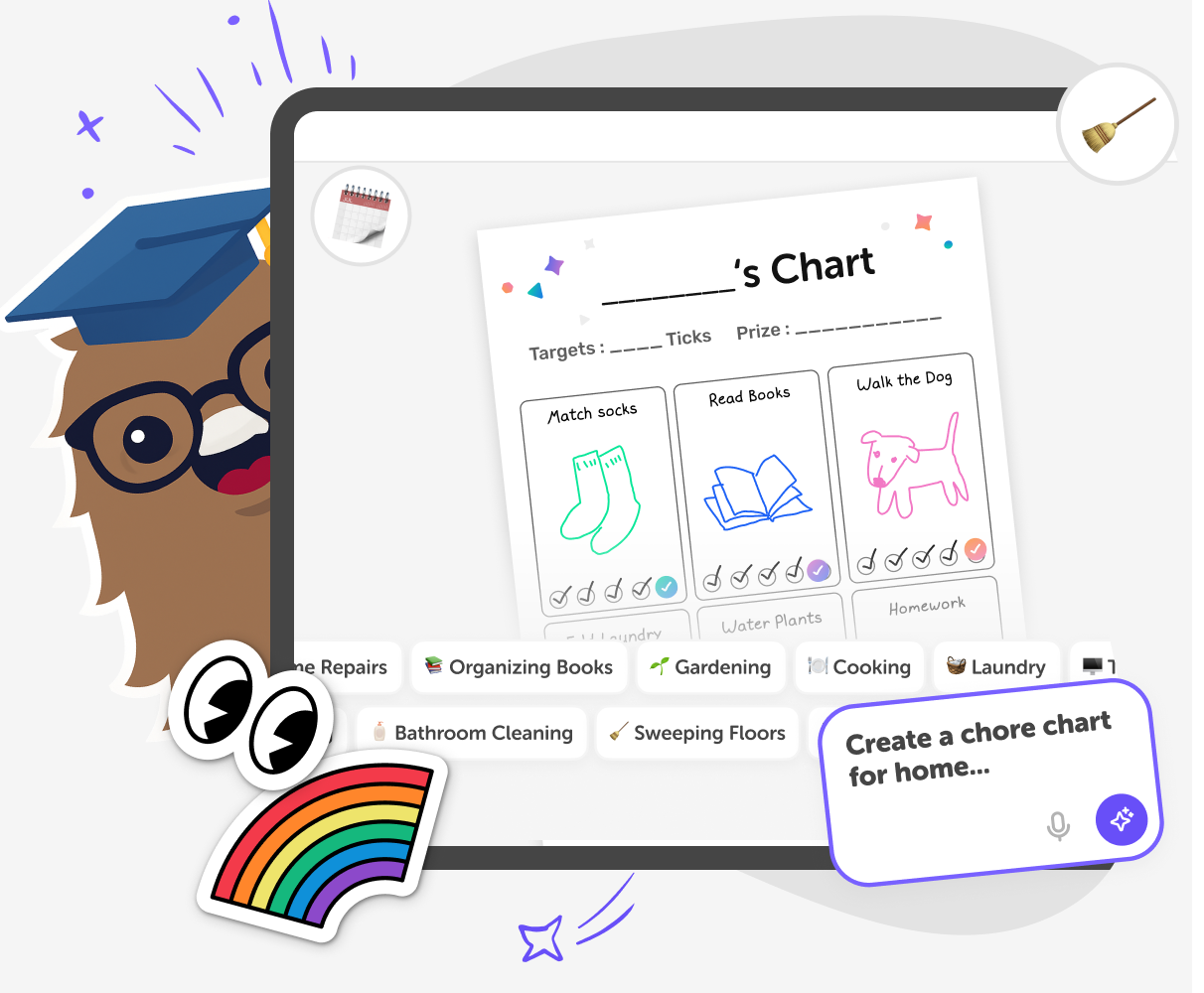
What are chore charts for kids?
Parents want to help kids learn responsibility, build routines, and contribute at home, but keeping track of chores can be challenging. Verbal reminders are easy to forget, and inconsistent expectations can lead to confusion or frustration for both kids and parents. A clear, visual system helps children understand what’s expected and feel proud when tasks are completed. Chore charts for kids are simple tools that show daily or weekly responsibilities in a clear, age-appropriate way. Using a chore chart makes it easier for kids to see their tasks, follow routines, and build healthy habits. Whether printed or digital, chore chart templates help turn everyday chores into manageable, achievable steps.
Built with families in mind, our chore charts focus on clarity, simplicity, and flexibility. Chore chart templates can be adapted for different ages, routines, and household needs. Parents can choose tasks, set schedules, and adjust responsibilities as kids grow, helping children develop independence and confidence in a supportive way. Chore charts for kids are designed to encourage responsibility without overwhelm. By keeping tasks visible and expectations clear, kids stay engaged and motivated instead of feeling pressured. Parents can feel confident knowing they’re using simple, effective chore chart templates that support routines, responsibility, and positive habits at home.
Are chore charts for kids a safe and effective way to build responsibility?
Yes. Chore charts for kids are a safe, positive way to help children learn responsibility and build healthy routines at home. They provide clear expectations in a visual, age-appropriate format that kids can understand without pressure or confusion. Instead of relying on constant reminders, a chore chart helps children see what needs to be done and feel proud when tasks are completed. Chore charts are designed to support, not replace, parental guidance. For parents, this means a calm, structured way to encourage responsibility, independence, and confidence while keeping expectations clear and consistent.
How do chore charts help kids learn responsibility and routines?
Chore charts help kids learn responsibility by breaking household tasks into clear, manageable steps. Instead of feeling overwhelmed, children can focus on one task at a time and see their progress throughout the day or week. This structure supports routine-building, time awareness, and follow-through. Chore charts encourage consistency, which helps children develop habits rather than relying on reminders. Over time, kids begin to understand accountability and take ownership of their tasks. This approach supports long-term skill building, making chores feel achievable while reinforcing independence and confidence at home.
What can kids use chore charts for beyond daily chores?
Beyond daily chores, kids can use chore charts to track routines, goals, and responsibilities in a wider sense. Chore charts can include morning routines, homework reminders, pet care, or optional extra tasks. They’re also helpful for teaching goal-setting, especially when a reward or family goal is included at the end of the chart. By visualising progress, kids learn planning, responsibility, and follow-through. Chore charts support life skills beyond cleaning tasks, helping children understand time, effort, and achievement in a positive and encouraging way.
Do parents need to download anything to create chore charts for kids?
No downloads are required to create chore charts for kids. Everything works directly in the browser on DIY.org, making it easy to get started instantly on supported devices. Parents can describe the type of chore chart they want in plain language and adjust it as routines change. This removes barriers like printing templates in advance, installing apps, or managing updates. Families can create, edit, and print chore charts easily, whether at home or on the go, keeping routines flexible, simple, and easy to manage.
How to use Chore Charts for Kids
Open the chore chart generator
Use the text field at the top of the page to describe your chore chart in plain language. You can include who the chart is for, the child’s age, the chores you want to include, and even what they enjoy.
Refine and adjust your chore list
As you write, the chore chart is generated and updated for you. You can tweak tasks, change wording, or adjust routines until everything feels right for your family.
Print or keep editing anytime
Print the finished chore chart to use at home, or keep editing it over time as routines change. You can always come back to update chores as kids grow.
Make the most of your chore chart
Add a goal at the end Set a clear goal, like a family activity or small reward. Having something to work toward helps kids stay engaged. Separate everyday and extra chores Keep daily home chores simple, and list optional extra chores separately. This gives kids choice and a sense of control. Negotiate the chart together Talk through chores with your child and agree on them together. When kids help decide, they’re more likely to follow through. Review and update regularly Revisit the chart as routines change or kids grow. Updating chores keeps the chart relevant and achievable.
Frequently asked questions
Are chore charts for kids free to use?
Yes. Chore charts for kids include free access on DIY.org. Parents can create, edit, and print chore charts without cost. Some advanced features may require a subscription, depending on your plan.
Do kids need an account to use chore charts?
No. Kids do not need an account to use chore charts. Parents can create and manage chore charts, while kids simply follow the chart at home.
Can parents customise chore charts for each child?
Yes. Parents can personalise chore charts by age, interests, routines, and household needs. This makes charts more effective and motivating for each child.
Are chore charts suitable for different ages?
Yes. Chore charts for kids can be adapted for toddlers, young children, and older kids. Tasks and routines can be adjusted as children grow.
Can parents change or update chore charts over time?
Yes. Chore charts can be edited anytime. Parents can add, remove, or change chores as routines, schedules, or responsibilities change.
Are chore charts a safe way to teach responsibility?
Yes. Chore charts provide clear, age-appropriate structure without pressure. They support responsibility, independence, and positive habits in a safe, supportive way.
Can chore charts be printed or used digitally?
Yes. Chore charts can be printed for use at home or viewed digitally, giving families flexibility in how they use them.
Do chore charts require downloads or installation?
No. Chore charts work entirely in the browser on DIY.org, with no apps or downloads required.
More tools
Build a Diamond Clicker Game
Build a diamond clicker game with a kid-friendly creative coding studio where kids can design a simple game, test how it feels, and improve it step by step. This page helps young makers understand the idea, practice game design, and build confidence while creating something fun and interactive.

Build a Diep IO Game
Build a diep io game by planning a tank battle idea, shaping the gameplay, and testing how it feels to play. This page helps kids understand the game style and start making their own interactive version with creative, guided coding support.
Build a Dinosaur Clicker Game
Build a dinosaur clicker game and explore how simple game ideas can turn into something fun to tap, test, and improve. Kids can create a playful dino game with guided support, then keep changing it as they learn what makes a game feel exciting and easy to play.
Build a Disney Princess Game
Build a Disney Princess Game is a creative kids activity where you imagine a princess-inspired game, shape the characters and challenges, and bring the idea to life with guided coding practice. It is a fun way to learn by making, testing, and improving an interactive project one step at a time.
Ready to start creating?
Join hundreds of thousands of kids already building cool stuff on DIY.ORG.
Your first game is on us.
Describe a game below - no sign-up needed to try.
Powered by AstroSafe
Make real games - not just chat