Build a Cow Clicker Game

Build a cow clicker game by turning a simple farm idea into a playful interactive project. Kids can make a game where every click adds cows, upgrades the herd, and changes what happens next while learning to test ideas, solve problems, and improve their own design.
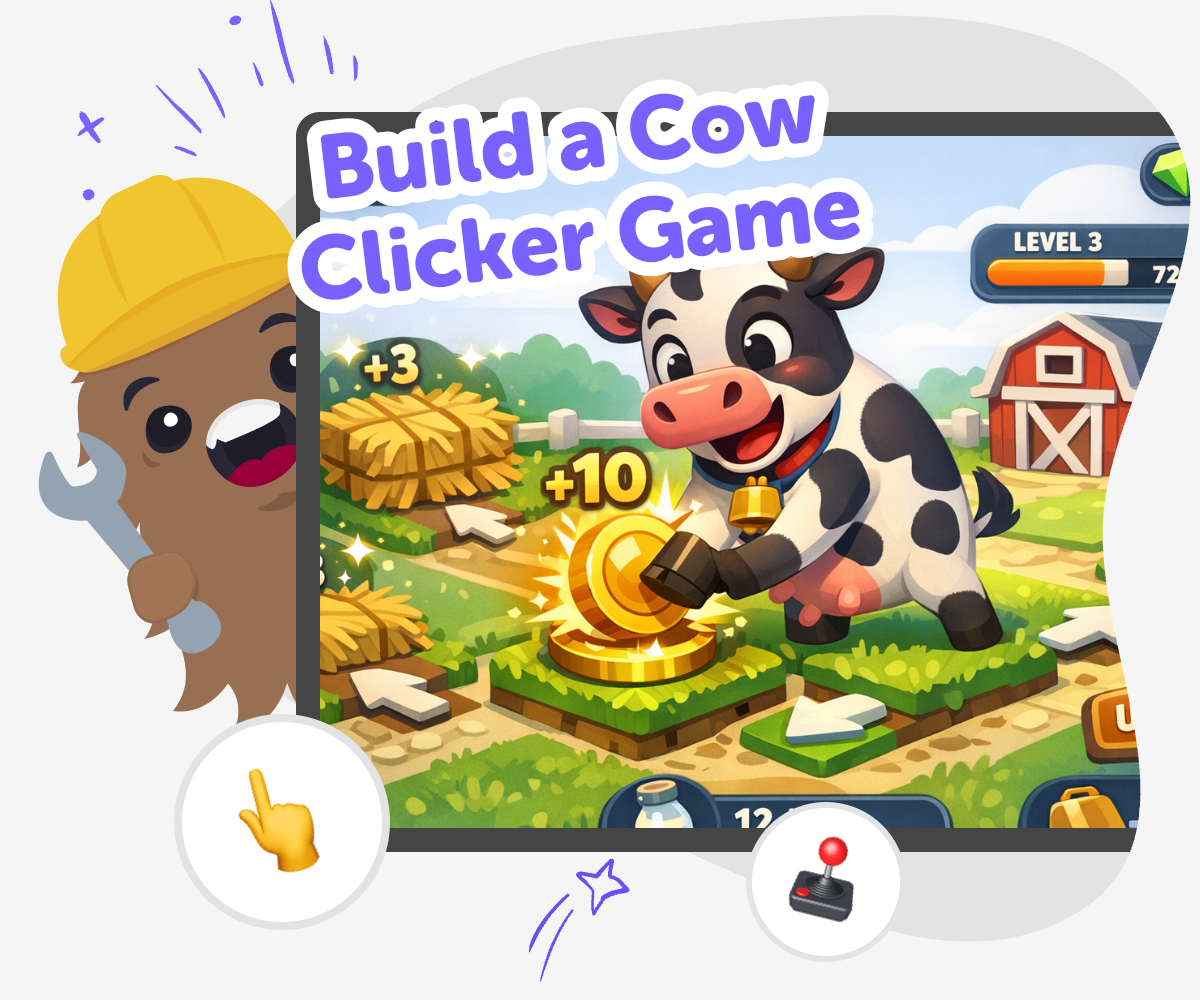
Build a Cow Clicker Game hero

Cow Clicker Game Ideas

A build a cow clicker game project helps kids turn a simple farm idea into an interactive game they can understand and improve. It can begin with one cow, one button, and one clear goal, then grow into a playful challenge where each click adds progress and each small change makes the game feel more alive. This kind of project matters because it shows kids that games are built step by step. It helps them practice planning, testing, and making creative choices while they learn how a simple idea can become something they can play and share.

Vibe Coding gives kids a guided place to explore the topic through hands-on making. They can describe the game they want, build a first version, test what happens, and improve it with support so the work stays active, creative, and easy to follow. The tool is there to help kids experiment safely and keep learning as they go. It supports clear thinking, small changes, and confident problem-solving without taking over the project or making the game feel finished before the child has built it.

How to build it

Step 1 - Start the farm idea

Choose the main joke or goal for the game, such as clicking to grow more cows or earn milk points. Keep the idea simple so the first version is easy to understand.

Step 2 - Add the click action

Make one button that the player taps to get a cow, a point, or another farm reward. Test it right away so you know the click is working before adding more pieces.

Step 3 - Create upgrades and goals

Add a way to make the game grow, such as faster clicks, new cow types, or small rewards for reaching a score. These changes help the game feel like it has progress.

Step 4 - Make the most of testing

Try a remix Change one part of the game, like the reward sound or the look of the cow, so you can see what makes the game more fun or easier to play. Check the flow Tap through the game from start to finish and look for anything confusing, slow, or hard to read. Fix the parts that do not help the player understand what to do next. Share kindly If you show your game to someone else, watch how they play before giving hints. Their choices can help you notice what needs a clearer button, bigger text, or a friendlier reward. Keep improving Save your favorite version, then try another round with a new rule or visual change. Small updates can make a simple cow clicker game feel more polished and more like your own.

What makes a cow clicker game fun?

A cow clicker game is fun because it uses a very simple action and turns it into a game with progress. One click can mean one cow, one point, or one new step on the farm. That makes the game easy for younger kids to understand and still interesting for older kids to improve. The fun comes from watching numbers change, seeing the herd grow, and deciding what should happen next. Kids also get to make choices about style, like whether the game feels silly, calm, speedy, or bright. When a game is small and clear, it is easier to test, fix, and remix. That is important because many good games are built from one strong idea that gets better through practice and play. A cow clicker game is a friendly way to learn that creative coding can start with something simple and still become something clever.

Why is making a simple game a good way to learn?

Making a simple game helps kids learn because it breaks a big idea into smaller parts they can understand. Instead of trying to build everything at once, they can focus on one button, one score, one cow, and one rule. That kind of step-by-step work builds coding confidence because each success is easy to notice. Kids also practice problem-solving when something does not work the first time. They can ask what needs to change, test a new idea, and see what happens. This is called iteration, and it is one of the most useful habits in creative technology. A cow clicker game is a good example because it gives quick feedback. If the cow appears, the score changes, or the upgrade works, kids can see the result right away. That makes learning feel active, not abstract, and it helps kids stay curious while they build.

How can kids make it creative and safe?

Kids can make a cow clicker game creative by choosing the look, the sounds, the names, and the little surprises that appear as the game grows. They might build a happy farm, a moon cow, a robot barn, or a funny milk counter. Creative choices help the game feel personal, and personal projects are easier to care about and improve. Safety matters too, especially for younger kids. A good game page should keep the design simple, avoid confusing screens, and stay age-appropriate in its jokes and images. It should also help kids build with guidance instead of rushing them past the thinking part. When kids use a guided studio like Vibe Coding, they can explore ideas, test them, and make changes with support. That way, the project stays playful while still teaching real making skills and good digital habits.

What can kids do after the first version works?

After the first version works, kids can begin to experiment. They can change the score goal, add a timer, make the cows look different, or create new rewards for reaching each level. They can also ask friends or family to try it and watch where they get stuck or excited. That kind of testing helps kids notice what a player sees, which is a big part of making games that feel smooth and fun. Another good next step is to save one version and then make a remix, so kids can compare ideas and learn which changes help the game most. This builds confidence because it shows that a project is never done in one try. With Vibe Coding, kids can keep building, checking, and improving in small steps, which turns a simple idea into a real creative project they understand and own.

Frequently Asked Questions

What is a cow clicker game?

Why do kids enjoy making clicker games?

How do you start a cow clicker game?

Can a cow clicker game be funny?

Is building a cow clicker game good for beginners?

How can kids make the game better after testing it?

Can kids make their own version with Vibe Coding?

What skills does this project help build?

Why 500,000 families trust DIY

User Avatar

Martin

Dad to 2 DIYers

My son loves DIY! He always finds fun projects to do, and we enjoy making things together. It’s a great way to learn, create, and have fun at the same time!

User Avatar

Pearl

DIYer from USA

DIY is such a great app with really sweet people and moderators who always make sure this app is super safe. You can learn to create things or learn drawing techniques - honestly there is so much to do.

User Avatar

Elaine W.

Middle school teacher

I love logging onto DIY every day - not just for projects but to also look at the comments my kids share about each other's work. It's a brilliant way to foster healthy support systems!

User Avatar

Jenn L.

Mom to 3 DIYers

We absolutely love the DIY platform and its endless river of creative adventures and projects! We always have the best time together participating, learning and creating!

Ready to create?

Drop Files here
Make

To create a safe space for kid creators worldwide!

Create

Vibe Coding

ChatDino

All Tools

Kibu

Resources

Worksheets

SafeTube

Blog

FAQ

Account

Pricing

Log-in

Sign-up

Data Deletion

Company

About

Community Guidelines

Privacy Policy

Terms of Service

2025, URSOR LIMITED. All rights reserved. DIY is in no way affiliated with Minecraft™, Mojang, Microsoft, Roblox™ or YouTube. LEGO® is a trademark of the LEGO® Group which does not sponsor, endorse or authorize this website or event. Made with love in San Francisco.