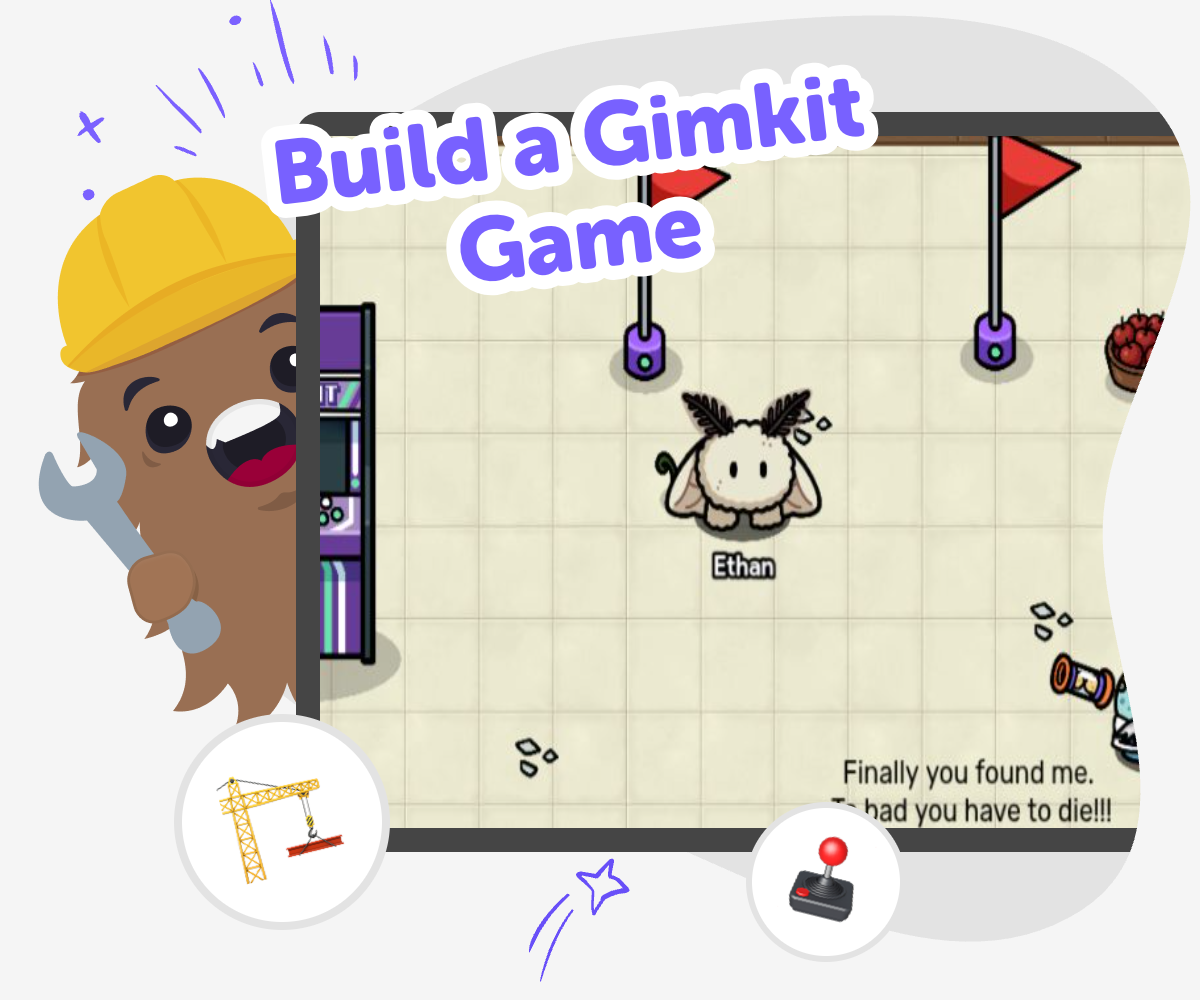
Build a Gimkit Game
Build a Gimkit Game is a creative project for kids who want to make a quiz-style game and learn how game ideas come to life. It helps young makers think about questions, rules, scoring, and player experience in a simple, hands-on way. With guided support from Vibe Coding, kids can explore the topic step by step, test what works, and improve their ideas as they go.
Make a Quiz Game
To build a gimkit game means making a quiz-style game where questions, answers, and points work together to create a fun challenge. Kids can learn how game design uses clear rules, quick choices, and playful rewards to keep players interested. It is a great way to practice creativity, logic, and confidence while turning an idea into something others can try. This kind of project matters because kids do not just play games they also learn how games are built. When they shape a game with their own questions and ideas, they practice planning, problem-solving, and testing small changes to see what feels best.
Vibe Coding gives kids a guided place to explore the idea of a quiz game without needing to know everything at once. Kids can describe the game they imagine, then build it step by step, test it, and change parts that do not feel right yet. That makes the process safe, creative, and encouraging. The tool supports the topic, but the real focus stays on the kid making choices, trying ideas, and learning through each version of the game.
How to Build It
Step 1 - Choose your game idea
Start with a simple quiz theme, such as animals, sports, books, or school subjects. Pick a topic you know well so it is easier to write questions that make sense.
Step 2 - Plan questions and answers
Write a few clear questions and decide which answer should be correct. Keep the wording short so players can read quickly and understand the challenge.
Step 3 - Build and test the game
Use guided coding help to put your quiz ideas into a playable version. Try it yourself, check if the questions are easy to follow, and fix anything confusing.
Step 4 - Make the most of testing
Try a remix Change one question, rule, or point value so you can see how a small edit changes the game. Testing one change at a time helps you notice what works best. Play with a friend Invite someone to try your game and watch where they pause, laugh, or get stuck. Their reactions can help you make the game clearer and more fun. Tidy the flow If a question feels too hard or a screen feels busy, simplify it. Small improvements can make the whole game smoother for younger players. Save your best version Keep the version you like most and remember what you learned from the others. That way, every test helps you build more confidence for the next project.
What makes a Gimkit-style game fun?
Why do kids learn from making quizzes?
How can kids keep a game safe and friendly?
What can kids do after the first version?
Frequently Asked Questions
Why 500,000 families trust DIY

Martin
Dad to 2 DIYers
My son loves DIY! He always finds fun projects to do, and we enjoy making things together. It’s a great way to learn, create, and have fun at the same time!

Pearl
DIYer from USA
DIY is such a great app with really sweet people and moderators who always make sure this app is super safe. You can learn to create things or learn drawing techniques - honestly there is so much to do.

Elaine W.
Middle school teacher
I love logging onto DIY every day - not just for projects but to also look at the comments my kids share about each other's work. It's a brilliant way to foster healthy support systems!

Jenn L.
Mom to 3 DIYers
We absolutely love the DIY platform and its endless river of creative adventures and projects! We always have the best time together participating, learning and creating!
