Your Punderful Challenge
Make a set of illustrated pun cards combining drawings and wordplay. Invent, write, and decorate at least ten punny cards to share.


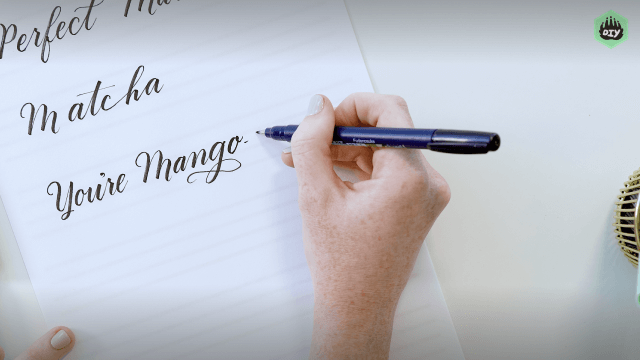

Step-by-step guide to make illustrated pun cards (Your Punderful Challenge)
Step 1
Gather all materials listed and put them on a clear workspace.
Step 2
Pick a theme for your pun cards or decide to mix lots of funny themes.
Step 3
Write down at least ten short pun ideas or wordplays on plain paper.
Step 4
Cut or set aside at least ten cards from your index cards or cardstock.
Step 5
On each card write one pun in large clear pencil letters.
Step 6
Trace over the pencil letters with the black marker to make the words bold.
Step 7
Sketch a simple illustration that matches each pun on its card using pencil.
Step 8
Ink the pencil sketches with the black marker to define the drawings.
Step 9
Colour each illustration and the letters using your colouring materials.
Step 10
Add small extra details like faces patterns or props to make each card sillier.
Step 11
Erase any stray pencil marks and tidy any smudges on every card.
Step 12
Write a short caption or a tiny explanation on the back of each card if you want.
Step 13
Arrange your completed set and take a clear photo or scan of them for sharing.
Step 14
Share your finished set of punny illustrated cards on DIY.org
Help!?
What can we use if we don't have index cards, cardstock, or a black marker?
If you don't have index cards or cardstock, cut and fold printer paper or cereal-box cardboard into card-sized pieces, and if you lack a black marker use a dark ballpoint pen or fine-tip permanent pen when you trace letters and ink sketches, while substituting crayons or coloured pencils for other colouring materials.
My letters or drawings keep smudging when I trace and colour — what should I do?
To avoid smudges when you trace over pencil letters with the black marker or ink sketches, work flat, let marker ink dry completely before colouring, place scrap paper under your hand, and erase stray pencil marks only after the ink is fully dry.
How can I adapt the activity for different age groups?
For younger kids make five simple pun cards and have an adult help with cutting and inking, for elementary kids keep the ten-card goal with easy sketches and crayons, and for older kids create 15–20 puns, add detailed captions on the back, and scan or photograph the set for sharing on DIY.org.
How can we extend or personalize our completed pun card set?
Personalize and enhance your finished set by laminating or covering cards with clear tape after colouring, binding them into a themed deck, adding tiny props or extra faces as suggested in the instructions, and taking a clear photo or scan for sharing on DIY.org.
Watch videos on how to make illustrated pun cards
The Best 100 Funny Puns for Kids | Make Your Friends Laugh
4 Videos

The Best 100 Funny Puns for Kids | Make Your Friends Laugh
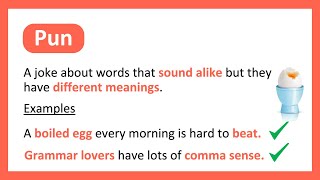
What is a PUN? | Learn with Examples

That's So Punny! | A Figurative Language Lesson about Puns
Understanding Puns And Satire | Educational Videos For Kids
Facts about wordplay and illustration for kids
😂 The oldest recorded joke is a Sumerian proverb from around 1900 BCE — people have enjoyed wordplay for thousands of years!
🧠 Making puns boosts creative thinking and vocabulary — it's a playful brain workout.
🎭 William Shakespeare loved puns and packed his plays with clever double meanings.
🖼️ Visual puns pair images with words to create surprising double meanings — they're common in cartoons and clever logos.
📅 June 1 is National Pun Day — a perfect excuse to make and swap your pun cards!
How do you make a set of illustrated pun cards?
What materials do I need for Your Punderful Challenge?
What ages is this activity suitable for?
What are the benefits of making pun cards?
