World Jazz Day - Create your own Jazz Scat
Learn basic scat singing by practicing rhythms, playful syllables, call-and-response exercises, and creating your own short improvised jazz phrases to perform.


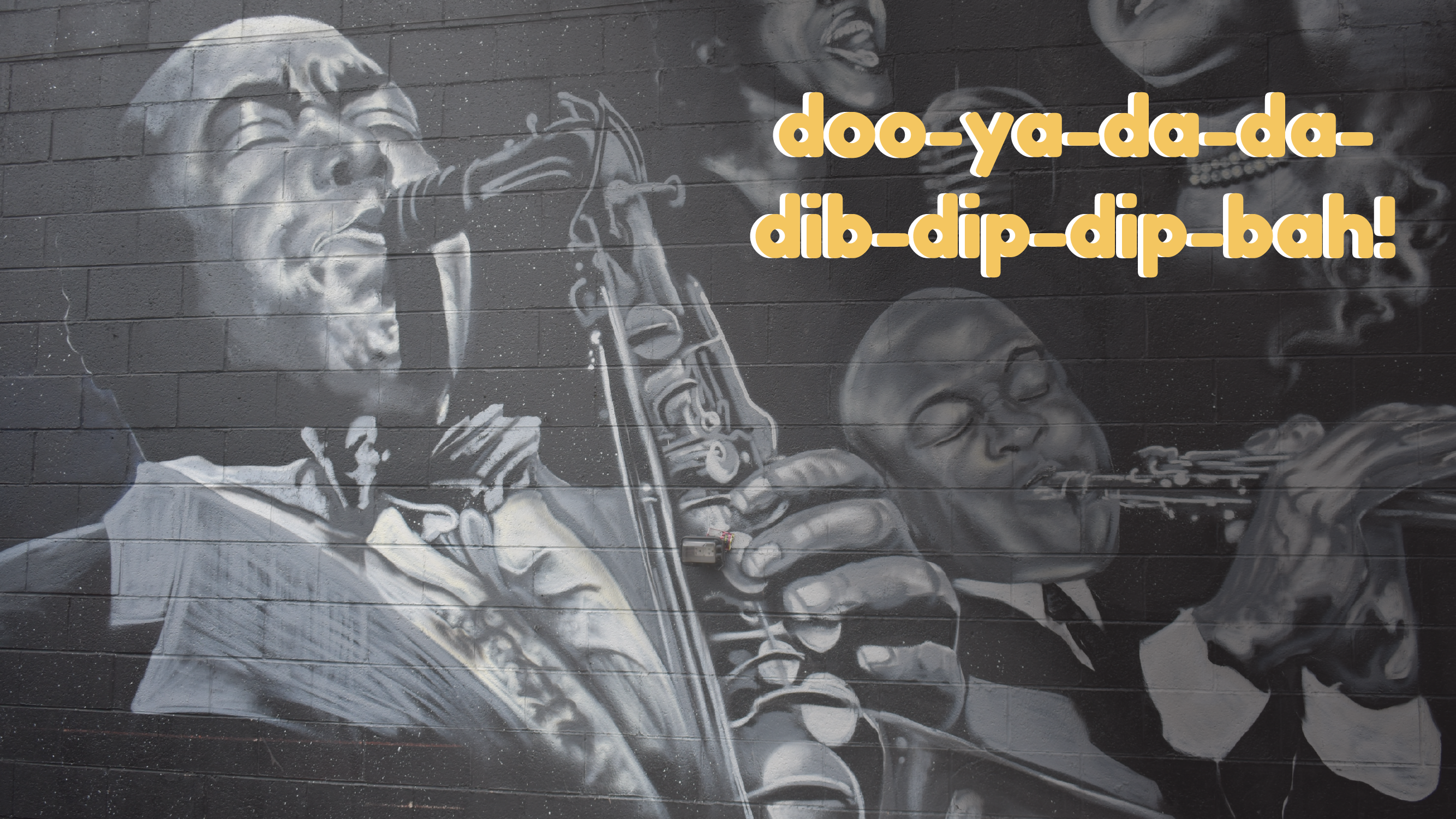

Step-by-step guide to create your own Jazz Scat for World Jazz Day
Step 1
Sit in your quiet space and sit up straight in your comfortable seat so you can breathe easily.
Step 2
Take five slow deep breaths in through your nose and out through your mouth to relax your body and voice.
Step 3
Hum gently for 20 seconds sliding up and down a small range to warm your vocal cords.
Step 4
Do lip trills or gentle sirens for 20 seconds to loosen your lips and breath support.
Step 5
Tap a steady beat on your knee or a table at a comfortable pace to create a steady tempo.
Step 6
Choose four playful syllables like do ba sha na and say each syllable aloud one time to memorize them.
Step 7
Sing your four syllables on each beat for eight beats to practice keeping the rhythm steady.
Step 8
Make up a short 4-beat scat phrase using your syllables and sing it clearly once.
Step 9
Echo that same 4-beat scat phrase back to yourself as a response and repeat the echo three more times.
Step 10
Improvise by changing one syllable at a time to make four new short variations of your phrase.
Step 11
Write your favorite final scat phrase in your notebook and decorate it with colours.
Step 12
Share your finished scat creation on DIY.org
Help!?
I don't have a notebook, table, or access to DIY.org — what can I use instead?
If you don't have a notebook, table, or DIY.org access, tap the beat on your knee or a hardcover book, write your final scat phrase on loose paper or a phone note, and share an audio or video with a parent or teacher instead of DIY.org.
I keep losing the beat or running out of breath when I sing the eight beats — how can I fix that?
If you lose the beat or run out of breath during the five deep breaths, 20-second hums, lip trills, or when singing your four syllables for eight beats, slow the tempo, count aloud while tapping, use a metronome or phone app, and repeat the warm-ups before trying the 4-beat phrase again.
How can I change the activity for younger kids or older kids?
For younger kids, shorten the warm-ups to 10 seconds, use two simple syllables and clap or tap a knee, while older kids can use more syllables, longer improvisations changing one syllable at a time, and add written notation in their notebook.
How can we make the scat more creative or share it in a cooler way?
To enhance the activity, add a simple percussion instrument or piano chords to accompany your 4-beat scat phrase, record a video of your decorated notebook page and performance, or invite a friend to echo and build call-and-response variations before posting to DIY.org.
Watch videos on how to create your own Jazz Scat for World Jazz Day
Scat Jazz: Jazz Singing Tutorial - How to Scat on a 12 bar Blues (improvised jazz singing!)
4 Videos
Scat Jazz: Jazz Singing Tutorial - How to Scat on a 12 bar Blues (improvised jazz singing!)
SCAT JAZZ: How to Scat Sing #2: Scat Syllables and Swing!
SCAT JAZZ: Introduction to How to Scat Sing (scat singing tutorial!)
SCAT JAZZ: How to Scat Sing #4: Jazz vocal licks and how to use them!
Facts about jazz singing for kids
🎤 Scat singing uses made-up syllables (like "sho-be-do" or "ba-da") so your voice can act like an instrument — no words required!
🎷 Legend says Louis Armstrong's 1926 recording of "Heebie Jeebies" helped popularize scat when he reportedly improvised the lyrics on the spot.
🗓️ World Jazz Day (also called International Jazz Day) is celebrated every April 30 to bring people together through jazz around the world.
🧩 Call-and-response is a musical conversation — one singer sings a phrase and another answers — perfect for practicing scat with a friend.
🎶 Jazz improvisation is making up melodies in the moment; start with short 4-bar phrases and playful rhythms to build your own scat lines.
How do I teach my child to create a jazz scat for World Jazz Day?
What materials do I need to create a jazz scat with my child?
What ages is jazz scat suitable for children?
What are the benefits of learning scat singing for kids on World Jazz Day?
