What's your favorite animation principle?
Make a small flipbook showing squash and stretch motion using paper, pencil, and stapler; draw sequential frames to learn how shape changes convey movement.


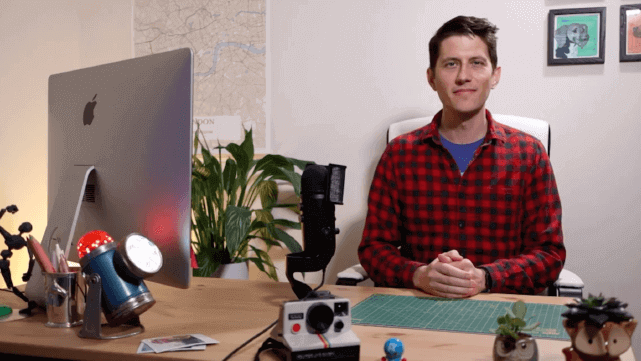

Step-by-step guide to make a squash-and-stretch flipbook
Step 1
Gather all your materials and put them where you can reach them.
Step 2
Pick a simple object to animate like a round bouncing ball.
Step 3
Choose one or two colours for your ball.
Step 4
Cut about 20 small rectangles from your paper all the same size using scissors.
Step 5
Stack the rectangles neatly and align their edges into a small pile.
Step 6
With adult help staple the stack along one short edge to make a flipbook spine.
Step 7
On the top page draw a round ball high on the page to be your first frame.
Step 8
On the next page draw the ball a little lower and slightly stretched tall to show motion.
Step 9
On the next page draw the ball even lower and more stretched to show speed.
Step 10
On the next page draw the ball touching the ground and squashed wide to show impact.
Step 11
On the next page draw the ball rebounding and stretched again as it leaves the ground.
Step 12
On the following three pages draw the ball gradually returning to a round shape and rising back to the starting height.
Step 13
Flip the pages quickly with your thumb to watch the squash and stretch animation.
Step 14
Colour the ball and the ground on pages you like using your colouring materials.
Step 15
Share your finished flipbook showing squash and stretch on DIY.org
Help!?
What can we use if we don't have a stapler or safety scissors for making the flipbook spine and cutting the rectangles?
If you don't have a stapler, make the spine by lining up the stacked rectangles from step 5 and clamping them with a strong binder clip or punching two holes along the short edge and tying with string, and if you lack scissors use pre-cut index cards or tear straight strips from printer paper to get about 20 rectangles.
My flipbook looks jumpy and the ball doesn't squash and stretch smoothly — what should I check or fix?
Make sure the rectangles are neatly aligned as in step 5, draw each ball's position with small consistent changes (for example follow the 'a little lower and slightly stretched' progression in steps 7–11), and flip the pages quickly with your thumb as instructed to see smooth motion.
How can I adapt this activity for a 4‑year‑old and for a 12‑year‑old?
For a 4-year-old, have an adult pre-cut and staple the roughly 10–12 larger rectangles and let them draw big simple circles and colour one or two frames, while for a 12-year-old increase to 30+ thinner frames, add subtle in-between shapes for smoother squash and stretch, and experiment with two colours or background details from the colouring materials.
How can we extend or personalize the flipbook after finishing the basic squash and stretch animation?
After colouring the ball and ground as in the instructions, personalize by adding a face or pattern to the ball, drawing a background sequence across pages for depth, combining two objects to interact, or photographing each page to make a longer digital animation to share on DIY.org.
Watch videos on how to make a squash-and-stretch flipbook
The 12 Principles of Animation Explained — The Most Important Rules for Animating
4 Videos
The 12 Principles of Animation Explained — The Most Important Rules for Animating
Animation for Beginners - Part 2: 12 Animation Principles you NEED to know
12 Principles of animation, Stopmotion Basics #3
12 Principles of Animation Complete Guide with Practical Examples
Facts about hand-drawn animation principles
📖 Flip books (also called kineographs) were patented in 1868 by John Barnes Linnett — one of the earliest forms of animation.
🧸 Squash and stretch is a core animation principle that exaggerates shape changes while preserving an object's volume to make motion feel alive.
⏱️ Animators often work in 12 or 24 frames per second; a 24-frame flipbook flipped at 24 fps shows about one second of motion.
✏️ Animators usually draw keyframes first (the big poses) and then create the in-between frames to smooth the action.
📚 The "Twelve basic principles of animation" were codified by Disney animators Frank Thomas and Ollie Johnston to teach lifelike movement.
How do you make a flipbook that shows squash and stretch motion?
What materials do I need for a squash-and-stretch flipbook?
What ages is this flipbook activity suitable for?
What are the benefits of making a squash-and-stretch flipbook?
