Up Your Room Decor: Crystal Making
Grow colorful alum or salt crystals using safe household materials, decorate strings or jars with them, and learn about crystal formation through observation.
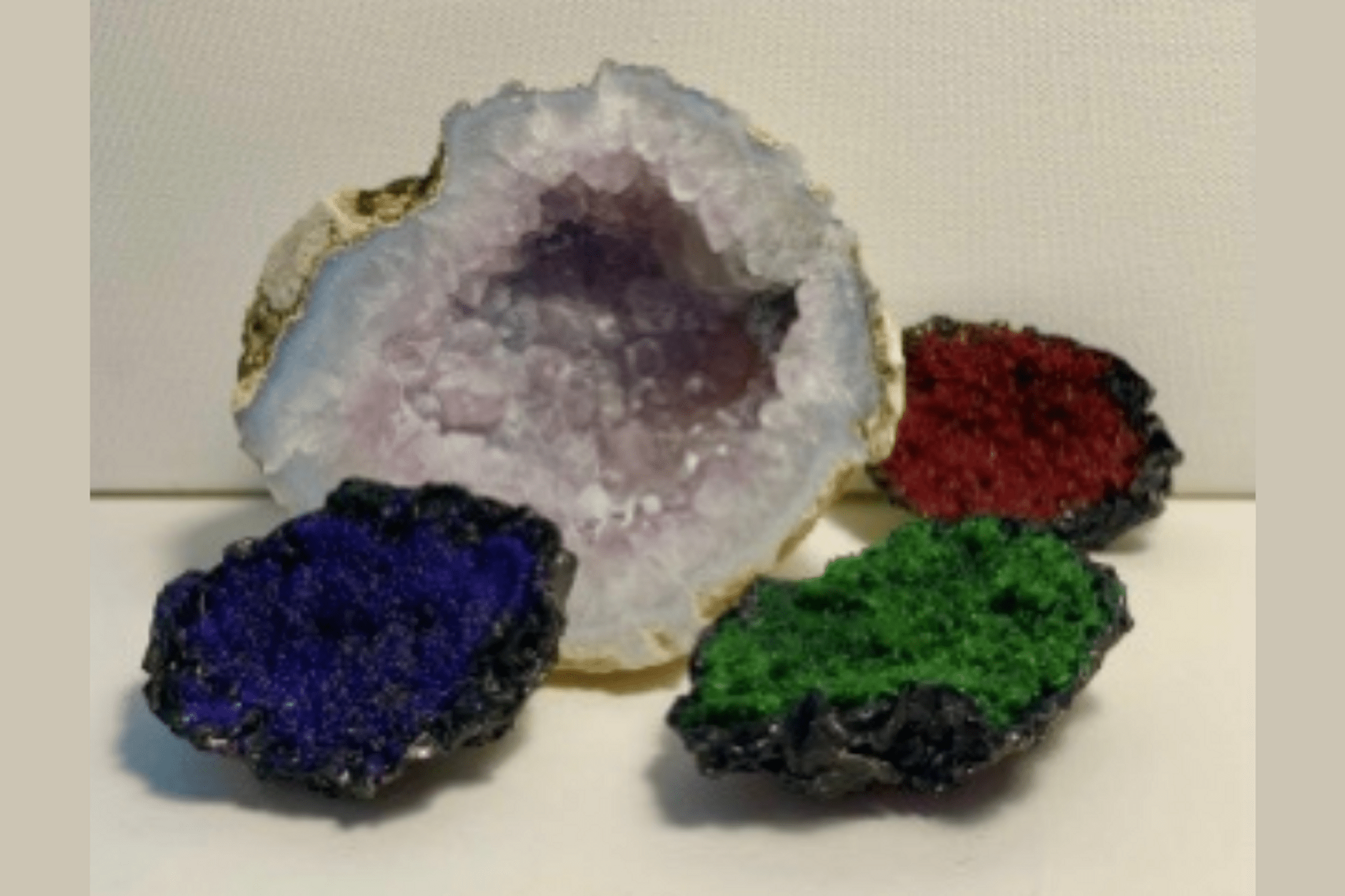
About this activity
Grow colorful alum or salt crystals using safe household materials, decorate strings or jars with them, and learn about crystal formation through observation.
What you need
Step by step
- 1
Step 1
Gather all the Materials Needed and set them on a clean table so everything is ready.
- 2
Step 2
Wash and dry the clear glass jar and the spoon to make sure they are clean before you start.
- 3
Step 3
Decide whether you will grow alum crystals or table salt crystals so you know which powder to use.
- 4
Step 4
With adult help heat 1 cup of water in the saucepan until it is very hot and steaming but not boiling.
- 5
Step 5
Add 3 tablespoons of alum or 5 tablespoons of table salt to the hot water.
- 6
Step 6
Stir the hot water with the spoon until the powder fully dissolves and the liquid looks clear.
- 7
Step 7
Add 2–4 drops of food coloring to the solution and gently stir to mix the color if you want colorful crystals.
- 8
Step 8
Place a paper towel or coffee filter over the jar and carefully pour the hot colored solution through it into the jar to remove any bits.
- 9
Step 9
Tie one end of the string to the pencil or popsicle stick and make sure the other end hangs down so it will sit in the center of the jar without touching the sides.
- 10
Step 10
Lower the string into the jar so it hangs in the solution and rest the pencil across the top of the jar to hold the string in place.
- 11
Step 11
Cover the jar with a paper towel and put it somewhere undisturbed at room temperature for several days while you wait for crystals to grow.
- 12
Step 12
Check after a few days and when crystals have formed well on the string remove the string from the jar with adult help.
- 13
Step 13
Let the crystal-covered string dry on a paper towel and then glue crystals onto the jar or use the string to make decorations.
- 14
Step 14
Share your finished crystal creation on DIY.org.
Fun facts
How do I grow colorful alum or salt crystals to decorate jars and strings?
Make a saturated solution by dissolving alum powder or table salt in very hot water, stirring until no more will dissolve. Add a few drops of food coloring. Shape pipe cleaners or tie string around a pencil and suspend it in a clear jar so it doesn’t touch the sides. Pour the cooled solution into the jar, cover, and leave undisturbed for several days to a week. When crystals form, remove and let them dry before decorating jars or stringing them into garlands.
What materials do I need to grow and decorate with alum or salt crystals?
You’ll need alum (available as potash alum) or table salt, water, a heat source and saucepan to dissolve the crystals, clear jars, measuring spoons/cups, food coloring, pipe cleaners or string, a pencil or stick to suspend the crystal starter, clothespins, and paper towels. Optional items: gloves, a thermometer, glue for mounting finished crystals, and craft supplies for decorating jars. Always include adult supervision for heating and handling solutions.
What ages is crystal making suitable for?
Crystal growing is great for kids roughly 6 and up with an adult doing the hot-water steps. Children ages 8–12 can help more independently with measuring, coloring, and checking growth, still under supervision. Younger children (3–5) can join by helping shape pipe cleaners or decorating finished crystals, but keep them away from hot liquids and concentrated solutions. Adjust tasks to each child’s fine motor skills and attention span.
Is crystal making safe for kids? What safety precautions should I take?
Crystal making can be safe with precautions: always have an adult handle boiling water and dissolving steps, keep concentrated solutions away from mouths and eyes, and avoid ingestion of alum (not food). Use gloves and eye protection if desired, label jars, and let solutions cool before children handle them. Work on a protected surface, wash hands after handling crystals, and store or dispose of leftover solution safely out of reach of children and pets.
Watch & Learn
Need help?
What can I use if I can't find alum for the crystals?
If alum is unavailable, use table salt with the 5-tablespoon measurement from the instructions or try Epsom salt from a pharmacy knowing it will make different-shaped crystals and may need concentration tweaks.
My mixture stayed cloudy or no crystals are growing — what should I check?
Confirm you heated 1 cup of water until very hot, fully dissolved the 3 tablespoons alum or 5 tablespoons salt while stirring, poured the solution through the paper towel into the jar to remove bits, and left the jar undisturbed at room temperature to let crystals form.
How can I adapt this activity for younger kids or older kids?
Have an adult handle the hot-water and pouring steps for younger kids while they measure, add food coloring, and watch growth, and let older kids experiment with different concentrations, multiple jars, or shaped strings like pipe-cleaners.
How can we make the finished crystal project more decorative or long-lasting?
After drying the crystal-covered string as instructed, glue crystals onto the jar or grow separate colored crystals using 2–4 drops of different food coloring in multiple jars and assemble them into ornaments or a glued mosaic.