Try the Cross Hatching Technique
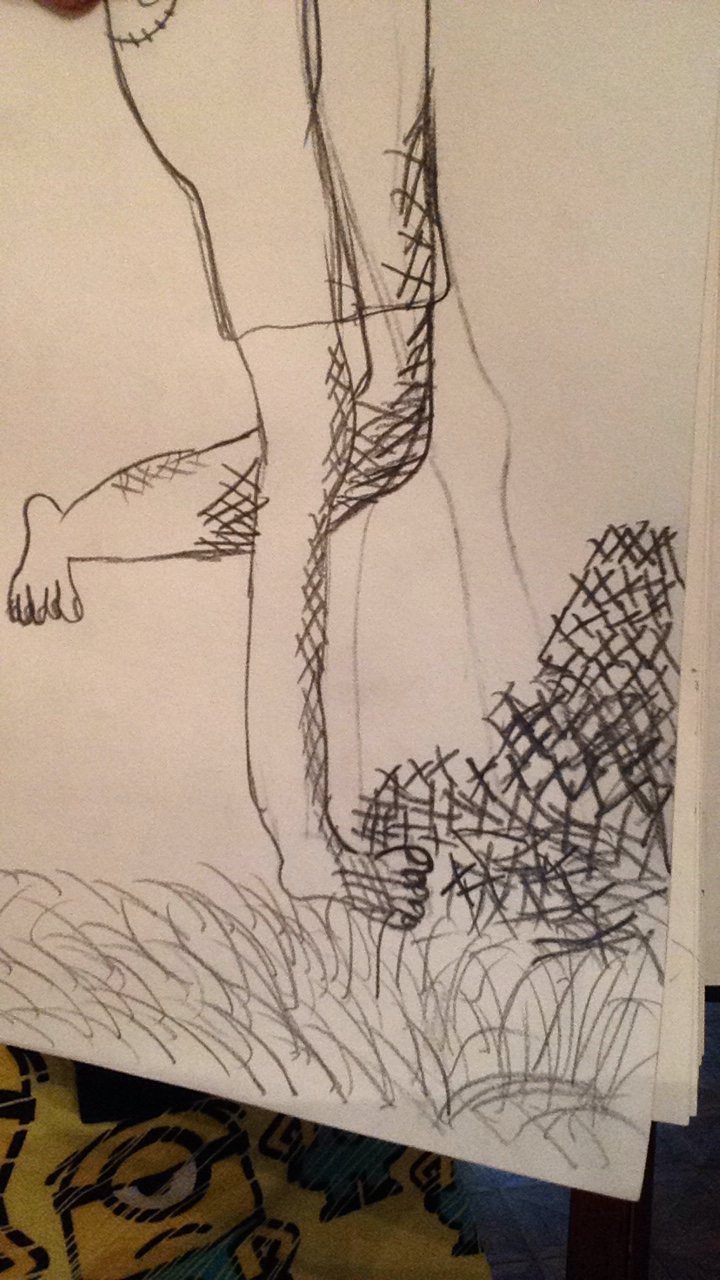
Practice the cross hatching drawing technique using pencil and paper to create shading, texture, and depth while experimenting with different line directions and pressures.
About this tutorial
Practice the cross hatching drawing technique using pencil and paper to create shading, texture, and depth while experimenting with different line directions and pressures.
What you need
Instructions
- 1
Step 1
Gather all materials and put them on a flat table or desk.
- 2
Step 2
Sharpen your pencil until it has a nice point.
- 3
Step 3
Place a scrap paper and draw five light straight parallel lines about one centimeter apart to warm up.
- 4
Step 4
Draw five light curved parallel lines on the scrap paper to practice curved hatching.
- 5
Step 5
On the scrap paper, draw a second set of lines crossing the first set at a different angle to make cross-hatching.
- 6
Step 6
Make a small value scale of five boxes and fill each box with cross-hatching using progressively harder pencil pressure to make darker values.
- 7
Step 7
Lightly sketch a simple shape on your main paper like a circle or a box to be shaded.
- 8
Step 8
Shade your sketched shape using cross-hatching and change the line directions and pencil pressure to show light and shadow.
- 9
Step 9
Use the eraser to lift tiny areas for highlights and clean up any stray marks around your drawing.
- 10
Step 10
Take a photo or upload your finished cross-hatching drawing and share it on DIY.org.
Fun facts
How do I practice the cross-hatching drawing technique with kids?
Start by showing kids how to draw even, parallel lines. Have them shade simple shapes (circles, cubes) with one set of parallel lines, then add a second set at an angle to create darker values. Encourage varying line direction to follow the form, and pressing lightly or harder to change tone. Practice small studies, celebrate messy attempts, and gradually increase complexity by adding more layers of lines for depth and texture.
What materials do I need for a child to try cross-hatching?
Basic supplies include pencil(s) such as an HB and a softer 2B or 4B, a sketchbook or drawing paper, a sharpener, and a kneaded eraser. Optional helpful items are a ruler for straight guidelines and thicker pencils or colored pencils for younger children. Keep materials non-toxic and age-appropriate; crayons or markers can be used for an easier introduction to the idea of layering lines.
What ages are suitable for learning cross-hatching?
Cross-hatching can be introduced to children as young as 5–6 with simple, guided exercises focusing on straight lines and patterns. Most kids develop stronger control by ages 7–12 and can handle shading studies and form. Teens and adults can use advanced variations. Adjust difficulty: use thicker pencils or markers for younger children and increase detail and tonal range for older kids.
What are the benefits of practicing cross-hatching and fun variations to try?
Cross-hatching builds fine motor skills, observation, patience, and an understanding of light and form. It teaches kids how line direction affects texture and depth. For variety, try contour hatching that follows object shapes, stippling (dots) for texture, colored pencil hatching, or combining hatching with light washing of watercolor. These variations keep practice engaging and help develop artistic confidence.
Watch & Learn
Need help?
What can we use if we don't have a wooden pencil or sharpener?
Use a mechanical pencil with a fine lead or carefully sharpen a pencil with a knife, and substitute scrap paper with printer paper or a cereal-box cardboard for the warm-up lines.
My cross-hatching looks smudged or uneven—what should I do?
Practice the five light parallel and curved lines on the scrap paper, fill the five-box value scale to control pressure, hold the pencil farther back for lighter lines, and place a clean scrap paper under your hand to avoid smudging.
How can I make this activity easier for a preschooler or more challenging for a teen?
For younger children use larger simple shapes, wider spaced hatching, and thicker crayons or markers on the scrap paper, while teens can use multiple pencil grades (HB–6B), tighter cross-hatching, subtler values on the five-box scale, and more complex shapes to shade on the main paper.
How can we extend or personalize the finished cross-hatching drawing?
Combine pencil cross-hatching with ink or colored pencils for texture, expand the five-box value scale into a larger chart, add personal details to the sketched shape, then photograph and upload the finished drawing to DIY.org.