Toss dough
Learn to toss and stretch pizza dough safely to shape a small pizza, discovering dough elasticity, hand-eye coordination, and simple kitchen hygiene.




Step-by-step guide to toss and stretch pizza dough
Learn To Toss Pizza Dough in 3 minutes
Step 1
Wash your hands with soap and water for 20 seconds before starting.
Step 2
Tie back long hair and remove rings or bracelets to keep the dough clean.
Step 3
Sprinkle a handful of flour on the clean countertop to stop sticking.
Step 4
Place the dough ball on the floured area and press the center gently with your fingertips to make a small flat disc.
Step 5
Use the heel of one hand to press from the center outward in a circular motion to widen the disc and leave a thicker edge for the crust.
Step 6
Lift the disc and drape it over your knuckles then slowly rotate it to stretch the edges evenly.
Step 7
Give the dough a gentle toss a few inches straight up and catch it on your knuckles to stretch it more while keeping it supported.
Step 8
If a thin spot or hole appears pinch the dough together and press gently to seal it.
Step 9
Sprinkle more flour on the surface of the dough if it starts to stick while you continue rotating and tossing.
Step 10
Stop when the dough is the size you want for a small pizza and place it on a lightly oiled baking sheet.
Step 11
Share a photo of your finished stretched pizza dough and tell how you did it on DIY.org.
Help!?
What can I use instead of all-purpose flour or a baking sheet if I don't have them?
If you don't have all-purpose flour to sprinkle in step 3, use fine cornmeal or semolina to stop sticking, and if you lack a lightly oiled baking sheet for step 11, use a lightly oiled pizza stone, an inverted rimless baking tray, or a piece of parchment on a cutting board.
My dough keeps tearing or getting holes when I toss it—what should I do?
When thin spots or holes appear during the toss (step 9), pinch and press the dough together to seal them, let the dough rest for 5–10 minutes if it's too elastic, and sprinkle more flour on the surface and your knuckles (step 10) to prevent sticking while you continue rotating and tossing.
How can I adapt this activity for younger or older kids?
For younger children, skip the high toss and let them press the center and use the heel-of-hand outward motion to widen the disc (steps 4–6) with close supervision, while older kids can practice the gentle toss and knuckle-draping technique (steps 7–8) and try larger stretches.
How can we extend or personalize the activity after the dough is stretched?
After placing the stretched dough on the lightly oiled baking sheet (step 11), personalize the activity by adding favorite toppings, shaping the crust with fun patterns, brushing the edge with olive oil and herbs, and sharing the finished photo and a brief how-to on DIY.org (step 12).
Watch videos on how to toss and stretch pizza dough
How to Toss Pizza Dough Tutorial
3 Videos
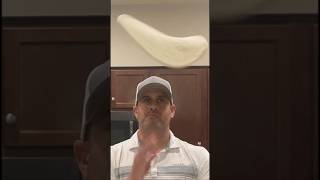
How to Toss Pizza Dough Tutorial

Tossing pizza dough - instructions by Tony Gemignani

How to Stretch and Toss Pizza Dough | Making Pizza at Home
Facts about baking and dough handling for kids
🍕 Pizza started in Naples, Italy — early street pizzas were sold there in the 18th century.
💪 Gluten, a protein network in wheat, gives dough its stretchy elasticity so it can be tossed and stretched without tearing.
🎯 Practicing dough tosses and stretches helps build hand-eye coordination and fine motor skills through fun, repeated movement.
🧼 Washing hands for at least 20 seconds before handling dough removes many germs and makes pizza-making much safer.
🌡️ Warm water speeds up yeast activity — pizza dough proofs faster around 25–30°C (77–86°F).
How do I teach my child to toss and stretch pizza dough safely to make a small pizza?
What materials and ingredients do I need to practice tossing pizza dough with a child?
What ages are suitable for tossing and stretching pizza dough, and how much supervision is needed?
What are the benefits and safety tips for a child learning to toss pizza dough, and are there variations?
