The Pick one, Eliminate Two Trick
Perform the Pick-One, Eliminate-Two probability trick using three cups and a hidden token to test whether switching increases your chance of winning.


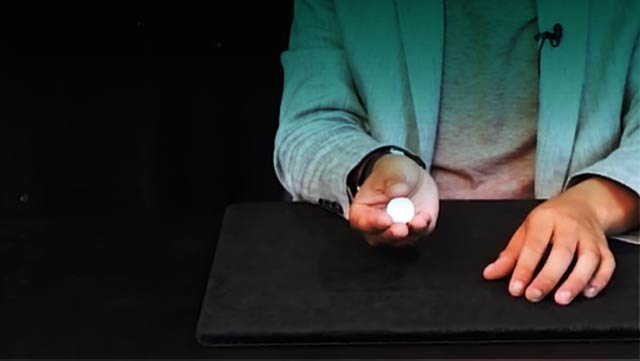

Step-by-step guide to the Pick One, Eliminate Two Trick
Step 1
Place the 3 cups upside down in a row on a flat table.
Step 2
On your paper draw two columns and label the left column Stay and the right column Switch.
Step 3
Ask a friend or adult to be the hider for all the rounds.
Step 4
Close your eyes so you cannot see where the token will go.
Step 5
Tell your hider to secretly hide the token under one of the cups while your eyes are closed.
Step 6
Open your eyes after the hider finishes hiding the token.
Step 7
Point to the cup you choose first as your initial guess.
Step 8
Ask the hider to lift one of the other two cups that does not have the token to show it is empty.
Step 9
Decide whether you will stay with your first choice or switch to the other covered cup and say your choice out loud.
Step 10
Point to the cup you will open now (either your original cup or the other covered cup).
Step 11
Lift that chosen cup to see if the token is under it.
Step 12
Write Win or Lose under the Stay or Switch column depending on your choice and the result.
Step 13
Repeat Steps 4 through 12 until you have completed 30 total trials to collect lots of results.
Step 14
Count and compare how many wins are in the Stay column and how many wins are in the Switch column.
Step 15
Share your finished creation and the results of your experiment on DIY.org.
Help!?
What can we use if we don't have three identical cups or a small token?
Use any three similar-sized containers like mugs, bowls, or paper cups and a coin, button, or folded paper as the token so you can still hide it under a cup (Steps 1 and 5) and follow the rest of the activity.
What should I do if the hider accidentally lifts the wrong cup or reveals the token during a round?
If the hider accidentally lifts the wrong cup or reveals the token during Step 8, stop and redo that trial (do not record it on your Stay/Switch sheet) and remind the hider to check under the cup before lifting so you can get 30 valid trials.
How can I adapt this activity for younger or older kids?
For younger kids, use big colorful cups and a large toy for the token and do fewer trials (like 10) to keep it simple, while older kids can run the full 30 trials, record results from Steps 9–12 carefully, and calculate percentages from Step 14 to analyze Stay versus Switch.
How can we make the experiment more fun or learn more from the results?
Decorate the cups and token, try increasing to more than three cups for a tougher challenge, record each round on video to review choices, and use the counted wins from Step 14 to compare Stay vs Switch before sharing your experiment on DIY.org.
Watch videos on how to perform the Pick One, Eliminate Two Trick
7 Easy Magic Tricks That Anyone Can Do at Home - Learn These Tricks for Beginners
4 Videos

7 Easy Magic Tricks That Anyone Can Do at Home - Learn These Tricks for Beginners

TWO SUPER EASY MAGIC TRICKS (Learn the Secrets! Jay Sankey Magic Trick Tutorial)

Learn Five Easy Magic Tricks for Kids - Vanish, Money, Levitation and More #easymagictricksforkids
Five Easy Magic Tricks You Can Do - Tricks You Can Do At Home #easymagictricks #magictricktutorial
Facts about probability experiments for kids
🐐 Switching in the classic three-cup (Monty Hall) problem wins 2 out of 3 times (about 66.7%).
🎯 If you stick with your first choice the chance to win is only 1 out of 3 (about 33.3%).
🧠 Marilyn vos Savant's 1990 Parade column explaining the puzzle provoked thousands of letters from readers who disagreed.
📺 The puzzle is named after Monty Hall, host of the TV show 'Let's Make a Deal' where the scenario became famous.
📊 Bayes' theorem and conditional probability are the math tools that explain why switching increases the odds.
How to perform the Pick One, Eliminate Two trick
Materials needed for the Pick One, Eliminate Two cup trick
Suitable ages for the Pick One, Eliminate Two activity
Benefits and safe variations of the Pick One, Eliminate Two trick
