The Paper Airplane Challenge!
Fold and test several paper airplane designs, measure flight distance and flight time, modify folds to improve performance through simple experiments.


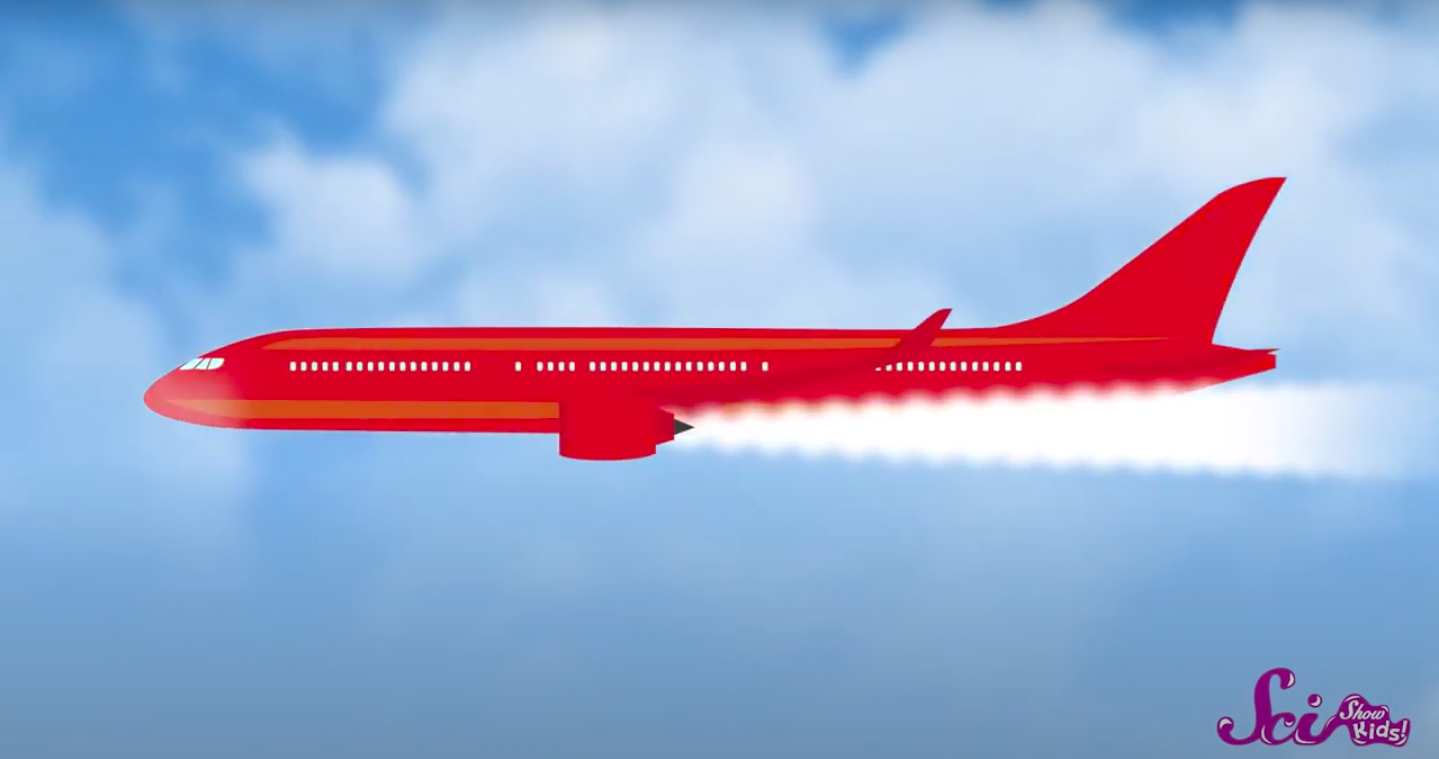

Step-by-step guide to the Paper Airplane Challenge
Step 1
Lay out your paper pencil notebook ruler and tape on a flat table so everything is ready to use.
Step 2
Pick three different paper airplane designs you want to test.
Step 3
Fold the first airplane design carefully using one sheet of paper.
Step 4
Write the number 1 on the airplane with your pencil so you remember which one it is.
Step 5
Find a clear hallway or open space and mark a starting line on the floor with a piece of tape.
Step 6
Ask a helper to use the stopwatch to start timing when you release the plane and stop when it lands.
Step 7
From the starting line throw airplane 1 three times the same way and record each flight distance and time in your notebook.
Step 8
Fold the second airplane design using a fresh sheet of paper.
Step 9
Write the number 2 on the second airplane with your pencil.
Step 10
Throw airplane 2 three times from the starting line and record each flight distance and time in your notebook.
Step 11
Fold the third airplane design using a fresh sheet of paper.
Step 12
Throw airplane 3 three times from the starting line and record each flight distance and time in your notebook.
Step 13
Calculate the average distance and average time for each design and write which design flew farthest and which stayed in the air longest.
Step 14
Try changing one fold or adding a paperclip to the best design test it two more times record the results and then share your finished creation and findings on DIY.org.
Help!?
What can I use if I don't have a stopwatch, ruler, or tape from the materials list?
Use a smartphone timer as the stopwatch, a book edge or floor tiles instead of a ruler to estimate distance, and a piece of masking tape or a shoe to mark the starting line while recording results in any scrap paper instead of the notebook.
My plane keeps nosediving or spinning during the three throws—what should I check in the folding and throwing steps?
Check that the wings are folded symmetrically and the nose isn't bent or too heavy, practice releasing the plane the same way each time from the taped starting line, and try slightly bending the tail or adding a small paperclip to the nose as the instructions later suggest to correct flight behavior.
How can I adapt the Paper Airplane Challenge for different ages using the provided steps and materials?
For younger children, an adult can pre-fold one plane and measure distance in big steps while timing with a phone, and for older kids use the ruler and protractor for precise folds, test more designs, and calculate averages and comparisons exactly as the instructions require.
What are simple ways to extend or personalize the experiment after calculating averages and before sharing on DIY.org?
Decorate each numbered airplane with markers, try the suggested change of adding a paperclip in different places, run a classroom tournament comparing average distances and times, or record slow-motion video of flights to analyze why the best design won before posting your findings.
Watch videos on how to fold and test paper airplanes
Epic Paper Airplane Challenge! 🏆 Paper Plane Making
4 Videos
Epic Paper Airplane Challenge! 🏆 Paper Plane Making
How To Make A Paper Airplane | Creativity Tips | Crayola Learning
How to Make the BEST PAPER AIRPLANE | Triangle Plane that Flies Over 500 Feet!
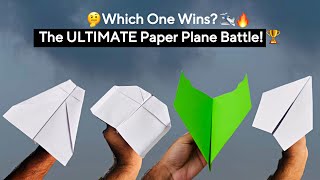
I Made 4 Super Cool Paper Airplanes! 🚀🔥 (Easy & Fast Flying) 4 Designs, 1 Winner - Watch Them Fly!
Facts about aerodynamics and flight for kids
✈️ The farthest paper airplane flight ever recorded is 69.14 m (226 ft 10 in), thrown by Joe Ayoob using a design by John Collins.
📏 Small tweaks — like folding a sharper nose or adding tiny winglets — can change distance and stability a lot.
🕑 Planes with wider wings and gentle throws usually stay aloft longer, even if they travel slower.
🧾 Origami folding ideas are used in real engineering — NASA applies origami principles to fold solar panels and satellites.
🔬 Building and testing paper airplanes is a hands-on way to explore lift, drag, weight, and center of gravity.
How do you do the Paper Airplane Challenge?
What materials do I need for the Paper Airplane Challenge?
What ages is the Paper Airplane Challenge suitable for?
What are the benefits of doing the Paper Airplane Challenge?
