Tell Us About Your Family!
Create a simple family tree and interview relatives to collect photos, names, and fun facts. Share your family story with others.



Step-by-step guide to Tell Us About Your Family
Step 1
Collect all Materials and put them on your table.
Step 2
Make a list of family members you want to include on your tree.
Step 3
Write five simple interview questions on sticky notes or index cards.
Step 4
Ask an adult to help you contact one family member from your list.
Step 5
Ask that family member to bring or send a photo for your family tree.
Step 6
Interview the family member using your questions and listen carefully.
Step 7
Write the family member’s name and one fun fact on a separate index card.
Step 8
Repeat Steps 4 to 7 until you have photos and cards for everyone on your list.
Step 9
Draw the outline of your family tree on the paper with you at the bottom and branches above for parents and grandparents.
Step 10
Cut out the photos neatly so they fit on your tree.
Step 11
Glue or tape each photo into the correct spot on the tree.
Step 12
Attach the name card and fun fact next to each photo on the tree.
Step 13
Decorate your tree with colors symbols or small drawings that show something special about each person.
Step 14
Share your finished family tree and story on DIY.org.
Help!?
What can we use if we don't have sticky notes, index cards, or a printer for photos?
Cut scrap paper, cereal-box cardboard, or the back of old greeting cards into small cards for the name/fun-fact cards (step 9), and if you can't print photos ask family to send phone photos you can glue/tape as-is or draw portraits to use in step 11.
What should we do if a family member won't answer or we get no photo when following steps 4–7?
Ask your adult helper to contact another person from your list or use a home photo, a screenshot from a video call, or a drawn picture and note that on the index card so you can continue through steps 8–11.
How can we change the activity for different ages while doing the tree (steps 2–13)?
For younger kids, have an adult pre-cut photos and ask one simple question while the child glues and decorates (steps 4–13), and for older kids, write more detailed interview questions, add dates or short stories to each card, and create a digital version to share (steps 3, 6, 9, 14).
How can we make the finished family tree more special or extend the project before sharing on DIY.org?
Add personalized symbols or small drawings that show hobbies for each person (step 13), attach a QR code or brief audio clip of the interview next to their photo, and draw a family timeline on the page margin before posting (steps 12–14).
Watch videos on how to Tell Us About Your Family
My family Tree And Games For Kids | 4K
4 Videos
My family Tree And Games For Kids | 4K
Learning Family Members for Kids | Fun & Easy Educational Video
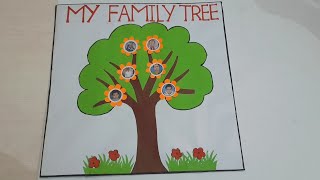
Family tree for kids project/How to make your own simple family tree/How to draw family tree/DIY Fam
Learn Family Members With Names | Fun & Animated Introduction to Family Tree for Kids
Facts about family history and genealogy for kids
🧬 You inherit about 50% of your DNA from each parent and roughly 25% from each grandparent — DNA helps explain family similarities!
🌳 Family trees grow fast: 10 generations back could include up to 1,024 ancestors if none of them overlap.
🗣️ Before written records, families preserved history by storytelling and interviews—just like this activity!
📸 The oldest surviving photograph was made in 1826 by Nicéphore Niépce, and photos have helped families remember faces for nearly 200 years.
🧭 Genealogy is a popular hobby—millions of people use archives and family interviews to discover surprising relatives and stories.
How do you create a simple family tree and interview relatives for the 'Tell Us About Your Family!' activity?
What materials do I need for the family tree and interview activity?
What ages is the 'Tell Us About Your Family!' activity suitable for?
What are the benefits of making a family tree and interviewing relatives?
