Skate a park
Learn basic skateboard skills and safety, practice balance, stops, and turns at a park using protective gear and adult supervision.


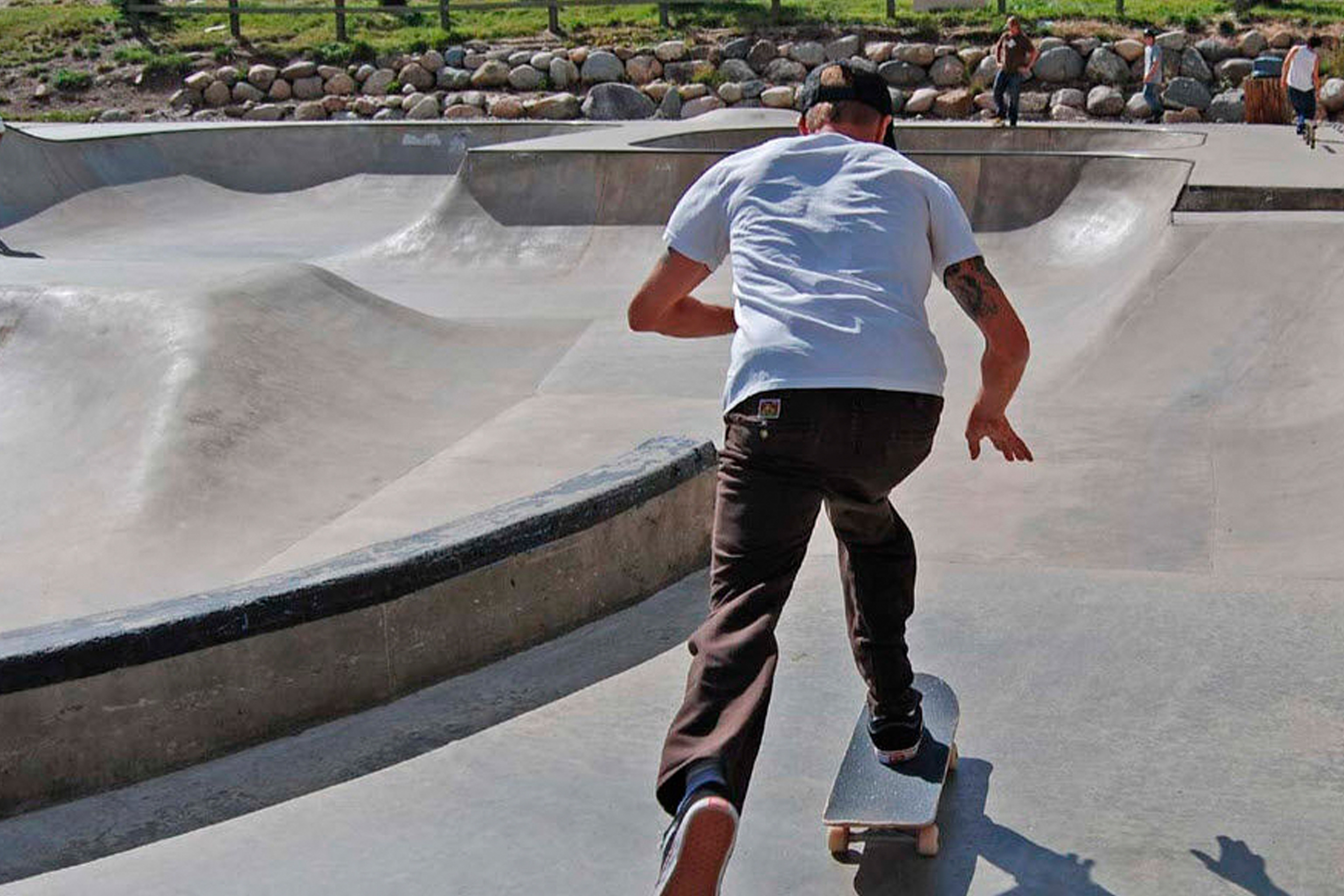
Step-by-step guide to skating at a park
Learn How to Skateboard for Kids
Step 1
Put on all your protective gear and make sure each strap is snug.
Step 2
Inspect your skateboard for cracks loose bolts or wobbly wheels before you ride.
Step 3
Place your skateboard on a flat smooth patch of pavement in the park with your adult helper nearby.
Step 4
Put your front foot on the board over the front bolts while keeping your back foot on the ground.
Step 5
Give one gentle push with your back foot to start rolling slowly.
Step 6
Place your back foot on the board over the back bolts once the board is moving.
Step 7
Bend your knees slightly to lower your center of gravity for better balance.
Step 8
Look forward while you roll to help keep your balance steady.
Step 9
Drag your back foot lightly on the ground to slow down and stop safely.
Step 10
Practice turning by leaning your shoulders and shifting your weight to your toes or heels.
Step 11
Do short slow runs to practice turning left and then right with control.
Step 12
Take a five-minute break to rest and sip water before trying again.
Step 13
Try the same pushes turns and stops at a slightly faster comfortable speed when you feel ready.
Step 14
Share your finished creation and what you learned on DIY.org.
Help!?
What can we use if we don't have all the protective gear or a skateboard?
If you don't have a skateboard or full skate pads, practice the balance and push steps on a sturdy scooter or low wooden balance board on a flat, smooth patch of pavement while wearing a bike helmet and thick gloves and keeping your adult helper nearby.
My board wobbles or I keep falling when I try to put my back foot on—what should we do?
If your skateboard has wobbly wheels or loose bolts, stop and tighten the bolts with a skate tool or wrench and, to work on the step 'Place your back foot on the board over the back bolts', have your adult helper hold your shoulder while you bend your knees and slowly transfer weight.
How can we adapt the activity for younger or older children?
For younger children, start by practicing 'Put your front foot on the board' and 'Give one gentle push' while holding an adult's hand and doing very short slow runs, and for older kids, progress to controlled faster pushes and longer runs practicing turning by 'leaning your shoulders and shifting your weight.'
How can we extend or personalize our skate session after the basic steps?
To extend the activity, set up a small cone course on the flat pavement to practice turning left and right, time short slow runs to track improvement, decorate the skateboard, and then share your finished creation and what you learned on DIY.org.
Watch videos on how to skate at a park
10 EASIEST SKATEPARK TRICKS FOR BEGINNERS!
4 Videos
10 EASIEST SKATEPARK TRICKS FOR BEGINNERS!
How to SKATEBOARD in 3 EASY STEPS!! (Kid-friendly Guide for Young Beginners Learning to Ride)
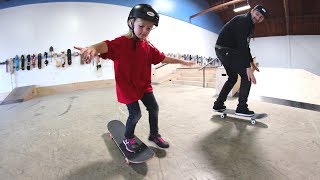
HOW TO TEACH A KID TO SKATEBOARD!
Learn to skate in 10 FUN steps - KIDS Inline skating
Facts about skateboarding for kids
🛹 Skateboarding started in 1950s California when surfers glued wheels to boards to 'surf' the streets.
🏟️ Many modern skateparks evolved from skaters riding empty backyard swimming pools and adapting their shapes into bowls.
⛑️ Wearing a helmet and pads is one of the easiest and most effective ways to reduce the risk of serious injuries while learning.
🚦 Learning to stop (like foot-braking or heel-side slides) is one of the first skills instructors teach for safety at parks.
🧑🏫 Adult supervision plus checking park rules (some parks require helmets for kids) helps keep beginner skaters safer and more confident.
How do I teach my child to skate at a park and practice basic skateboard skills?
What materials and protective gear do I need for my child to skate at a park?
What ages are suitable for learning to skateboard at a park?
What are the safety tips and benefits of practicing skateboarding at a park?
