Show off something you're good at
Plan, practice, and present a short performance or demonstration of a skill (magic trick, dance, drawing, science demo) to friends or family.



Step-by-step guide to show off something you're good at
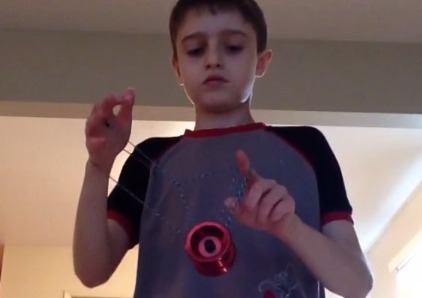
10 Playful Fine Motor Ideas for Kids | 10 Fun Activities for Fine Motor Skills Development
Step 1
Pick one skill you are excited to show such as a magic trick a dance a drawing or a short science demo.
Step 2
Write on your paper what you want the audience to feel or learn and how long your performance will be.
Step 3
List the beginning middle and end of your performance on your paper with one sentence for each part.
Step 4
Gather the props and materials you need and put them in one spot.
Step 5
Practice your whole performance once while timing it with a timer or clock.
Step 6
Show your timed practice to one family member and ask them for one suggestion.
Step 7
Choose one suggestion from the feedback and change your performance accordingly.
Step 8
Practice the changed part three times in a row.
Step 9
Clear and arrange your performance area so your audience can see everything.
Step 10
Do a quick one minute warm up like stretching your hands or taking deep breaths.
Step 11
Perform your short show for your family or friends from start to finish.
Step 12
Ask your audience to tell you two things they liked and one idea to try next time.
Step 13
Share your finished creation on DIY.org
Help!?
What can I use if I don't have a timer or special props listed in the instructions?
Use a smartphone's clock or kitchen timer for the timed practice and substitute household items for props (for example, a scarf for a magic trick or markers and scrap paper for a drawing) and keep them gathered in one spot before practicing.
My performance keeps running too long or I forget parts during the timed practice—how do I fix that?
Shorten the sentences you wrote for the beginning, middle, and end, re-time just the changed part, and practice that changed part three times in a row so your whole timed practice fits your target length.
How should I change the steps for younger children or older kids?
For younger children, have an adult help write the 'what you want the audience to feel or learn' and limit the show to 30–60 seconds with the parent gathering props and timing, while older kids can write a longer goal, do full timed run-throughs, and ask the family member for one specific suggestion to refine.
How can we extend or personalize the show after following all the steps?
Record your timed practice or final performance on a phone to review and refine the changed part during the three practice repetitions, add simple costumes or handmade props in the cleared performance area, then edit and share the polished video on DIY.org.
Watch videos on how to show off something you're good at
LEARN 45 AWESOME SKILLS | 1 hour of tutorials
4 Videos

LEARN 45 AWESOME SKILLS | 1 hour of tutorials
SIMPLE DIY GAMES YOU CAN MAKE FOR FUN 🤩
LEARN 45 effective MATCH SKILLS in 45 minutes
1 HOUR of tutorials | Learn 35 football skills
Facts about performance and presentation skills for kids
🎤 Around 75% of people report some fear of public speaking—glossophobia is one of the most common social fears.
🪄 Magicians rely on misdirection and sleight of hand; a single well-timed gesture can redirect attention in less than a second.
💃 Dance is one of humanity's oldest art forms and has been used for storytelling and celebration for thousands of years.
✍️ Doodling while listening can actually help memory—one study found it improved recall by about 29%.
🧪 Public science demonstrations became popular in the 18th and 19th centuries as a fun way to teach new discoveries to crowds.
How do I help my child plan, practice, and present a short performance?
What materials do we need to prepare a short performance or demo at home?
What ages is this activity suitable for?
What are the benefits of having my child plan, practice, and present a short performance?
