Share a Non-verbal Gesture
Design and practice a friendly non-verbal gesture (wave, bow, thumbs-up), teach it to a friend or family member, and observe how communication changes.


Step-by-step guide to share a non-verbal gesture
Step 1
Sit quietly and think of three friendly non-verbal gestures you like.
Step 2
Pick the one gesture you want to design and practice.
Step 3
Decide which body parts your gesture will use like hands face or shoulders.
Step 4
Give your gesture a short fun name that explains its meaning.
Step 5
Draw your gesture on paper showing the position and movement.
Step 6
Stand in front of a mirror or in open space and practice the gesture five times slowly.
Step 7
Try the gesture at two different speeds to see how it feels.
Step 8
Show your friend or family member the gesture clearly one time.
Step 9
Ask your friend or family member to copy the gesture one time.
Step 10
Role-play a short greeting using the gesture with your friend.
Step 11
Watch and notice your friend’s facial expression and body language when you use the gesture.
Step 12
Ask your friend to tell you how the gesture made them feel.
Step 13
Make one small change to your gesture based on the feedback and practice it twice.
Step 14
Share your finished gesture and what you learned on DIY.org.
Help!?
I don't have a mirror or drawing paper—what can I use instead?
Use a smartphone or tablet selfie camera as a mirror and draw your gesture on a napkin, index card, or in a notes app to complete the 'draw your gesture on paper' step.
My friend couldn't copy my gesture—how can I make it clearer?
Show the gesture slowly and in parts (hands, face, shoulders), name each movement while demonstrating the 'show your friend the gesture clearly one time,' and have them try each part before putting it together.
How do I change the activity for younger or older kids?
For younger kids, limit it to one simple gesture with picture labels when you 'draw your gesture' and practice once or twice, while older kids can design multi-part gestures, try the two speeds, and post the finished gesture on DIY.org.
How can we make the gesture activity more fun or personal?
Create a colorful gesture card with your drawing and fun name, video your five slow practices and the role-play, then upload the finished gesture and what you learned to DIY.org to share and get feedback.
Watch videos on how to share a non-verbal gesture
How to Teach Nonverbal Communication Skills
4 Videos
How to Teach Nonverbal Communication Skills
Effective Nonverbal Communication in the Classroom: Examples And Strategies
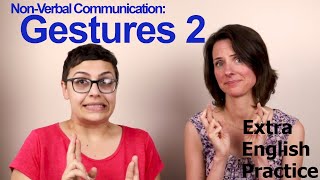
Gestures 2 - Common non-verbal communication actions in English - Actions you do with your hands
How To Use Non-Verbal Communication With Children? - Second Chance Journey
Facts about non-verbal communication for kids
👍 A thumbs-up means "good job" in many places, but the same gesture can be rude in other countries—gestures travel differently than words!
👶 Babies start using gestures like pointing and waving around 9–12 months old, so non-verbal chatting begins very early.
🧠 Acting out a movement or gesture helps your brain remember it better—doing is a super memory trick!
🤟 Sign languages such as ASL are full languages with their own grammar and vocabulary, not just finger pictures.
😮 Researchers found some facial expressions (happy, sad, angry, fear, surprise, disgust) are recognized across many cultures.
How do I run the 'Share a Non-verbal Gesture' activity with my child?
What materials do I need for the 'Share a Non-verbal Gesture' activity?
What ages is the 'Share a Non-verbal Gesture' activity suitable for?
What are the benefits, safety tips, and variations for the 'Share a Non-verbal Gesture' activity?
