Say “Thank You” in a New Language
Learn to say "Thank you" in five different languages, practice pronunciation, and create colorful thank-you cards showing each language and when to use them.


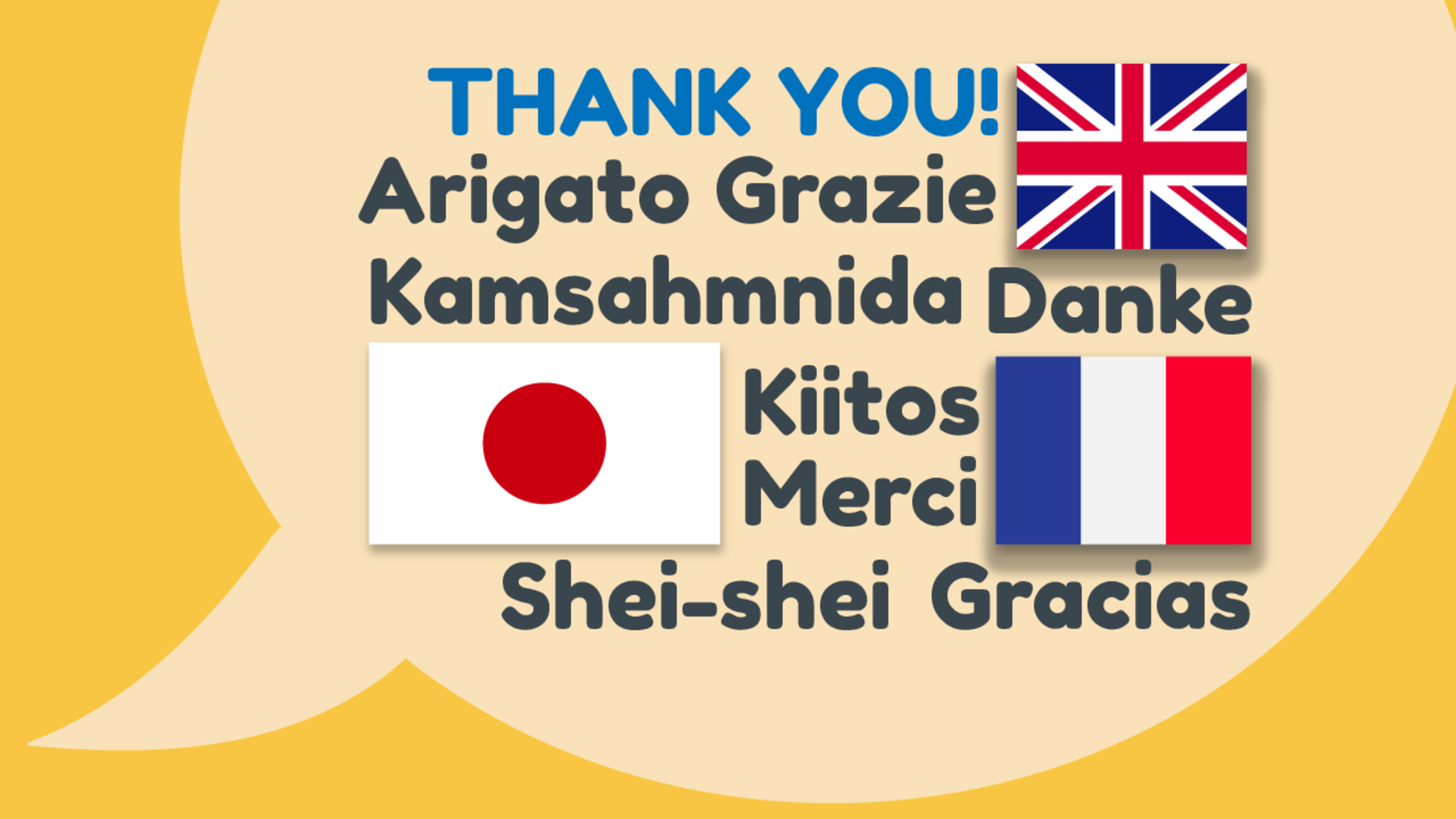

Step-by-step guide to Say "Thank You" in a New Language
5 ways to say "Thank you " in French _ Be polite in French
Step 1
Gather all your materials and find a quiet table where you can work.
Step 2
Choose five languages you want to learn to say "Thank you" in.
Step 3
Ask a grown-up or look up how to say "Thank you" and when to use it for each language.
Step 4
Write each language name the word for "Thank you" and a short note about when to use it in your notebook.
Step 5
Say each "Thank you" phrase out loud three times to practice the pronunciation.
Step 6
Cut and fold your paper or cardstock into five card-sized pieces.
Step 7
On each card write the language name and the "Thank you" word with its pronunciation.
Step 8
Add a short example sentence or a note on each card that explains when to use that phrase.
Step 9
Decorate each card with drawings colors and stickers that match the language or how it makes you feel.
Step 10
Practice using your cards by saying each phrase to a family member friend or a stuffed animal.
Step 11
Share your finished set of thank-you cards and what you learned on DIY.org.
Help!?
I don’t have cardstock or stickers—what can I use instead?
Use folded printer paper or thin cereal-box cardboard for the 'Cut and fold your paper or cardstock into five card-sized pieces' step, and decorate with crayons, markers, or magazine cutouts instead of stickers when you 'Decorate each card'.
My pronunciation sounds wrong—how can I practice the tricky sounds?
Ask a grown-up to model the phrase or use an online audio clip when you 'Ask a grown-up or look up how to say "Thank you"', then say each phrase out loud three times slowly and record yourself to compare.
How can I adapt this activity for younger or older kids?
For younger children have an adult write the language name and 'Thank you' and let them color and practice saying each phrase out loud three times, while older kids can research usage notes, write full example sentences on each card, and prepare to 'Share your finished set...on DIY.org'.
How can we make the thank-you cards more special or challenging?
Personalize and extend the project by adding small drawings or flags that match each language when you 'Decorate each card', laminating cards for durability, and recording pronunciations to attach via QR codes so you can practice and share on DIY.org.
Watch videos on how to Say "Thank You" in a New Language
Learn French in 2 Minutes: How to Say THANK YOU | Merci Explained
3 Videos
Learn French in 2 Minutes: How to Say THANK YOU | Merci Explained

7 WAYS TO SAY THANK YOU IN FRENCH

Learn 'Merci': Say Thank You in French!
Facts about language learning for kids
🌍 There are about 7,000 languages spoken around the world — so many ways to say “thank you”!
🙏 Saying 'thank you' in someone's language is a small, powerful way to show respect and make friends.
🧠 Learning just a few words in another language can boost kids' memory and listening skills.
🗺️ Travel phrasebooks and language apps usually teach 'thank you' as one of the very first phrases.
🎨 Making colorful cards that match each word with a picture helps your brain remember new phrases.
How do I teach my child to say "Thank you" in five new languages?
What materials do I need to learn "Thank you" in other languages and make cards?
What ages is this "Say Thank You" activity suitable for?
What are the benefits of learning to say "Thank you" in new languages?
