Say Your Vowels without Moving Your Lips
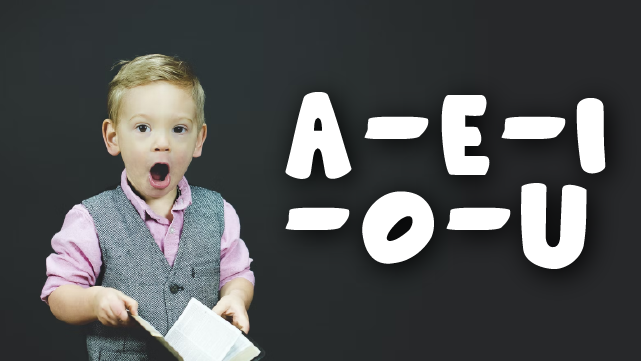
Practice saying each vowel (A, E, I, O, U) without moving your lips, using tongue and breath positions, recording changes and comparing sounds safely.


Step-by-step guide to Say Your Vowels without Moving Your Lips
Step 1
Sit comfortably in front of the mirror with your paper and pencil and your timer ready.
Step 2
Take three slow deep breaths to relax your face and lips.
Step 3
Open a recording app on a phone or computer so you can play the sounds back later.
Step 4
Practice A: put your tongue low look in the mirror then take a breath and say "ah" steadily for three seconds without moving your lips while you record.
Step 5
Practice E: move your tongue forward and up then take a breath and say "ee" like in "see" for three seconds without moving your lips while you record.
Step 6
Practice I: bring your tongue a little forward then take a breath and say "ih" like in "sit" for three seconds without moving your lips while you record.
Step 7
Practice O: move your tongue slightly toward the back then take a breath and say "oh" like in "go" for three seconds without moving your lips while you record.
Step 8
Practice U: raise the back of your tongue then take a breath and say "oo" like in "moon" for three seconds without moving your lips while you record.
Step 9
Play back each recording and listen closely to the sound of each vowel.
Step 10
Write one short note for each vowel on your paper about how it sounded and whether your lips stayed still.
Step 11
Pick the vowel that was hardest and try it two more times using a small change in tongue or breath to make it clearer.
Step 12
Share your finished recording and your notes on DIY.org.
Help!?
What can we use if we don’t have a mirror, timer, or a recording app?
Use a window reflection or a shiny spoon instead of a mirror, a watch or kitchen clock in place of the timer, and your phone camera or a voice memo app to 'Open a recording app' so you can still play back each vowel.
My lips keep moving when I try the Practice A–U steps—what should I try?
Try the slow deep breaths from Step 2, rest a fingertip lightly on your lips to feel movement while you record each three‑second trial, and make a second take to compare when you 'Play back each recording.'
How can I adapt this activity for younger children or older kids?
For younger kids shorten each vowel to 1 second and use stickers on the paper for the 'Write one short note' step, while older kids can lengthen holds to 5 seconds, experiment with tiny tongue changes during the 'try it two more times' step, or analyze pitch with the recording app.
How can we enhance or personalize the activity after finishing the basic steps?
Make a simple chart on your paper to rate lip stillness and vowel clarity, draw a picture next to the hardest vowel, try a friend’s feedback during playback, and then upload the improved recording and notes to DIY.org as the final Sharing step.
Watch videos on how to Say Your Vowels without Moving Your Lips
Consonants and Vowels for Kids | Homeschool Pop
4 Videos

Consonants and Vowels for Kids | Homeschool Pop
Fun with Vowels - Learn Vowels easy with Kids Song.
Let's Learn the Vowel! | Fun Learning for Kids |Kiddos Academy

Short and Long Vowels| Learning with Ms Houston| Kid Songs
Facts about speech articulation and oral motor skills
🗣️ Many alphabets teach five vowel letters (A, E, I, O, U), but English actually has around 14 distinct vowel sounds you can practice!
👄 Vowel quality is shaped mostly by tongue and jaw position — so you can make noticeable vowel changes while keeping your lips still.
👅 Linguists describe vowel placement using "high/low" and "front/back" — like moving your tongue up vs. down or forward vs. back.
🎧 Vowels create different resonant peaks called formants, which show up as unique patterns if you look at a voice spectrogram or waveform.
📱 With an adult's permission, recording your voice and comparing samples is a fun way to hear small changes and track your progress.
How do I help my child say vowels without moving their lips?
What materials do I need for the vowel-without-lips activity?
What ages is this vowel practice activity suitable for?
What are the benefits and safety tips for saying vowels without moving lips?
