Say words from (J-Z) without moving your lips!
Practice saying words starting with letters J through Z without moving your lips, using tongue and throat sounds while a partner guesses each word.


Step-by-step guide to Say words from (J-Z) without moving your lips
Step 1
Find a partner to play the guessing game with you.
Step 2
Use paper and your pen to write one word for each letter from J to Z on separate slips of paper.
Step 3
Fold each slip and drop them into the small bowl or hat.
Step 4
Tell your partner the rule: you will keep your lips gently closed and use only tongue and throat sounds to say the word while they guess.
Step 5
Press your lips together gently and hum or make soft throat sounds for 10 seconds to warm up your mouth and voice.
Step 6
Pick one folded slip from the bowl without showing your partner the word.
Step 7
Press your lips closed and say the word using only your tongue and throat sounds—do not move your lips or show the word.
Step 8
Let your partner guess the word out loud while you keep your lips closed.
Step 9
Switch roles so your partner now picks a slip and you guess; keep playing until you finish all the slips or your timer runs out.
Step 10
Share your finished guessing game experience on DIY.org.
Help!?
What can we use if we don't have paper, a pen, or a small bowl/hat?
Instead of paper and your pen and a small bowl or hat you can write words on sticky notes or index cards, type them into a phone notes app and draw one at a time, and use an empty cup or jar to hold the folded slips.
My child keeps moving their lips or the words are too quiet—how can we fix that?
If lips move or sounds are too quiet, repeat the warm-up step (press your lips together and hum or make soft throat sounds for 10 seconds), choose shorter words from the slips, have the speaker place a hand on their throat to feel vibrations, and have the guesser lean in to listen closely.
How can we adapt the game for different age groups?
For younger kids, replace the instruction to write one word for each letter from J to Z with picture cards or fewer big-print letters (J–M), while older kids can use longer words, add a timer for each turn, and keep score when you switch roles.
How can we extend or personalize the guessing game after we've played?
Decorate and theme your folded slips, award points for correct guesses for a prize, record short rounds to share your finished guessing game experience on DIY.org, or create a 'challenge' pile of extra-hard J–Z words to swap into the bowl.
Watch videos on how to Say words from (J-Z) without moving your lips
ABC Phonics and Spelling | Miss V teaches ABC Letter Sounds and Spelling Basic Words from A to Z
4 Videos
ABC Phonics and Spelling | Miss V teaches ABC Letter Sounds and Spelling Basic Words from A to Z
Phonics for Kids 🗣 The Z Sound 🧟♂️ Phonics in English 🎪

The Letter J | Letters and Letter Sounds | Learn Phonics with Khan Academy Kids
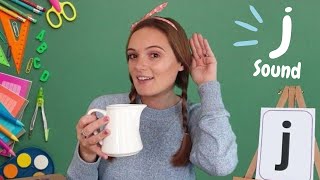
'j' Sound | Phonics for Kids | 'j' Words & Blending Practice | Learn to Read with a British Teacher
Facts about speech articulation and oral-motor skills for kids
🤐 Ventriloquists often replace lip sounds (like p, b, m) with similar sounds so their lips can stay still—it's a real speech trick.
🗣️ In phonetics, sounds produced without using the lips are called non-labial and include common sounds like t, k, s and many vowels.
👄 Try saying “m,” “p,” or “b” and you'll feel your lips close—those labial sounds are the hardest to do without moving your lips.
👅 The tongue is one of the most important tools for speech: it touches the roof of the mouth, teeth, and back of throat to shape sounds.
🎶 Throat-singing styles (like Tuvan throat singing) show extreme throat and vocal control, producing deep drones and overtones without lip movement.
How do you play 'Say words from J–Z without moving your lips'?
What materials do I need to play this no-lip J–Z word game?
What ages is this activity suitable for?
What are the benefits and safety tips for this lip-free speaking game?
