Review a graphic novel
Read a graphic novel, write a short review describing characters, plot, and favorite panels, then draw one illustrated scene to explain your choice.


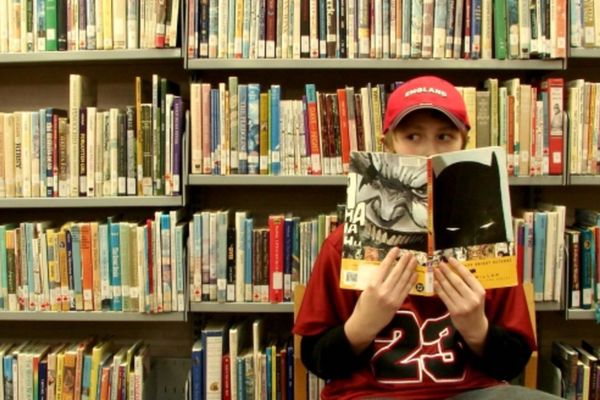

Step-by-step guide to review a graphic novel
5 Easy Steps To Creating a Graphic Novel | With Author Marieke Nijkamp & Illustrator Sylvia Bi
Step 1
Choose a graphic novel you want to read and review.
Step 2
Find a quiet comfy spot where you can read without interruptions.
Step 3
Read the graphic novel from the first page to the last page.
Step 4
Write a short paragraph (3–5 sentences) describing the main characters and summarizing the plot.
Step 5
Pick your three favorite panels from the book.
Step 6
Write one sentence for each favorite panel explaining why you like it.
Step 7
Choose one of those favorite panels to illustrate as your drawing.
Step 8
Place a clean sheet of paper on a flat surface so you can draw comfortably.
Step 9
Lightly sketch the chosen scene on your paper with a pencil.
Step 10
Trace over your pencil sketch with a black marker to ink the lines.
Step 11
Let the ink dry completely so it won't smudge.
Step 12
Carefully erase any remaining pencil lines with your eraser.
Step 13
Color your illustration using your coloring materials.
Step 14
Write a one-sentence caption beneath your drawing explaining why you chose that scene.
Step 15
Share your written review and illustrated scene on DIY.org
Help!?
What can we use if we don't have a black marker, special coloring materials, or a clean sheet of drawing paper?
If you don't have a black marker, use a fine-tip black pen or dark pencil to ink after your light sketch, substitute crayons or colored pencils for markers when you color, and use printer paper or a page from a sketchbook as your clean sheet.
What should we do if the ink smudges or pencil lines won't erase cleanly after inking?
If ink smudges or pencil lines won't erase cleanly, follow the instruction to let ink dry completely (or speed-dry with a cool hairdryer), gently blot fresh smudges with a tissue, then use a soft or kneaded eraser and erase lightly once the ink is dry.
How can we adapt this activity for younger children or older kids who want more challenge?
For younger children, shorten the written review to one simple sentence, have an adult pre-sketch the chosen panel for them to trace and color with crayons, and for older kids expand the 3–5 sentence paragraph into a longer critique, add detailed pencil shading before inking, and experiment with layered coloring techniques.
How can we extend or personalize the review and illustrated scene before sharing it on DIY.org?
To extend and personalize your project, turn your three favorite panels into a short three-panel comic or alternate ending, add speech bubbles and a one-sentence caption under your colored illustration, try mixed media like a watercolor wash or collage, and photograph each step to include with your written review on DIY.org.
Watch videos on how to review a graphic novel
How To Create A Graphic Novel: Step By Step For Beginners
4 Videos
How To Create A Graphic Novel: Step By Step For Beginners
Making a Graphic Novel! - Part 1
Beginner's Guide to Creating a Graphic Novel in Adobe InDesign
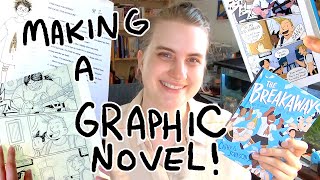
Making a GRAPHIC NOVEL! THE BREAKAWAYS Process
Facts about graphic novels and reading skills
📚 Graphic novels mix words and pictures to tell longer, book‑length stories—reading and looking at once!
🐭 Art Spiegelman's Maus was the first graphic novel to win a Pulitzer Prize (1992), proving comics can be powerful literature.
🖼️ Comics are made of panels — changing their size or order can speed up or slow down how you read a scene.
✍️ Scott McCloud explains that comics are "juxtaposed pictorial and other images in deliberate sequence," which helps storytellers plan scenes.
🎨 A full-page splash is a single dramatic panel that artists use to make a moment unforgettable—perfect for a favorite scene!
How do I guide my child through reviewing a graphic novel step by step?
What materials are needed to review and illustrate a graphic novel?
What ages is a graphic novel review activity suitable for?
What are the benefits of having my child review and illustrate a graphic novel?
