Recreate Fern Leaf on Paper
Recreate a fern leaf on paper using leaf rubbings, tracing, and shading techniques to study symmetry, texture, and natural patterns.




Step-by-step guide to recreate a fern leaf on paper
Step 1
Gather all the materials on a clean table.
Step 2
Go outside and pick a fern leaf or use a fern frond you already have.
Step 3
Put the fern flat on the table with the stem pointing away from you.
Step 4
Tape the stem end lightly to hold the fern in place.
Step 5
Lay a sheet of plain paper over the fern so it covers the whole leaf.
Step 6
Tape the paper corners lightly so the paper does not move.
Step 7
Hold a crayon on its side and rub gently across the paper until the leaf texture appears.
Step 8
Carefully peel the paper up to reveal your leaf rubbing and set it aside to look at.
Step 9
Place tracing paper over the same fern and trace the center stem and each leaflet with your pencil.
Step 10
Put a clean sheet of paper down and copy the traced outline by drawing the center stem and matching leaflets.
Step 11
Shade one side of each leaflet with your pencil to show where the light hits and where the shadow falls.
Step 12
Add fine vein lines and tiny texture marks on each leaflet with a sharp pencil for realism.
Step 13
Use crayons or colored pencils to add color and create a natural gradient from the stem out to the tips.
Step 14
Erase stray marks and sharpen the outline so your fern drawing looks neat.
Step 15
Take a photo of your finished fern artwork and share it on DIY.org.
Help!?
What can we use if we don't have a fern frond or tracing paper?
If you can't find a fern, use a similarly veined leaf or a printed high-contrast fern photo taped flat to the table, and replace tracing paper with wax paper or a sheet of vellum for the tracing step.
My rubbing doesn't show the leaf texture or the paper keeps moving—what should I do?
Secure the fern stem and paper with slightly stronger tape at the stem and paper corners, hold the crayon on its side and use firmer, even strokes, and switch to a softer crayon or charcoal pencil if the texture still doesn't appear.
How can I change the steps for different ages?
For preschoolers, limit the activity to the crayon rubbing and simple coloring with thick crayons; for elementary kids, include the tracing and copying steps with a pencil; and for older children, emphasize precise shading, fine vein lines with a sharp pencil, and layered colored pencils to create gradients.
How can we extend or personalize the finished fern artwork?
Create a series by pressing several fronds and making a layered collage, add a soft watercolor wash under the rubbing before coloring, label parts and note where you found the fern, or photograph the finished piece and share it on DIY.org.
Watch videos on how to recreate a fern leaf on paper
How to Draw a Fern: Easy Step by Step Drawing Tutorial for Beginners
4 Videos
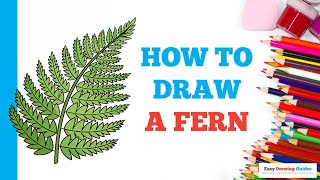
How to Draw a Fern: Easy Step by Step Drawing Tutorial for Beginners
How To Draw The Leaf ferns - Learn To Draw - Art Space
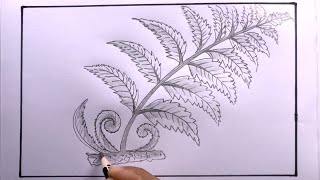
How To Draw Fern Easy/Fern Drawing
How to Draw a Leaf | Easy Drawing Tutorial for Beginners & Kids
Facts about botanical art and nature study
🌿 Ferns are ancient — their ancestors appeared about 360 million years ago, long before flowering plants.
🍃 A single fern frond can carry dozens or even hundreds of leaflets (called pinnae) that form its pattern.
✍️ Frottage (leaf rubbing) was popularized by surrealist artists like Max Ernst to capture interesting textures.
⚖️ Many leaves show bilateral symmetry, meaning the left and right halves mirror each other down the midrib.
🔍 The arrangement of veins and surface texture on a leaf are key clues botanists use to identify plant species.
How do I recreate a fern leaf on paper using leaf rubbings, tracing, and shading?
What materials do I need to recreate a fern leaf on paper?
What ages is the fern leaf rubbing, tracing, and shading activity suitable for?
What are the benefits of doing fern leaf rubbings, tracing, and shading with my child?
