Quantify yourself
Track your daily activity, sleep, mood, and snacks for seven days, record measurements, then make simple charts to analyze and compare patterns.




Step-by-step guide to quantify yourself
Basic Measurement For Kids | Learn about Height, Length, and Width
Step 1
Gather all your materials and find a comfy spot to work.
Step 2
Use your ruler to draw a table with seven rows and five columns and label the columns Day Active Minutes Sleep Hours Mood Snacks.
Step 3
Write a short rule at the top that says what counts as "active minutes" (for example running biking dancing count as active).
Step 4
Write a short rule at the top that explains how you will count snacks (for example count each food item or one serving as one snack).
Step 5
Draw a simple mood scale from 1 to 5 with faces and write what each number means (for example 1 = very sad 5 = very happy).
Step 6
Choose one time in the morning to write sleep hours and one time in the evening to add totals and write those times at the top of your page.
Step 7
For the next seven days record your total active minutes each evening in the Active Minutes column.
Step 8
For the next seven days write your hours of sleep each morning in the Sleep Hours column.
Step 9
For the next seven days circle or color the mood number that matches how you feel once each day in the Mood column.
Step 10
For the next seven days write each snack you eat in the Snacks column and add a tally mark for every time you eat that snack.
Step 11
After seven days use your ruler and colouring materials to draw a bar chart of Active Minutes with days on the bottom and minutes on the side.
Step 12
Draw a bar chart of Sleep Hours with days on the bottom and hours on the side using your ruler and colouring materials.
Step 13
Count how many tallies each snack has and draw a simple bar chart of snack types using your tallied counts.
Step 14
Look at your charts and write one sentence about one pattern you notice (for example I sleep more on weekends or I snack on fruit most days).
Step 15
Take a photo or write a short note about your project and share your finished creation on DIY.org.
Help!?
What can we use instead of a ruler or colouring materials if we don't have them?
Use the straight edge of a book, cutting board, or the edge of a tablet to draw your seven-row table and bar-chart axes, and substitute coloured pencils, markers, stickers, or even different patterned paper scraps to fill the bars.
I'm forgetting to write entries every morning and evening—how can I avoid missing days and keep tallies correct?
Write the two chosen times at the top as instructed, set alarms for those times, keep your page and a pen by your bed or snack area, and add tally marks immediately in the Snacks column and minutes in the Active Minutes column each evening to prevent missed or mixed-up counts.
How can I change this activity to suit different ages?
For younger kids pre-draw the seven-row table, simplify the Mood scale to three faces and use stickers for Snacks, while older kids can add extra rows for notes, calculate average Active Minutes and Sleep Hours, and recreate the bar charts in a spreadsheet for more precise comparison.
How can we make the charts more interesting or compare results in new ways?
Enhance the project by adding a color key to split Active Minutes by activity type, grouping Snack tallies into categories before drawing the snack bar chart, drawing a goal line on the Sleep Hours chart, and then photograph and share your personalized results on DIY.org as instructed.
Watch videos on how to quantify yourself
Math for Kids: Measurement, "How Do You Measure Up" - Fun & Learning Game for Children
4 Videos
Math for Kids: Measurement, "How Do You Measure Up" - Fun & Learning Game for Children
How To Measure & What Tools We Use To Measure *Science for Kids*
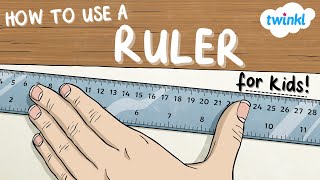
How to Use a Ruler | Math Videos for Kids | Data and Measurement | Geometry for Kids | Twinkl USA
Measurement Introduction for Kindergarten
Facts about self-tracking and basic data analysis for kids
🔢 A single week of daily tracking gives you 7 data points — enough to spot simple patterns like “I snack more on weekends.”
🛌 School-age kids typically need about 9–11 hours of sleep a night, so tracking sleep helps check if you’re getting enough rest.
⏱️ Activity trackers often count steps; 10,000 steps is a popular goal, but even short bursts of movement add up toward better fitness.
😄 Jotting your mood every day for a week can reveal what lifts or lowers your spirits — small notes build big clues.
🍎 Keeping a snack log makes you more aware of eating habits and can help you spot swaps (like fruit instead of chips) that cut cravings.
How do I set up a week-long 'Quantify Yourself' activity to track my child's activity, sleep, mood, and snacks?
What materials do I need to track activity, sleep, mood, and snacks for seven days and make charts?
What ages is the 'Quantify Yourself' tracking project suitable for?
What are the benefits of having kids track and chart their activity, sleep, mood, and snacks for seven days?
