Practice Uppercase Alphabets: Q-Z
Practice writing uppercase letters Q through Z using tracing, stencils, and creative drawing activities to learn correct strokes, spacing, and letter recognition.


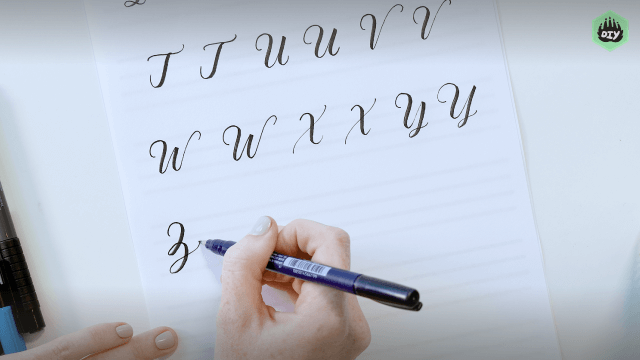

Step-by-step guide to Practice Uppercase Alphabets: Q–Z
Step 1
Gather all your materials and find a quiet flat spot to work.
Step 2
Choose the letter Q to start with and smile because you are about to practice!
Step 3
Put the tracing sheet or stencil for the letter Q on top of your paper so the letter is ready to trace.
Step 4
Trace the letter Q slowly two times with your pencil following the lines or arrows on the tracing guide.
Step 5
Remove the tracing paper or stencil from your paper.
Step 6
Write the letter Q freehand two times trying to copy the traced shape.
Step 7
On a new line write Q five times across the page leaving one finger space between each letter to practice even spacing.
Step 8
Decorate and color one of your Qs to make it fun and memorable.
Step 9
Pick the next letter R and repeat the steps you used for Q starting with placing the tracing guide or stencil.
Step 10
Repeat tracing freehand spacing and decorating for the remaining letters S T U V W X Y and Z until all letters are practiced.
Step 11
Choose your best traced and decorated letters and arrange them on one page to make a final alphabet practice sheet.
Step 12
Share your finished alphabet practice on DIY.org so everyone can see your awesome work.
Help!?
What can we use if we don't have a tracing sheet or stencil?
If you don't have a tracing sheet or stencil, print large letters Q–Z from the internet or cut letters from cardboard to use as stencils and then trace them onto your paper with your pencil as the instructions say.
My letters look different when I try freehand; how can I make them match the traced ones and keep even spacing?
If your freehand letters don't match the traced shapes or spacing is uneven, retrace the letter slowly two times, lightly mark faint guide dots one finger-width apart across the line before writing the five-letter practice, and compare each freehand attempt to your traced copies.
How can I change this activity for younger kids or older kids?
For younger children, make the tracing sheet or stencil much larger and let them trace each letter three times with a thick crayon before attempting the freehand steps, while older kids can reduce the letter size, write each letter more times (for example ten), and add writing a word that starts with each letter after decorating.
How can we make the final alphabet practice sheet more special or shareable?
To enhance the final alphabet practice sheet, choose your best traced and decorated letters, arrange them as a poster or small laminated booklet, add a little picture or sticker next to each letter, then photograph it to share on DIY.org.
Watch videos on how to Practice Uppercase Alphabets: Q–Z
Text and Capital Letters A to Z 🔤 | Lesson Thirteen - Phonics Made Easy | Alphablocks
4 Videos
Text and Capital Letters A to Z 🔤 | Lesson Thirteen - Phonics Made Easy | Alphablocks

Uppercase Letters - Learn the Alphabet | Grammar for Kids | Kids Academy

Learning How to Write the English Alphabet Uppercase and Lowercase Letters
Learn to write Uppercase Letters A to Z - English Alphabet | Letter School Games
Facts about letter formation and handwriting
✍️ Tracing letters helps kids build fine motor control—the same small-muscle strength used for tying shoelaces and buttoning shirts.
🔤 Q–Z are the last 10 letters of the 26-letter English alphabet, so practicing them finishes the whole uppercase set!
🌀 Some uppercase letters (like S and Q) use smooth curvy strokes, while others (like T and E) use straight strokes—great for varied practice.
🎨 Stencils have been used for centuries to paint and print letters, and they make perfectly shaped uppercase letters easy for beginners.
🤓 Z is one of the least-used letters in English words, while E is the most common—so some letters show up much more often than others.
How do you practice uppercase letters Q through Z with a child?
What materials are needed to practice uppercase Q–Z?
What ages is practicing uppercase Q–Z suitable for?
What are the benefits and variations of practicing uppercase Q–Z?
