Practice Drawing Ears
Practice drawing different ear shapes and angles using pencils and paper. Learn proportions, shading, and simple step by step techniques to improve observational skills.
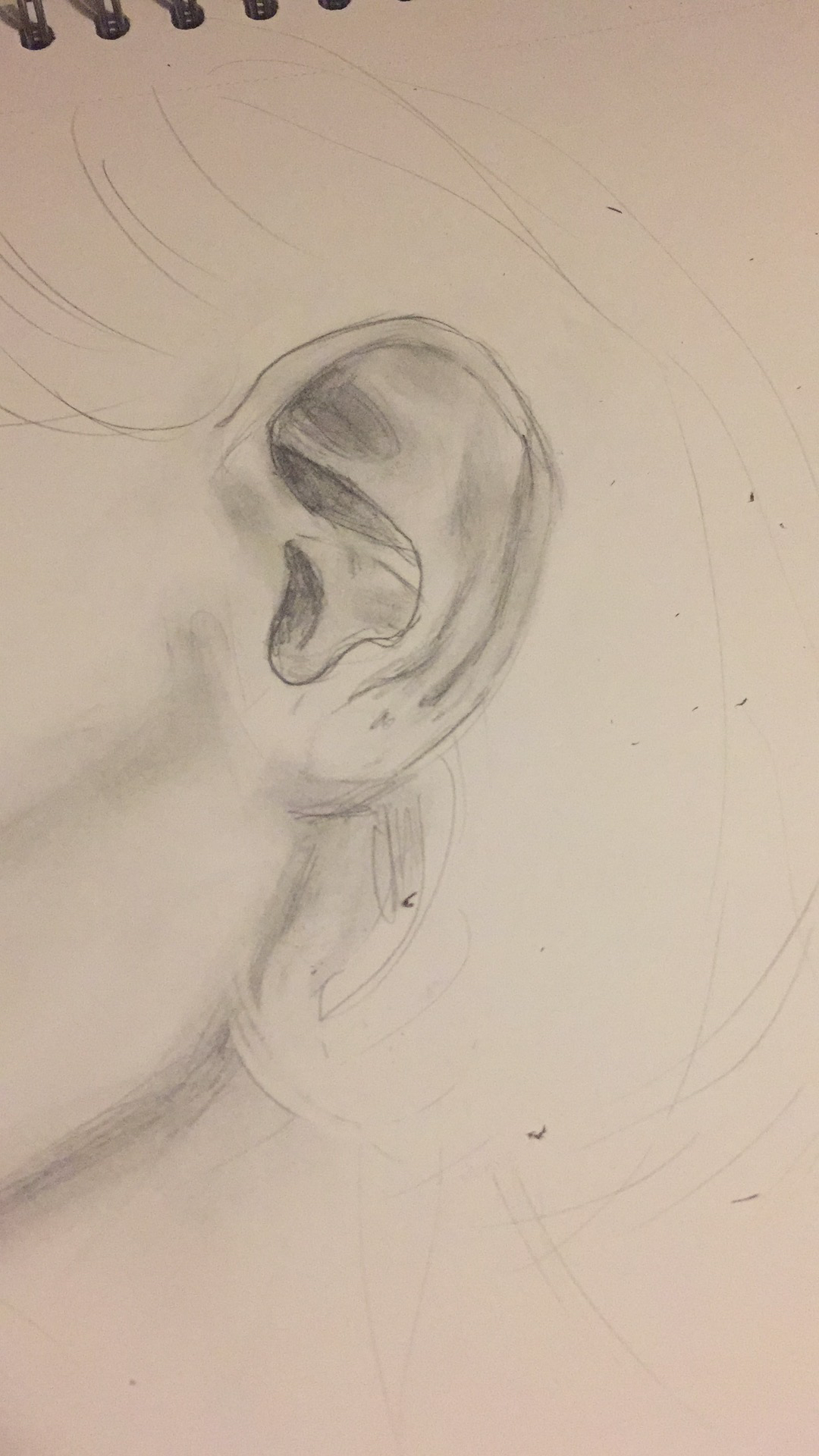
About this tutorial
Practice drawing different ear shapes and angles using pencils and paper. Learn proportions, shading, and simple step by step techniques to improve observational skills.
What you need
Instructions
- 1
Step 1
Gather your materials and place them on a clean flat table.
- 2
Step 2
Look at an ear in the mirror or at a photo for one minute and notice the outer shape inner folds and the earlobe.
- 3
Step 3
Lightly draw the outer ear outline with your HB pencil.
- 4
Step 4
Mark three light dots for the top middle and bottom of the ear to help with proportions.
- 5
Step 5
Draw the main inner curved fold (the antihelix) inside the outline using gentle lines.
- 6
Step 6
Sketch the concha the bowl shaped inner area with a smooth curved shape.
- 7
Step 7
Add the tragus and the earlobe using short curved strokes.
- 8
Step 8
Shade the deepest parts of the ear gently using your 2B pencil with short light strokes.
- 9
Step 9
Gently blend the shaded areas with a tissue or cotton swab to soften the tones.
- 10
Step 10
Erase any construction dots or stray lines to clean up your drawing.
- 11
Step 11
Draw three more ear studies on the same paper changing the angle size or shape for each one.
- 12
Step 12
Share your finished ear drawings on DIY.org.
Fun facts
How do I teach my child to draw ears step by step?
Start with observation and simple shapes: have your child look at a photo or mirror, then lightly sketch the outer ear oval and a central guideline to mark top and bottom. Break the ear into basic parts—the helix, antihelix, tragus—and draw them as curved lines. Teach shading with light strokes to show depth, erasing for highlights. Practice different angles, use step-by-step tracing, then try freehand copies to build observational skills and confidence.
What materials do we need to practice drawing ears at home?
Basic supplies: a range of pencils (HB, 2B, 4B) for line and shading, a kneaded eraser and a regular eraser, sharpeners, smooth drawing paper, and a blending stump or tissue for softening shadows. Also use reference photos or a mirror, a pencil with a harder tip for guidelines, and optional charcoal or colored pencils for variation. Tape and a ruler help with proportions.
What ages is drawing ears suitable for?
Drawing ears can be adapted for ages roughly 5 and up. Preschoolers (5–7) work on simple oval shapes and cartoon ears with adult guidance. Ages 8–11 can learn proportions, basic folds, and light shading. Teens and older children can practice advanced angles, detailed anatomy, and refined shading. Always tailor instructions, keep sessions short for younger kids, and praise progress to maintain interest.
What are the benefits of practicing drawing ears?
Practicing ear drawing improves observation, fine motor control, and understanding of facial proportions. Shading exercises teach light and shadow, boosting depth perception and visual memory. It also encourages patience, focus, and creative problem-solving. For variety, try drawing ears from different angles, in profile, or as cartoon and animal ears. Keep sessions positive and offer short breaks to avoid frustration, making practice fun and rewarding for children.
Watch & Learn
Need help?
What can I use if I don't have a 2B pencil, tissue, or a mirror?
If you don't have a 2B pencil, use a softer 4B or charcoal for shading (step 8), replace a tissue with a cotton swab or your fingertip for blending (step 9), and use a phone photo instead of a mirror when observing the ear (step 2).
My ear proportions look wrong — what should I fix first?
If proportions are off after marking the three light dots (step 4), hold your HB pencil at arm's length to compare distances and then erase and reposition the outer ear outline (step 3) before drawing the antihelix (step 5).
How can I change the activity for younger or older children?
For younger children, have them trace the outer ear outline and draw only the earlobe with the HB pencil (steps 3 and 7), while older kids can focus on the antihelix and concha details (steps 5–6), refine shading with the 2B and tissue (steps 8–9), and complete three varied studies (step 11).
How can we extend or personalize the ear-drawing activity?
To extend the activity, experiment with different lighting to emphasize shadows for deeper 2B shading (step 8), label anatomical parts like tragus and antihelix on each study (steps 5 and 7), and photograph your best drawings to share on DIY.org (step 12).