Pop a balloon with a swinging hammer
Construct a safe swinging hammer setup to pop a balloon from a distance, learning about momentum and simple machines with adult supervision.


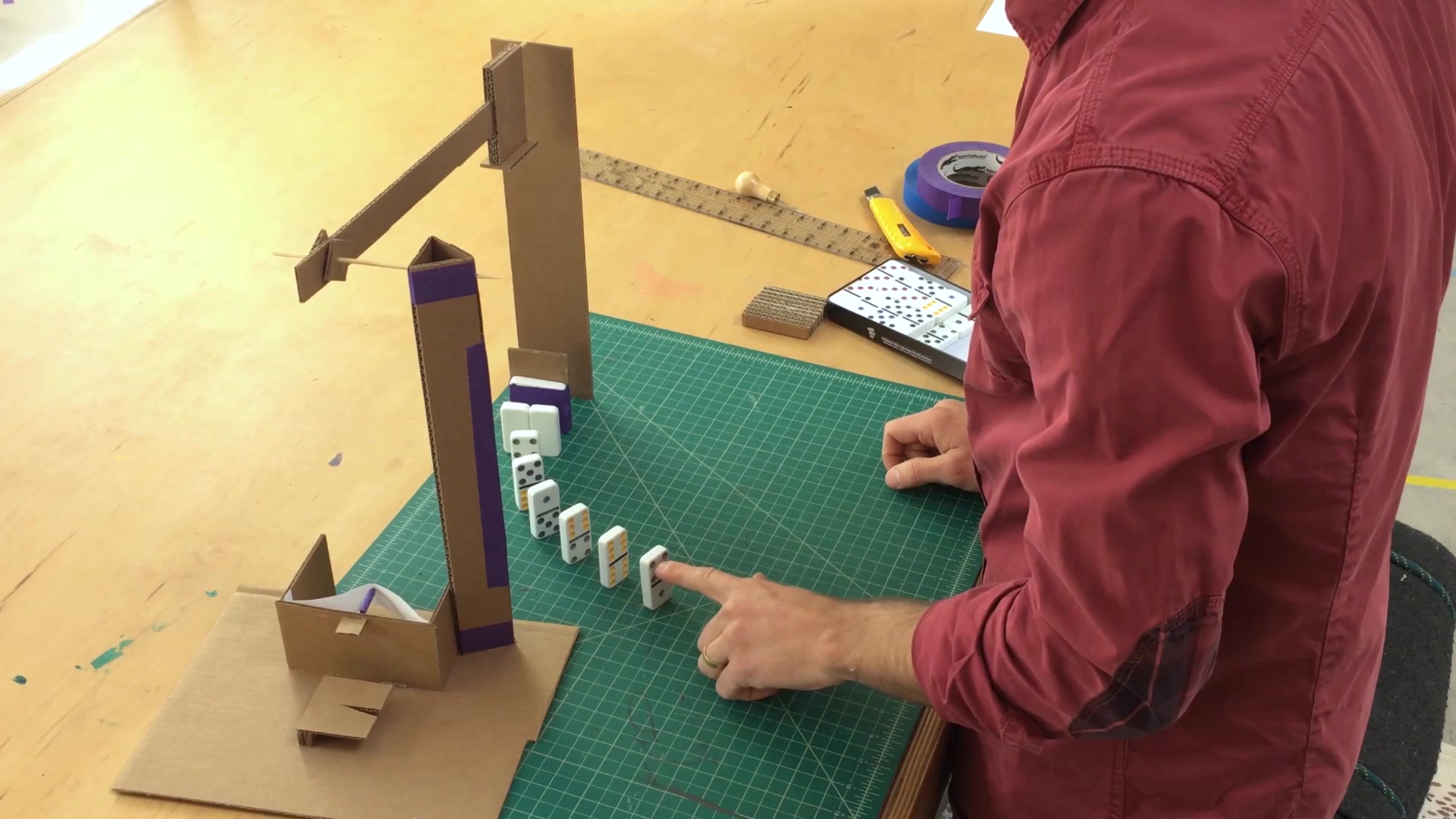

Step-by-step guide to pop a balloon with a swinging hammer
Step 1
Ask an adult to help you and stay close for every step so the project stays safe.
Step 2
Put on your safety goggles so your eyes are protected.
Step 3
Position two sturdy chairs about one meter apart facing each other to make a support base.
Step 4
Lay the broom handle or dowel across the tops of the two chairs so it sits solidly as a horizontal bar.
Step 5
Tie one end of the string tightly to the hammer handle so the knot will not slip.
Step 6
Drape the string over the broom handle so the hammer hangs down like a pendulum.
Step 7
Secure the string at the top with a bit of tape so the hammer hangs in one place and does not slide.
Step 8
Inflate one balloon and tie the neck so the air does not escape.
Step 9
Tape the tied balloon to a chair back or to the wall at a height where the hanging hammer can strike its side.
Step 10
Stand back and pull the hammer gently to a small angle and let go so it swings and tries to pop the balloon.
Step 11
If the balloon does not pop ask the adult to safely shorten the string by retying it higher up on the hammer.
Step 12
Pull the hammer back to a slightly larger angle and release again to test how the hit changes.
Step 13
Watch and write down on paper whether a shorter string or a larger release angle made the balloon pop harder to learn about momentum.
Step 14
Put away the chairs broom handle and tape and pick up any scraps so the area is clean.
Step 15
Take a photo or write about your swinging hammer experiment and share your finished creation and what you learned on DIY.org.
Help!?
What can we use if we don't have a broom handle, dowel, or a hammer?
Use a sturdy mop handle or long wooden ruler instead of the broom handle/dowel and substitute a small rubber mallet or a tightly taped sock filled with rice for a heavy hammer, and always keep the safety goggles on and an adult supervising.
The hammer keeps sliding along the bar or the knot slips—how do we fix that?
Follow step 6 and secure the string at the top with tape, and follow step 5 to retie the knot tightly (use a double knot) so the hammer hangs in one place and doesn't slide.
How can I make this activity appropriate for younger or older kids?
For younger children have the adult control the swing and use a lightweight soft mallet with only small release angles, while older kids can shorten the string themselves, measure release angles and string length, and record momentum outcomes on paper as in the experiment steps.
What are some ways to extend or personalize the swinging hammer experiment?
Try taping balloons of different sizes at varying heights, add small weights to the hammer handle to test mass effects, mark and measure different release angles and string lengths, and then photograph or write up your results to share on DIY.org as suggested in the final step.
Watch videos on how to pop a balloon with a swinging hammer
Popping Balloons with a Hammer
4 Videos
Popping Balloons with a Hammer
🤫 How to Pop a Balloon QUIETLY?! 🎈😲✨

15 Ways to pop a balloon
How to Pop Balloons Quietly: A Step-by-Step Tutorial #popballoons
Facts about simple machines and momentum
🎈 A party balloon can stretch to several times its relaxed size — that stretched rubber stores elastic energy that makes it pop!
🔨 Momentum (mass × velocity) matters: increase the hammer's mass or swing speed and the impact energy rises a lot.
🕰️ A swinging hammer behaves like a pendulum: for small swings the pendulum's period depends mostly on its length, not its mass.
⚖️ Using a hinge and arm turns the hammer into a simple lever — changing pivot position or arm length changes the force and reach.
🚸 Safety first: a fixed stop, clear launch zone, and an adult-controlled release keep the popping game fun and accident-free.
How do I set up a safe swinging hammer to pop a balloon and teach momentum?
What materials do I need for a safe swinging hammer balloon pop activity?
What ages is the swinging hammer balloon pop activity suitable for?
What are the safety tips and learning benefits of the swinging hammer balloon pop activity?
