Plant Cells: Observe and Draw!
Prepare a simple microscope slide from an onion or leaf, observe plant cells under magnification, and draw and label their parts carefully.


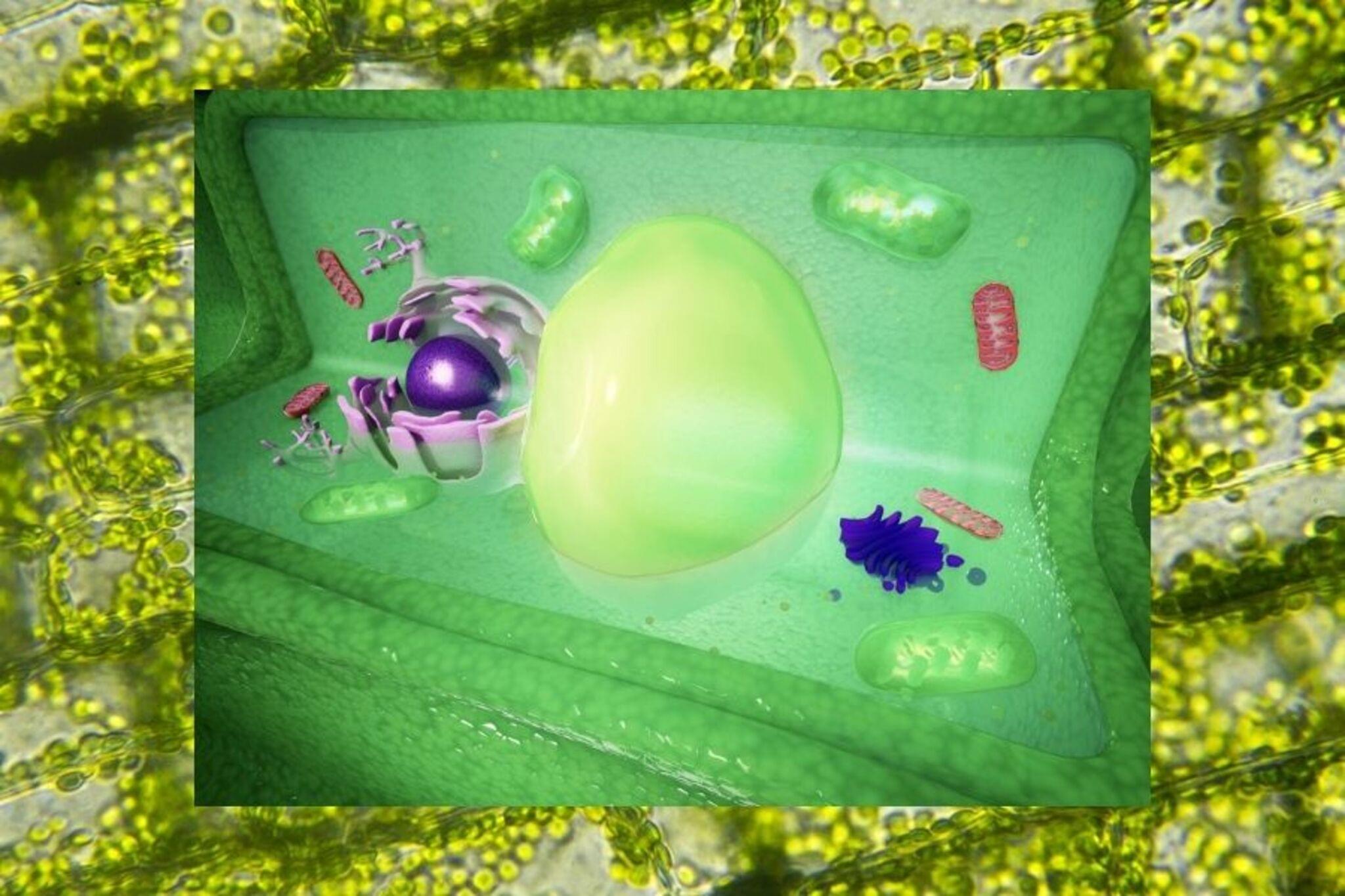

Step-by-step guide to Plant Cells: Observe and Draw
Plant and Animal Cells for Kids
Step 1
Wash your hands and clear a small clean workspace to keep everything tidy.
Step 2
Ask an adult to cut a small piece of onion or help you pick a fresh leaf for the slide.
Step 3
Use tweezers to gently peel a very thin transparent layer of epidermis from the onion or from the underside of the leaf.
Step 4
Place the thin layer flat in the center of a clean microscope slide.
Step 5
Use the dropper to place one drop of iodine solution or clean water onto the specimen.
Step 6
Slowly lower a cover slip at a 45 degree angle onto the drop to avoid trapping air bubbles.
Step 7
Blot any extra liquid from the edge of the cover slip with a paper towel.
Step 8
Put the slide on the microscope stage and secure it with the stage clips.
Step 9
Turn on the microscope and rotate the nosepiece to the lowest power objective.
Step 10
Use the coarse focus knob to bring the cells into view.
Step 11
Use the fine focus knob to sharpen the cell details until you can see cell shapes clearly.
Step 12
Make a neat pencil sketch of the cells you see on your paper.
Step 13
Label each visible part on your drawing with neat handwriting (for example cell wall chloroplast nucleus cytoplasm vacuole).
Step 14
Share your finished creation on DIY.org
Help!?
What can I use if I don't have iodine solution, tweezers, or a cover slip?
If you don't have iodine (step 5) use a drop of strong tea or diluted food coloring for contrast, if you lack tweezers (step 3) use two clean toothpicks to peel and handle the epidermis, and if you don't have a cover slip (step 6) carefully lay a very thin square of clean plastic from a food container at a 45° angle to avoid bubbles.
My slide has air bubbles or I can't see cells clearly — what should I check or fix?
If you see air bubbles or fuzzy cells, confirm the epidermis is very thin (step 3), use only one drop of iodine or water (step 5), lower the cover slip at a 45° angle (step 6), blot excess liquid (step 7), and begin with the lowest objective then use coarse and fine focus (steps 9–10) to sharpen the view.
How can I adapt this activity for different age groups?
For preschoolers have an adult prepare the thin epidermis and let them watch under the lowest objective (steps 2–9) while coloring a simple sketch, for elementary kids let them add the iodine drop and label basic parts like cell wall and nucleus (steps 5 and 13), and for teens encourage using fine focus (step 10) to draw detailed organelles and measure cell size before sharing on DIY.org.
What are some ways to extend or personalize the activity after making one slide?
To extend the activity, prepare comparative slides from onion and a green leaf (step 2), test iodine versus plain water for staining (step 5), photograph views at different objective powers (steps 9–10) to build a labeled gallery, and post your favorite image and drawing on DIY.org.
Watch videos on how to observe and draw plant cells
The plant cell and its parts - Natural Science - Educational video for kids
4 Videos

The plant cell and its parts - Natural Science - Educational video for kids

Natural Science for kids - Human body systems, the plant, the cell, the Solar System, animals
The cell: Structure, functions and its parts - Science for kids

GCSE Biology Revision "Plant Cells"
Facts about plant cells and microscopy
🔬 In 1665 Robert Hooke used an early microscope to spot tiny box-like 'cells' in cork — that's where the name comes from!
🧅 Onion epidermis is a go-to for microscope labs because it's thin, transparent, and easy to peel into a single layer of cells.
🌱 Chloroplasts are the green parts inside plant cells that hold chlorophyll and turn sunlight into food through photosynthesis.
🧪 A tiny drop of iodine or food dye can make cell parts like the nucleus and starch grains stand out under the microscope.
🖊️ Plant cells often look like little bricks — they're large enough to draw and label details like the cell wall, nucleus, and vacuole with a school microscope.
How do I prepare a microscope slide and observe plant cells from an onion or leaf?
What materials do I need for the Plant Cells: Observe and Draw activity?
What ages is the Plant Cells: Observe and Draw activity suitable for?
What are the benefits of observing and drawing plant cells?
