Make Gouache Painting Art
Make vibrant gouache paintings on paper by mixing colors, practicing brush techniques, layering textures, and experimenting with composition while learning safe cleanup.




Step-by-step guide to make gouache painting art
Easy Gouache Painting for Beginners-Step-by-Step Tutorial-How to Paint with Gouache #art #painting
Step 1
Lay newspaper or a tray on your table to protect it from paint spills.
Step 2
Tape the edges of your paper to the table or board with masking tape so the paper stays flat.
Step 3
Squeeze small blobs of the gouache colors you want to use onto your palette or plate.
Step 4
Add one drop of water to a color on the palette and mix with your brush until the paint is creamy like yogurt.
Step 5
Try three different brush strokes on scrap paper to practice thin lines thick strokes and dabs.
Step 6
Lightly draw your simple composition on the taped paper with a pencil.
Step 7
Use a large brush to lay down broad flat washes of color for the main shapes in your sketch.
Step 8
Wait until those first layers are completely dry before adding more paint.
Step 9
Mix a new color by combining two paints on your palette and adjust the shade with tiny drops of water.
Step 10
Use a smaller brush to add details textures and layered strokes to build depth in your painting.
Step 11
Rinse your brushes in the cup of water until the water runs clear and reshape the bristles.
Step 12
Wipe the palette and table with paper towels and let your painting finish drying flat.
Step 13
Take a photo and share your finished gouache painting on DIY.org
Help!?
What can we use if we don't have gouache or a palette?
Substitute washable poster paint or tempera squeezed in small blobs onto a clean paper plate and use that plate as your palette while still adding just one drop of water to mix each color until creamy as in step 4.
Why is my paper buckling or paint pooling, and how do I fix it?
If the paper buckles or paint pools, press the edges down with more masking tape as in step 2, blot extra water with paper towels, and wait until the first washes are completely dry before adding more paint per step 7.
How can we adapt this activity for different ages?
For younger children use larger brushes, pre-mixed colors on a plate, and skip detailed layering in step 10, while older kids can practice the three brush strokes from step 5, mix custom shades in step 8, and add fine textures with a small brush in step 10.
How can we personalize or extend the painting after it dries?
After your painting is dry and you've taken a photo in step 13, personalize it by adding collage elements, tiny white or metallic highlights with the small brush from step 10, or create a series using different color mixes from step 8 to compare moods.
Watch videos on how to make gouache painting art
Gouache Painting Tutorial | How to Paint like a Pro | Step by Step Tutorial | Himi Gouache
4 Videos
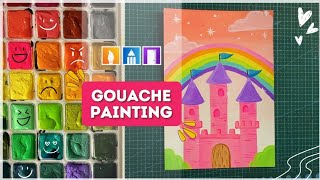
Gouache Painting Tutorial | How to Paint like a Pro | Step by Step Tutorial | Himi Gouache
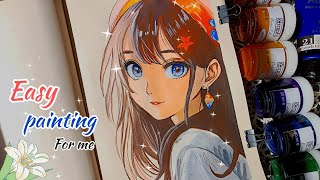
Easy Gouache Painting for Beginners || Step-by-Step Guide to Creating Stunning Art!✨
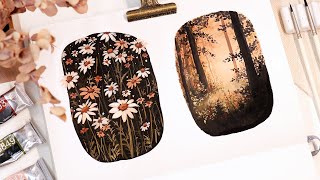
🌼 Easy Mini Gouache Painting Tutorial // Fall Flowers & Forest
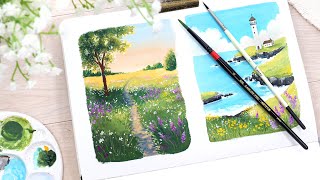
🌼 Easy Mini Gouache Painting Tutorial // Flower Field Landscape
Facts about painting techniques and color mixing for kids
🎨 Gouache is an opaque, water-based paint often called "opaque watercolor" — it dries to a matte finish and can be reactivated with water.
🖌️ You can paint light colors over dark with gouache because it's opaque — a super-handy trick for highlights and corrections.
🌈 Mixing complementary colors (like blue + orange) mutes a hue naturally instead of using black, which keeps colors lively.
💧 Gouache cleans up easily with soap and water (unlike oils), but strong pigments can still stain clothes and surfaces — wear an apron!
🖼️ Gouache has long been a favorite of illustrators and poster artists for its smooth, flat color areas and crisp details.
How do you create a gouache painting with kids?
What materials do I need for a gouache painting activity?
What ages is gouache painting suitable for?
What are safety and cleanup tips for gouache painting with children?
