Make Beats With Your Body!
Create rhythmic songs using claps, snaps, stomps, and chest pats; design and practice simple beat patterns, then perform or record a short body-percussion piece.


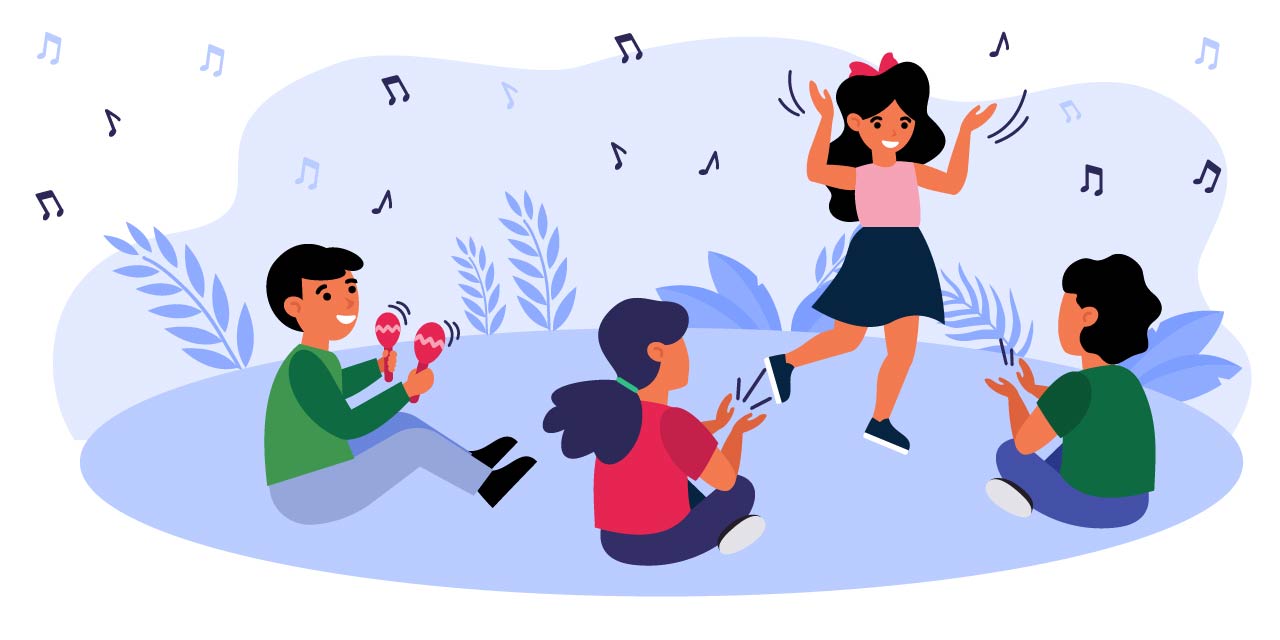

Step-by-step guide to Make Beats With Your Body!
Step 1
Find a small open area where you can stand and move without bumping into things
Step 2
Shake your arms legs and shoulders for 20 seconds to warm up your body
Step 3
Make a loud clap by striking both hands together and listen to the sound
Step 4
Snap your fingers by curling and releasing your middle finger against your thumb until you hear a crisp snap
Step 5
Stomp one foot hard on the floor to make a strong low sound
Step 6
Pat your chest with flat hands to make a soft hollow sound
Step 7
Choose two or three of the sounds and decide on a short 4 beat pattern in your head
Step 8
Write the beats of your pattern on your paper using simple letters or marks so you remember them
Step 9
Tap your foot slowly to make a steady pulse for timing
Step 10
Perform your 4 beat pattern once while keeping your foot tapped to practice timing
Step 11
Create a second 4 beat pattern that uses different sounds than the first pattern
Step 12
Write the second pattern on your paper under the first pattern
Step 13
Play the first pattern then the second pattern in a row to make an 8 beat sequence
Step 14
Perform or record your 8 beat body percussion piece for about 30 seconds to share your music
Step 15
Share your finished body beat creation on DIY.org
Help!?
What can I use instead of paper to write down my 4-beat patterns if I don't have any?
If you don't have paper, use a smartphone notes app, a dry-erase board, or mark beats with small pieces of tape on the floor to record the 4-beat patterns from the "Write the beats of your pattern on your paper" step.
I can't snap my fingers—how can I still make a crisp sound for that step?
If you can't snap, replace the "Snap your fingers" step with a quick tongue click, a fingertip tap against your palm, or a small slap on your thigh to get a crisp sound that fits into your pattern.
How can I adapt the activity for a 4-year-old versus a 10-year-old?
For a 4-year-old, use only two easy sounds like clap and stomp and make a simple 2-beat pattern while tapping a steady pulse, and for a 10-year-old, use the writing step to notate two different 4-beat patterns, combine them into the 8-beat sequence, and record the 30-second performance to share on DIY.org.
How can we make the body percussion piece more interesting or personalized?
Make it more interesting by adding dynamics and tempo changes between the first and second 4-beat patterns, layering extra body sounds or household percussion, creating a short movement or costume for the performance, and recording the final 8-beat piece for sharing on DIY.org.
Watch videos on how to Make Beats With Your Body!
Green Green Grass | Easy Body Percussion for Kids
4 Videos
Green Green Grass | Easy Body Percussion for Kids
Body Beats 1 | Stomp & Clap Rhythm for Kids | Green Bean's Music
Body Percussion Class Finds Rhythm at Rutgers
Rhythm for Kids! | What is Rhythm? | Difference between Rhythm and Pulse | Twinkl USA
Facts about body percussion and rhythm
🥁 Body percussion (claps, snaps, stomps, chest pats) is used worldwide — some musicians craft entire songs from just body sounds.
👄 Beatboxing can imitate drums, basslines, and special effects so well that performers sometimes sound like a full band using only their mouth.
👏 Clapping games have entertained kids for centuries; many rhyme-and-clap songs are passed down through generations.
👣 Stomping and foot percussion are core parts of dances like tap and flamenco, turning your feet into powerful rhythm instruments.
🎵 Practicing simple beat patterns (like 4-beat loops) boosts timing, coordination, and listening skills — perfect for young musicians.
How do I make beats with my body step-by-step?
What materials do I need to make body percussion beats?
What ages is this body percussion activity suitable for?
What are the benefits of making beats with your body?
