Make a special lens
Make a special lens from a clear plastic bottle bottom to magnify objects, observe tiny details, and explore how light bends safely.


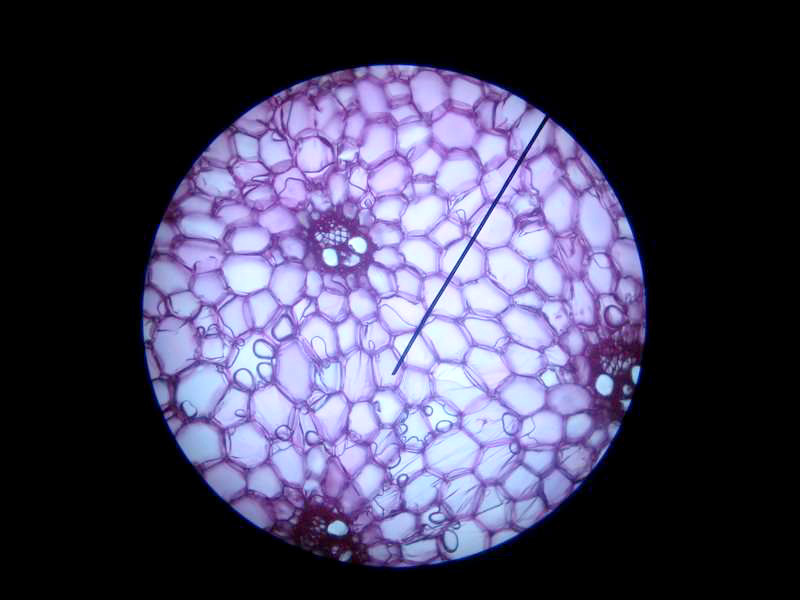

Step-by-step guide to make a special lens from a clear plastic bottle bottom
ULTIMATE Beginner's Guide To Camera Lenses
Step 1
Gather all your materials and put them on a clear workspace so you can see everything.
Step 2
Use the marker to draw a circle around the bottom of the bottle showing where you will cut out the rounded piece.
Step 3
Ask an adult to carefully cut along the marked circle to remove the rounded bottom piece from the bottle.
Step 4
Take the rounded plastic piece off the bottle and set it flat on the table.
Step 5
Wrap transparent tape around the cut rim to cover sharp edges so it is safe to handle.
Step 6
Hold the clear curved piece up toward a light and look at its curved shape to see how it bends light.
Step 7
Put a small object you want to study on the table where you can easily reach it.
Step 8
Move the curved plastic slowly up and down above the object until the object looks largest and the details become clearer.
Step 9
Place one tiny drop of water in the center of the curved side to make a stronger curved surface.
Step 10
Look through the lens with the water drop and notice how the size and sharpness of the object change.
Step 11
Draw or write what you discovered about how the lens and the water changed the way light made the object look.
Step 12
Share your finished magnifying lens and your discoveries on DIY.org
Help!?
What can I use if I don't have a clear plastic bottle or transparent tape?
Use the rounded bottom of a clear plastic cup or a clean yogurt tub in place of the bottle and substitute clear packing tape, cellophane tape, or a folded strip of paper tape when you 'wrap transparent tape around the cut rim'.
My object doesn't get bigger or clearer when I move the curved plastic—what should I try?
Check that the cut rim is smoothed with tape as instructed, move the curved piece slowly up and down to find the sharpest position, and add one tiny drop of water in the center to increase curvature if details remain unclear.
How can I change the activity for different ages?
For younger children have an adult do the 'cut along the marked circle' step and let them hold the taped lens and drop the water, while older kids can test different bottle bottoms, measure distances where the object looks largest, and record results as they 'draw or write what you discovered'.
How can we extend or personalize the magnifying lens project after finishing the steps?
Try using glycerin instead of water for a stronger lens, compare views with a store magnifying glass, decorate the taped rim, and then 'share your finished magnifying lens and your discoveries on DIY.org'.
Watch videos on how to make a special lens from a clear plastic bottle bottom
Camera Lenses Explained: What Every Beginner NEEDS to Know
4 Videos
Camera Lenses Explained: What Every Beginner NEEDS to Know
How to choose your next camera lens.
LENS BASICS - A Beginners Guide to Camera Lenses | Photography Tips and Tutorial.
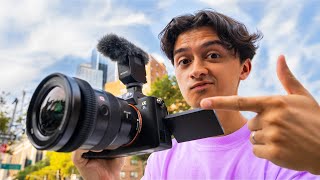
How to Use a Camera | A Beginner's Guide
Facts about optics and light for kids
🔍 Magnifying glasses make things look bigger by curving light so more of it reaches your eye.
💡 A convex lens bends parallel light rays so they meet at a focal point — that’s how images get sharper.
♻️ Many clear plastic bottles are made from PET (polyethylene terephthalate), which is transparent enough to form simple lenses.
💧 A single drop of water works like a tiny convex lens and can noticeably magnify small print or insect parts.
🌈 Refraction — the bending of light when it passes between materials — is why a straw looks 'broken' in a glass of water.
How do I make a magnifying lens from a clear plastic bottle bottom?
What materials do I need to make a lens from a plastic bottle for magnifying objects?
What ages is making a plastic bottle lens suitable for?
What are the benefits and safety tips for a plastic bottle magnifying lens activity?
