Make a shampoo bottle boat
Build a small boat from an empty shampoo bottle, add a sail or motor, test buoyancy and speed, and learn simple engineering.


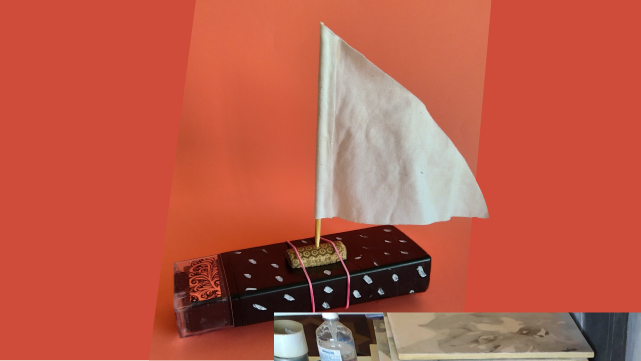

Step-by-step guide to make a shampoo bottle boat
Step 1
Rinse the empty shampoo bottle thoroughly with water to remove any soap residue.
Step 2
Dry the bottle completely with a towel or let it air dry until no water remains.
Step 3
Replace the cap tightly on the bottle so it is closed.
Step 4
Wrap waterproof tape around the cap and neck to seal any tiny gaps and stop leaks.
Step 5
Press a small lump of modelling clay into the bottom inside the bottle to act as ballast and help it sit steady.
Step 6
Place the bottle gently in a tub or sink of water to check if it floats level.
Step 7
If the bottle tips or sinks, add or reshape small pieces of clay until the bottle floats upright and steady.
Step 8
Decide whether you want to add a sail or a rubber-band motor and do only the steps for the choice you picked.
Step 9
(Sail) Cut a rectangle from paper or thin plastic about the height of the bottle to make a sail.
Step 10
(Sail) Tape one long edge of the sail to the skewer or straw so the sail is firmly attached.
Step 11
(Sail) Push the skewer carefully through a small hole in the cap or tape the skewer to the bottle top so the mast stands upright.
Step 12
(Motor) Make a simple rubber-band motor by looping a rubber band around a small craft stick or plastic propeller and winding it so it can spin when released.
Step 13
(Motor) Tape the rubber-band motor to the back of the bottle so the propeller sits in the water and can turn freely.
Step 14
Launch your finished boat three times from the same start point and count seconds to compare which run was fastest.
Step 15
Share a photo and what you learned about buoyancy and speed with your finished shampoo bottle boat on DIY.org.
Help!?
What can I use if I don't have waterproof tape or modelling clay?
If you don't have waterproof tape, wrap duct tape or clear packing tape around the cap and neck (step 4), and if you lack modelling clay press rolled-up aluminum foil, small coins, or pebbles into the bottom as ballast (step 5).
My boat keeps tipping or taking on water — what should I check and fix?
If the bottle tips or sinks, reshape or add small pieces of modelling clay inside the bottom to adjust ballast (steps 5–6) and check the cap is tightly replaced and sealed with tape around the neck to stop leaks (steps 3–4).
How can I adapt this activity for different ages?
For toddlers, have an adult rinse and seal the bottle and pre-cut and tape a paper sail (steps 1–4 and sail steps), while older kids can build the rubber-band motor themselves (motor steps) and time three launches to analyze which run was fastest.
How can we extend or personalize the experiment beyond making a simple boat?
Decorate the shampoo bottle with waterproof markers, test different sail sizes or materials (sail steps), and change ballast amounts (steps 5–6) or rubber-band tensions (motor steps) to compare effects on speed across your three launches.
Watch videos on how to make a shampoo bottle boat
DIY Toy Boat: How to Make a Fun Boat with a Recycled Plastic Bottle! KidiesTime7
3 Videos
DIY Toy Boat: How to Make a Fun Boat with a Recycled Plastic Bottle! KidiesTime7
"Shampoo-Powered Paper Boat Experiment 🚤✨"
Water bottle boat making , how to make simple and easy boat , best school project
Facts about buoyancy and simple engineering
🧴 An empty shampoo bottle floats because the air trapped inside lowers its overall density below water.
⚖️ Archimedes' principle explains buoyancy: the upward force equals the weight of the water the boat pushes aside.
🌬️ Even a tiny sail on a lightweight bottle boat can catch enough wind to move it surprisingly fast across a pond.
🚤 Hobby model boats and RC speedboats can reach speeds over 100 km/h — small things can be very speedy!
♻️ Upcycling a shampoo bottle into a boat keeps plastic out of landfills; many plastics take hundreds of years to decompose.
How do I build a shampoo bottle boat and test its buoyancy and speed?
What materials do I need to make a shampoo bottle boat?
What ages is building a shampoo bottle boat suitable for?
What are the benefits of making shampoo bottle boats and how can I keep kids safe?
