Make a rod puppet
Make a colorful rod puppet using cardboard, craft sticks, glue, and markers; attach moving arms to learn simple mechanics and storytelling.


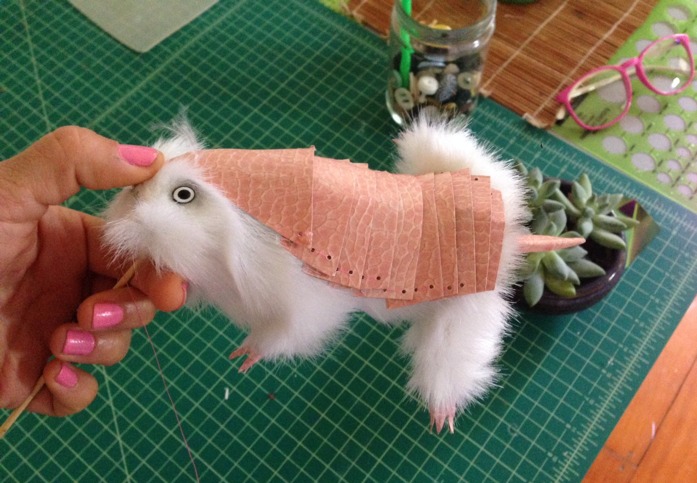

Step-by-step guide to make a rod puppet
Make A Simple Rod Puppet At Home
Step 1
Gather all your materials on a clean table so everything is ready to use.
Step 2
Draw a fun puppet body and head shape on the cardboard with a marker.
Step 3
Draw two long arm shapes on the cardboard separate from the body.
Step 4
Colour and decorate the puppet body head and arms with your colouring materials.
Step 5
Carefully cut out the body head and arm shapes from the cardboard with scissors.
Step 6
Glue a craft stick vertically to the back center of the puppet body to make the control rod and press it in place.
Step 7
Make a small hole at each shoulder on the body and a matching hole at the top of each arm using a hole punch or a pencil.
Step 8
Push a paper fastener through an arm hole then through the matching body hole.
Step 9
Flatten the fastener legs at the back of the puppet so the arm is attached but can swing freely.
Step 10
Gently move both arms to test the swinging motion and loosen or widen the holes a little if needed.
Step 11
Take a photo or short video and share your finished rod puppet on DIY.org
Help!?
What can I use instead of cardboard, craft sticks, or paper fasteners if I can't find them?
If you don't have cardboard use a cereal box or thick poster paper for the body, replace the craft stick with a wooden skewer, straw, or ruler for the control rod, and swap paper fasteners for small brads or short lengths of strong thread tied through the arm and shoulder holes.
My puppet's arms won't swing freely or the glue won't hold—what should I do?
If the arms are stuck, gently widen the shoulder holes with a hole punch or pencil and loosen the fastener legs slightly, and if the craft stick or decorations won't stay glued, press the glued craft stick in place while drying under a heavy book or reinforce it with strong tape.
How can I adapt the activity for different ages?
For preschoolers have an adult pre-cut the body and arms and use stickers and crayons to decorate, for early elementary let children draw, colour and cut with safety scissors and attach arms with paper fasteners, and for older kids add extra joints, fabric clothing, or supervised X‑Acto knife details.
How can I make my puppet more interesting or unique after finishing the basic rod puppet?
Personalize the puppet by gluing on googly eyes or yarn hair, adding fabric scraps for clothes, creating elbow joints by cutting arms into two pieces and joining with extra paper fasteners, or attaching a second craft stick to move the head independently.
Watch videos on how to make a rod puppet
Perform a Bird Rod Puppet
4 Videos
Perform a Bird Rod Puppet
Make: Rod Puppets with Clementine Part 1
Make: Rod Puppets with Clementine, part 2
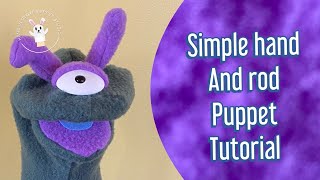
Simple Hand and Rod Puppet Tutorial
Facts about puppet-making and simple mechanics for kids
🎭 Puppetry is one of the world's oldest performance arts — examples appear in ancient Egypt, Greece, and China.
🪄 Rod puppets use sticks or rods to move limbs; traditional puppeteers can control very subtle gestures with just a few rods.
📐 Attaching arms with brads, string, or pivot points teaches simple lever-and-joint mechanics in a hands-on way.
📦 Cardboard is lightweight, inexpensive, easy to cut and decorate, and is recyclable in many places — perfect for quick craft puppets.
🎙️ Performing puppet stories helps kids practice voices, emotions, sequencing, and public-speaking skills while having fun.
How do I make a colorful rod puppet with moving arms?
What materials do I need to make a rod puppet?
What ages is this rod puppet activity suitable for?
What are the benefits of making a rod puppet?
