Make a Rain Stick & Play it!
Make a rain stick from a cardboard tube, rice, and toothpicks; seal and decorate it, then tilt and play to hear gentle rain sounds.


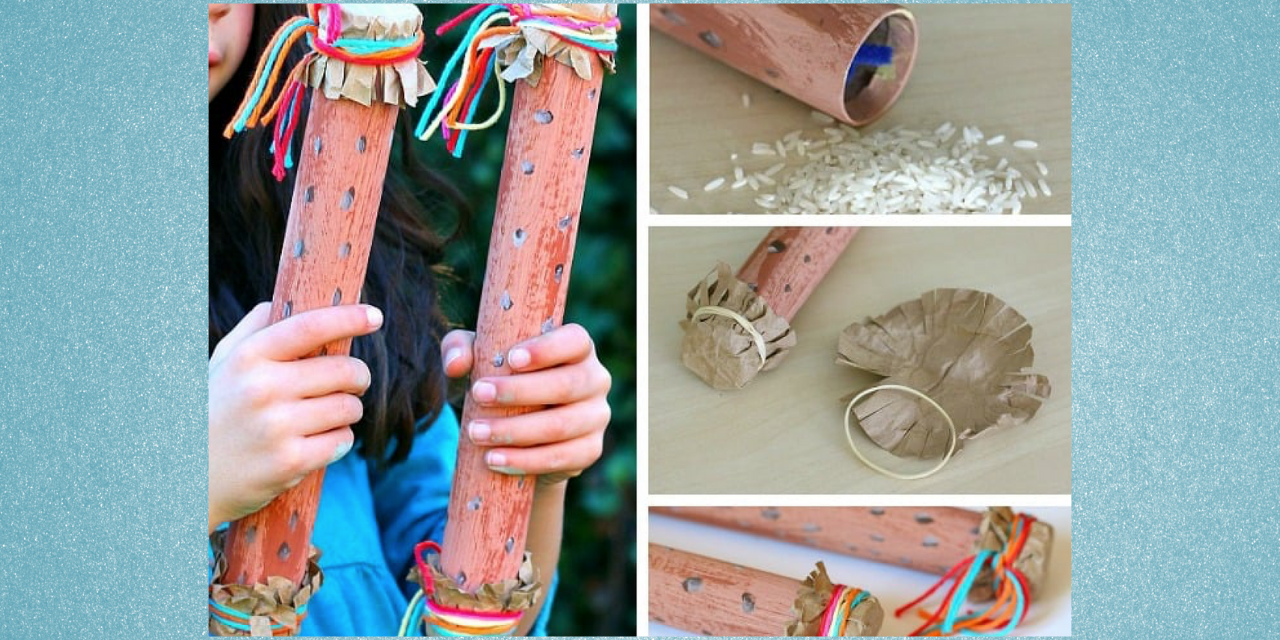

Step-by-step guide to make a rain stick and play it
Step 1
Pick a clean cardboard tube and place it on a flat workspace.
Step 2
Trace and cut two circles from scrap paper that are slightly larger than the tube ends.
Step 3
Cut small slits around the edge of each paper circle to make foldable tabs.
Step 4
Fold the tabs down so each circle can sit flat against a tube end.
Step 5
Tape one paper circle onto one end of the tube to make a tight end-cap.
Step 6
With adult supervision, poke a zigzag row of holes through the tube wall using the rounded tip of the scissors or a skewer.
Step 7
Push toothpicks through the holes so the points crisscross inside the tube and slow the rice.
Step 8
Pour rice into the open end of the tube until the tube is about half full.
Step 9
Tape the second paper circle onto the open end to seal the rice inside securely.
Step 10
Decorate the outside of your rain stick using colouring materials and glue for extra flair.
Step 11
Hold your rain stick and slowly tilt it from end to end to listen to the gentle rain sounds you made.
Step 12
Share your finished rain stick on DIY.org
Help!?
What can we use if we don’t have a cardboard tube, rice, or toothpicks?
If you don't have a cardboard tube use a paper-towel or wrapping-paper roll, replace rice in the step 'Pour rice into the open end' with dried beans, lentils, or small pasta, and swap toothpicks in the step 'Push toothpicks through the holes' for short wooden skewers or tightly folded strips of cardboard.
My rice either spills out or the rain sound is too fast—what went wrong and how can I fix it?
If rice spills or the sound is too fast, double-check that you taped the first paper circle tightly in 'Tape one paper circle onto one end,' make the holes in 'poke a zigzag row of holes' small and staggered, and add more toothpicks in 'Push toothpicks through the holes' so the points crisscross more inside the tube or increase to half-full as the instructions state.
How can I adapt this rain stick activity for younger kids or older kids?
For younger kids have an adult do the sharp steps—complete 'poke a zigzag row of holes' and 'Push toothpicks through the holes'—while the child helps with 'Trace and cut two circles,' 'Pour rice,' and 'Decorate,' and for older kids let them design complex zigzag patterns, experiment with mixed fillings, and create more detailed decorations as part of 'Decorate the outside.'
What are some fun ways to enhance or personalize our finished rain stick?
To personalize and change the sound try mixing fillings in 'Pour rice into the open end' such as a few beads or pasta for layered tones, line the inside with foil before inserting toothpicks for a brighter timbre, and use glued-on sequins, paint, or a strap when you 'Decorate the outside' to make it unique.
Watch videos on how to make a rain stick and play it
How To Make A Rain Stick - A Fun Project For Kids!
3 Videos
How To Make A Rain Stick - A Fun Project For Kids!

How to Make a Rainstick | Craft for Kids
Easy craft: How to make a rain stick
Facts about DIY musical instruments for kids
🌵 Rainsticks were traditionally made from hollow cacti or dried tubes and filled with pebbles by people in South America and Mexico.
🎶 Rainsticks are used in many music styles and soundtracks to create gentle rain or ambient effects.
🌾 Filling a rainstick with tiny grains like rice makes a softer, tinkling rain — bigger pebbles make a louder storm sound.
📏 Longer tubes and more internal pegs slow the fall of the filling, producing a longer, slower rain sound.
🛠️ Toothpicks or small wooden sticks inside a cardboard tube act like cactus spines, making the rice trickle and sound like rain.
How do you make a rain stick and play it?
What materials do I need to make a rain stick?
What ages is this rain stick activity suitable for?
What are the benefits and safety tips for making a rain stick?
