Make a One Line Flower
Draw a one-line flower by creating stem, petals, and center without lifting your pencil, practicing steady hand control, observation, and creativity.


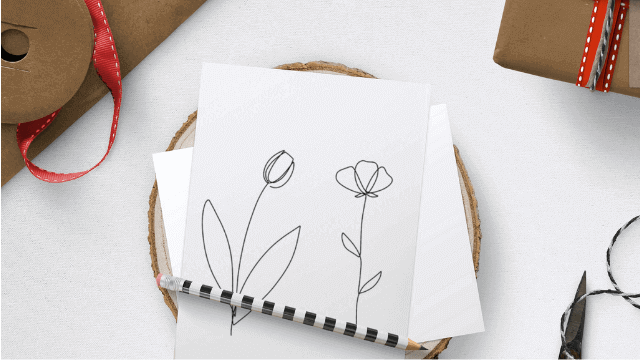

Step-by-step guide to make a one-line flower
Step 1
Gather your paper pencil eraser and colouring materials and sit at a flat table.
Step 2
Choose a spot near the top half of your paper and make a tiny dot for the flower center.
Step 3
Decide where you want the stem to start at the bottom of the paper and place your pencil there.
Step 4
Draw an unbroken line straight up from the bottom to the tiny dot to make the stem without lifting your pencil.
Step 5
From the top of the stem draw a small circle around the dot to make the flower center without lifting your pencil.
Step 6
Make one petal by looping your pencil out from the center and returning to touch the center circle without lifting your pencil.
Step 7
Keep looping more petals around the center one at a time until the flower looks full always keeping the pencil on the paper.
Step 8
Slide down the stem and draw one or two leaf shapes by curving out and back in without lifting your pencil.
Step 9
When your continuous one-line flower is finished lift your pencil from the paper.
Step 10
Erase any stray marks or guide dots with your eraser.
Step 11
Color your flower using your colouring materials.
Step 12
Write your name in a corner to sign your artwork.
Step 13
Share your finished one-line flower on DIY.org.
Help!?
What can we use if we don't have a pencil, eraser, or colouring materials?
Use a ballpoint pen or fine-tip marker to draw the required unbroken stem and petals, a kneaded or soft white eraser (or a clean cloth) to remove stray marks, and crayons or washable markers in place of the listed colouring materials.
What should I do if my line breaks because I accidentally lift my pencil during the 'draw an unbroken line' step?
Practice the motion on scrap paper, draw more slowly with light pressure so you can erase guide dots, then lightly erase back to a nearby point and continue the looped petal or stem without rushing.
How can I change the activity for younger or older kids?
For preschoolers have an adult draw the stem and center dot for them to finish one or two petals and color with chunky crayons, while older kids can make taller stems, add many petals, detailed leaf veins with colouring materials, or draw a whole bouquet on larger paper and sign their name.
How can we extend or personalize the One Line Flower after finishing the basic drawing?
Make a bouquet by connecting several one-line flowers on the same paper, add patterns inside petals with colouring materials, paint a background, glue on glitter, and then write your name and share the artwork on DIY.org.
Watch videos on how to make a one-line flower
How To Make Easy Paper Flowers 🌸| DIY Paper Flower Craft Ideas Tutorial
4 Videos
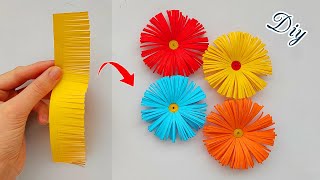
How To Make Easy Paper Flowers 🌸| DIY Paper Flower Craft Ideas Tutorial

🌸 Easy Paper Flower Making | Step-by-Step Paper Flower Craft Tutorial 🌸
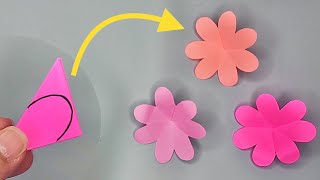
Very Easy Paper Flower Craft | Paper Flower Making No-Glue | DIY Flower Tutorial in Just 2 Minutes!
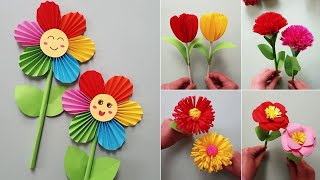
How to Make Flower with Colored Paper | Making Paper Flowers Step by Step
Facts about line drawing and fine motor skills
✏️ One-line drawings are called continuous-line drawings and help artists train their eyes to follow a shape without lifting the pencil.
🌸 Many flowers show radial symmetry, which makes repeating petal shapes easier to capture in one flowing stroke.
🖼️ Pablo Picasso famously made single-line sketches that captured faces and figures with surprising expression and economy.
⏳ Practicing short one-line drawing sessions (5–10 minutes) can noticeably improve steady hand control and focus.
🎯 Blind contour and one-line exercises force you to look closely at the subject, boosting observation skills and hand–eye coordination.
How do you draw a one-line flower?
What materials do I need to make a one-line flower?
What ages is the one-line flower activity suitable for?
What are the benefits of making a one-line flower?
