Make a life casting
Create a detailed life cast of your hand or foot using safe alginate molding and plaster, learning measurement, patience, and cleanup under adult supervision.


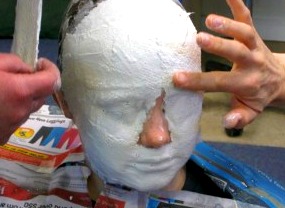

Step-by-step guide to make a life cast
Kindergarten Kids Learning Videos Compilation
Step 1
Prepare your work area by covering the surface with the plastic sheet and placing the towel nearby.
Step 2
Gather all materials and set them within easy reach.
Step 3
Put on disposable gloves.
Step 4
Measure the alginate and water following the alginate package directions.
Step 5
Mix the alginate and water in the bowl until smooth and lump-free.
Step 6
Apply a thin layer of petroleum jelly to your hand or foot to protect the skin.
Step 7
Pour the mixed alginate into the clean plastic container.
Step 8
Gently insert your hand or foot into the alginate so it is fully covered.
Step 9
Keep your hand or foot perfectly still until the alginate sets according to the package time.
Step 10
Slowly remove your hand or foot from the set alginate mold.
Step 11
Measure and mix plaster of Paris with water following the plaster package directions until smooth.
Step 12
Pour the plaster slowly into the alginate mold.
Step 13
Tap the container lightly to release any air bubbles from the plaster.
Step 14
Let the plaster harden completely for the time shown on the plaster package and then carefully remove the plaster cast from the alginate.
Step 15
Share your finished creation on DIY.org.
Help!?
What can I use if alginate or plaster of Paris is hard to find?
If alginate is unavailable, substitute a skin-safe silicone molding putty made for body casting and follow its mixing/curing instructions instead of the alginate steps, and use dental stone as a substitute for plaster of Paris when pouring into the mold for a stronger cast.
What should I do if the alginate is lumpy, the mold tears, or the plaster has air bubbles?
Remix the alginate in the bowl until smooth before pouring into the clean plastic container, apply a thin layer of petroleum jelly to the skin and keep the hand perfectly still until the alginate sets per the package time, then pour the plaster of Paris slowly into the alginate mold and tap the container lightly to release any air bubbles.
How can I adapt the activity for very young children, older kids, or teens?
For preschoolers have an adult do the alginate mold and plaster pour while the child watches, for school-age children let them measure and mix alginate and plaster with supervision, and for teens let them complete all steps (mixing, pouring, tapping, and decorating) and then share the finished creation on DIY.org.
How can we personalize or extend the finished plaster cast?
After the plaster hardens and you carefully remove the cast from the alginate, sand smooth, paint with acrylics or add colored plaster layers when pouring, attach a ribbon or hook for hanging, and seal with clear varnish before sharing on DIY.org.
Watch videos on how to make a life cast
3rd Grade Kids Learning Videos Compilation
4 Videos

3rd Grade Kids Learning Videos Compilation

2nd Grade Kids Learning Videos Compilation

Anyone Can Act - Betina Hershey - Video Course For Kids at DIY.org

1st Grade Kids Learning Videos Compilation
Facts about molding and casting for kids
🖐️ Alginate life molds can capture tiny details like fingerprints and skin texture.
🌊 Alginate is a seaweed-derived material (from brown algae) and is biodegradable.
⏱️ Alginate sets very quickly—often in 3–8 minutes—so you must work fast and follow timing instructions.
🧼 Alginate molds are usually single-use, while plaster casts can be cleaned, sanded, and finished.
🎨 Once fully cured, plaster casts can be painted, varnished, or used as bases for sculptures.
How do I make a life cast of my child's hand or foot?
What materials do I need for a hand or foot life cast?
What ages is life casting suitable for?
What safety tips should I follow for a child hand or foot life cast?
