Learn to Draw Cartoons in Motion
Draw simple cartoon characters, sketch frame by frame poses, and make a flipbook or animated GIF to study timing, motion, and expression.


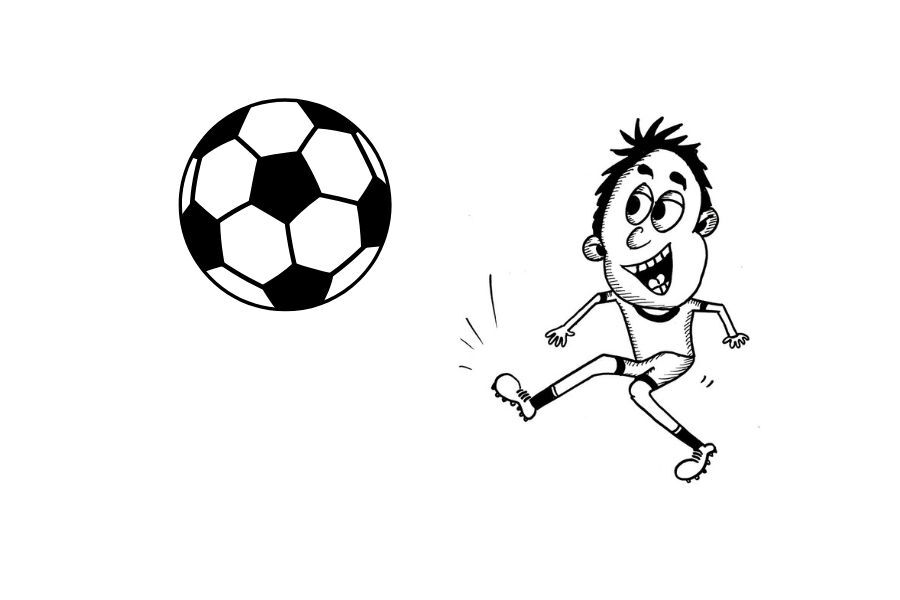

Step-by-step guide to learn to draw cartoons in motion
Step 1
Pick one simple action for your cartoon like jumping waving or running and draw three tiny thumbnail boxes showing the start middle and end pose.
Step 2
Gather 12 to 20 same-size pages or cut a stack of paper into equal rectangles and stack them neatly.
Step 3
Use your ruler and pencil to put a small registration dot in the same spot on every page so your drawings line up.
Step 4
Clip or tape the pages together along one short edge so they stay aligned while you draw.
Step 5
On the first page draw your character in the starting pose lightly with pencil.
Step 6
On the middle page draw a strong key pose that shows the main action or peak of the movement.
Step 7
On the last page draw the ending pose that finishes the action.
Step 8
On each page between the key poses draw the next small step of movement so the character changes little by little from start to end.
Step 9
Go over the pencil lines with your black marker on every page to make clean outlines.
Step 10
Add facial expressions and simple motion lines on each page to show emotion and speed.
Step 11
Colour the drawings on each page if you like using your colouring materials.
Step 12
Flip the stack with your thumb to watch the motion and notice if it feels too fast or too slow.
Step 13
If timing needs change add or erase frames or redo a page to speed up or slow down the action.
Step 14
If you want an animated GIF make one by photographing each page from the same spot with steady lighting and uploading the photos into a GIF maker or app to save the animation.
Step 15
Share your finished flipbook or GIF on DIY.org
Help!?
What can we use if we don't have a ruler, binder clip, or black marker?
Use the straight edge of a hardcover book to place the small registration dot with your pencil, secure the stacked pages along one short edge with a rubber band or heavy book instead of a binder clip, and trace over pencil lines with a dark fine-tip pen if you don't have a black marker.
My flipbook looks jumpy or the drawings don't line up — what should I check?
Recheck that the small registration dot is in the exact same spot on every page using your ruler and pencil, realign the pages to that dot and firmly tape or clip the short edge before redrawing or inking to prevent misalignment and jumpiness when you flip the stack.
How can I adapt this activity for different age groups?
For younger kids, use 3–6 thick pages, crayons, and pre-drawn thumbnail start/middle/end templates, while older kids can work with the full 12–20 pages, finer pencils, stronger key poses, black marker inking, and photographing pages to make a GIF.
How can we make the flipbook or GIF more creative or shareable?
Add changing simple backgrounds or a second character across frames, color every page, photograph each page from the same spot with steady lighting to create a smooth animated GIF in an app, and then upload the finished GIF to DIY.org.
Watch videos on how to learn to draw cartoons in motion
How To Draw Spongebob Squarepants | Beginner Sketch Tutorial
4 Videos
How To Draw Spongebob Squarepants | Beginner Sketch Tutorial
Learn to Draw with Cartooning 4 Kids
Learn to Draw Cartoons with Christopher Hart
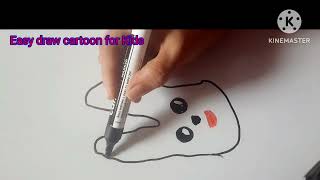
Learn to Draw Fun Cartoons for Kids: Step-by-Step Guide!" how to draw cartoon for kids easy cartoon
Facts about animation and cartooning for kids
🎞️ The flipbook (patented as the "kineograph" in 1868) is one of the earliest and simplest forms of animation — just flip the pages fast!
⏱️ Many hand-drawn cartoons are animated "on twos": about 12 unique drawings per second to match 24 fps film for smooth motion.
🦕 Winsor McCay's Gertie the Dinosaur (1914) was an early animated star that showed characters could have real personality and timing.
🧅 "Onion-skinning" is a drawing technique/tools feature that lets you see faint previous frames so you can plan motion between poses.
🎭 Cartoon animators often exaggerate expressions and poses so emotions and actions read clearly, even in tiny flipbooks or GIFs.
How do I teach my child to draw cartoons in motion step by step?
What materials do I need to help my child make a flipbook or animated GIF?
What ages is learning to draw cartoons in motion suitable for?
What are the benefits of drawing cartoons in motion for kids?
