Learn solfège
Learn solfège by singing do-re-mi patterns, practicing hand signs, matching pitches to notes, and using simple songs to build ear training skills.


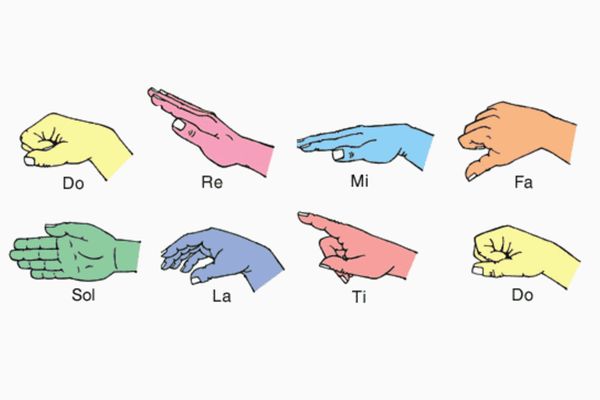

Step-by-step guide to learn solfège
Sight Singing, Relative Pitch, and Solfege
Step 1
Place the solfège chart where you can see it easily.
Step 2
Trace each syllable on the chart in order with your finger.
Step 3
Say each solfège syllable out loud from do to do.
Step 4
Sing the solfège scale slowly going up from do to the next do.
Step 5
Sing the solfège scale slowly going down from the top do back to do.
Step 6
Practice the hand sign for each solfège syllable in order while looking at the chart.
Step 7
Press the note you will call "do" on the keyboard to hear its sound.
Step 8
Play the ascending scale slowly on the keyboard from do to do.
Step 9
Sing the ascending solfège scale while listening to the keyboard notes.
Step 10
Ask an adult to play a short two or three note pattern on the keyboard for you.
Step 11
Sing the pattern back using solfège syllables to match the pitches you heard.
Step 12
Sing a simple song from your song sheet using solfège and the matching hand signs.
Step 13
Share your finished solfège song or performance on DIY.org.
Help!?
What can we use if we don't have a real keyboard or a printed solfège chart?
Use a free keyboard app or virtual piano on a tablet or phone and display or draw the solfège chart on paper so you can still press the note you will call do and trace each syllable.
My child can't match the pitches when singing the two- or three-note pattern—what should we try?
Have the adult replay the short two- or three-note pattern slowly on the keyboard while the child watches the keys and practices the matching hand signs, then sing each note back using the solfège syllables as the keyboard plays the corresponding notes.
How can I adapt the steps for younger or older children?
For younger kids, limit the activity to tracing the chart, saying syllables, and doing hand signs with a toy keyboard, while older kids can play the ascending scale on the keyboard, transpose do to other keys, and write a solfège song to perform.
How can we extend or personalize the activity after finishing the basic steps?
Create your own song sheet with favorite lyrics in solfège, record a video of you singing with the hand signs and keyboard accompaniment, add a harmony line, and then share your finished solfège song on DIY.org.
Watch videos on how to learn solfège
Learn Solfege Hand Signs w/ Mr. Rob | Prodigies Music Lessons | Preschool & K-5 Music Education
4 Videos
Learn Solfege Hand Signs w/ Mr. Rob | Prodigies Music Lessons | Preschool & K-5 Music Education
What is Solfege and Sight Singing?

What Is Solfège and Why Is it Used in Music?
Introduction to Solfege - what is solfege for?
Facts about music education for kids
🎵 Solfège uses the syllables do–re–mi–fa–sol–la–ti to name scale steps — a simple code singers use worldwide.
🕰️ The roots of solfège go back over 1,000 years to Guido of Arezzo, a medieval music teacher who helped singers learn faster.
🖐️ Curwen hand signs (a set of hand shapes linked to solfège syllables) were popularized in the 19th century to help kids feel pitches.
🧠 Regular solfège practice builds ear training and relative pitch so students can recognize intervals and sing melodies more accurately.
🎶 Teachers often use short do–re–mi patterns and familiar songs because children learn pitches and sight-singing best through singing games.
How do I teach my child solfège using do‑re‑mi patterns and hand signs?
What materials do I need to teach solfège at home?
What ages is learning solfège suitable for?
What are the benefits and variations of teaching solfège to kids?
