Learn a winter sport
Learn basic skiing skills on gentle slopes with adult supervision, practicing balance, stopping, turning, and safe gear use to build confidence.


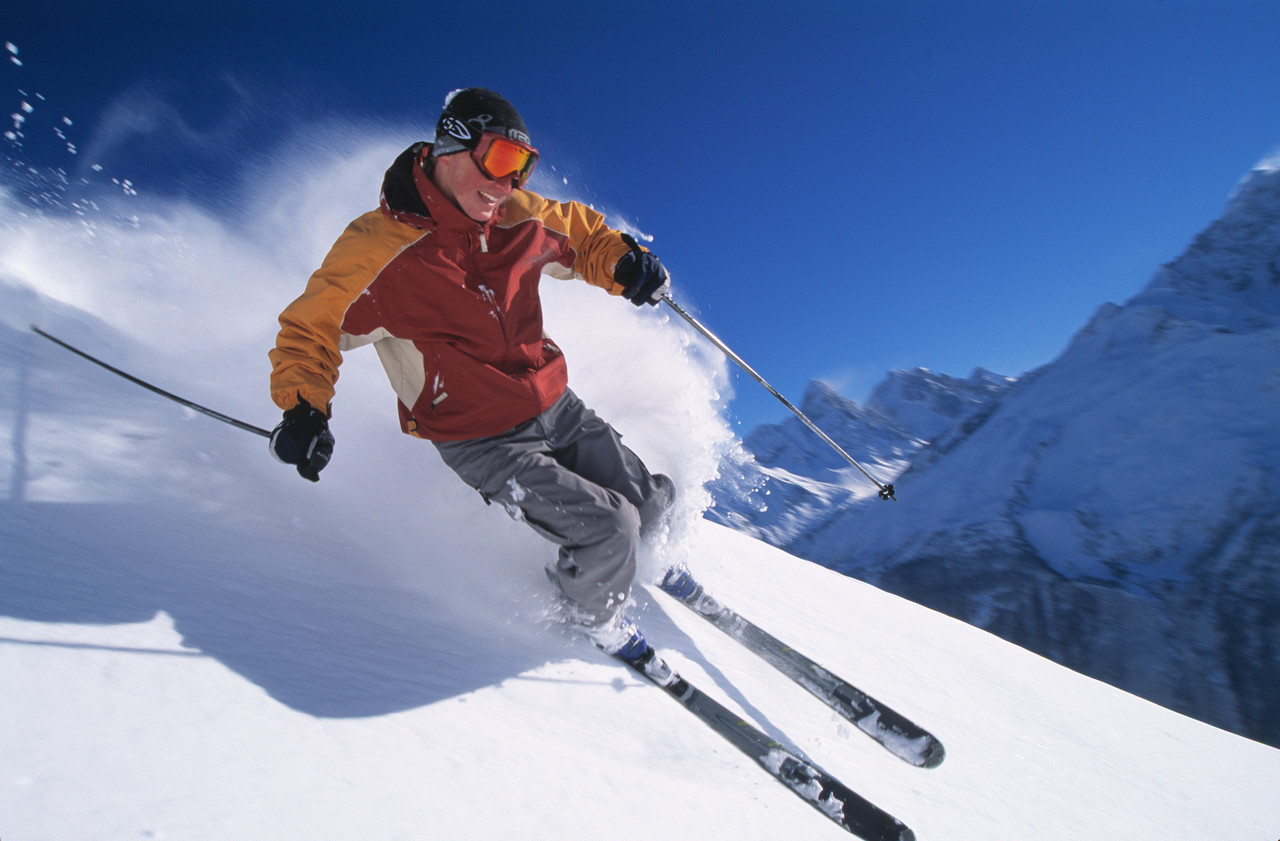
Step-by-step guide to learn to ski
Teaching Kids to Snowboard - Tips & Advise for Beginners
Step 1
Put on your warm waterproof clothing and gloves so you stay cozy in the snow.
Step 2
Put on your ski boots and fasten them snugly so your feet feel secure.
Step 3
Put on your helmet to keep your head safe.
Step 4
Put on your goggles so your eyes stay protected from snow and sun.
Step 5
Ask an adult to check your boots and ski bindings to make sure they are safe and snug.
Step 6
Clip into your skis while standing on flat snow with your adult beside you.
Step 7
Bend your knees and lean slightly forward to find a balanced skiing stance.
Step 8
Rock gently forward and back to practice staying balanced on your skis.
Step 9
Glide a few short straight slides on flat snow to feel how the skis move beneath you.
Step 10
Make a pizza wedge by bringing your ski tips together and your heels apart to learn how to stop.
Step 11
Use the pizza wedge to stop several times until you can stop smoothly and confidently.
Step 12
On a gentle slope with your adult beside you, shift your weight to one ski to practice gentle turns and control speed.
Step 13
Share a photo or video of your first skiing try and what you learned on DIY.org.
Help!?
What can we use if we don't have ski goggles or waterproof gloves?
Use UV-blocking sunglasses and waterproof mittens while practicing the glide and pizza wedge on flat snow, but keep your helmet, ski boots, and adult supervision as instructed.
My skis won't clip in — what should we check first?
Have an adult recheck your boots and ski bindings (step 5) for correct sole alignment and binding tension, stand on flat snow (step 6), and clear ice or packed snow from the binding before clipping in again.
How can this activity be adapted for younger or older children?
For younger kids, use smaller practice skis or stay on gentle terrain and focus on assisted balance and repeated pizza-wedge stops with an adult beside them (steps 6–11), while older kids can work on longer straight glides and weight shifts to one ski on a gentle slope (step 12).
How can we extend or personalize the skiing practice after the first try?
Set goals like five smooth pizza-wedge stops, practice shifting weight to one ski for controlled turns (step 12), and share a photo or video with notes about what you learned on DIY.org (step 13) to track progress.
Watch videos on how to learn to ski
How to Snowboard: A Beginner's Guide - Part 1 | PSIA-AASI
4 Videos
How to Snowboard: A Beginner's Guide - Part 1 | PSIA-AASI
How to Snowboard - the basics of riding for your first day | REI
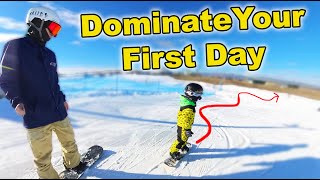
LEARN TO SNOWBOARD IN 10 MINUTES
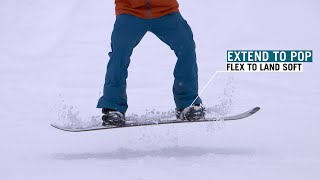
How to Snowboard: A Beginner's Guide - Part 4 | PSIA-AASI
Facts about skiing for kids
⛷️ The word "ski" comes from the Old Norse word skíð, which means a split piece of wood — skiing started with wooden planks!
❄️ Beginners usually practice on a "bunny hill" — a very gentle slope made just for learning balance and turns.
🍕 Kids often learn to stop with the "pizza" (snowplough/wedge) and go faster with "french fries" (parallel skis) — fun food words make the moves easier to remember!
🥾 Modern ski bindings are designed to release during falls to help protect knees and legs, and wearing a helmet greatly reduces head injury risk.
⏱️ Downhill skiing is a great workout — a typical hour can burn roughly 300–600 calories depending on how hard you go.
How do I teach my child basic skiing skills on gentle slopes?
What materials and equipment do I need to teach a child to ski?
What ages are suitable for learning basic skiing skills?
What are the benefits and key safety tips for kids learning to ski?
