How to make dish soap slime
Make stretchy dish soap slime by mixing dish soap, cornstarch, and water, then stirring and kneading to explore textures and safe chemistry.


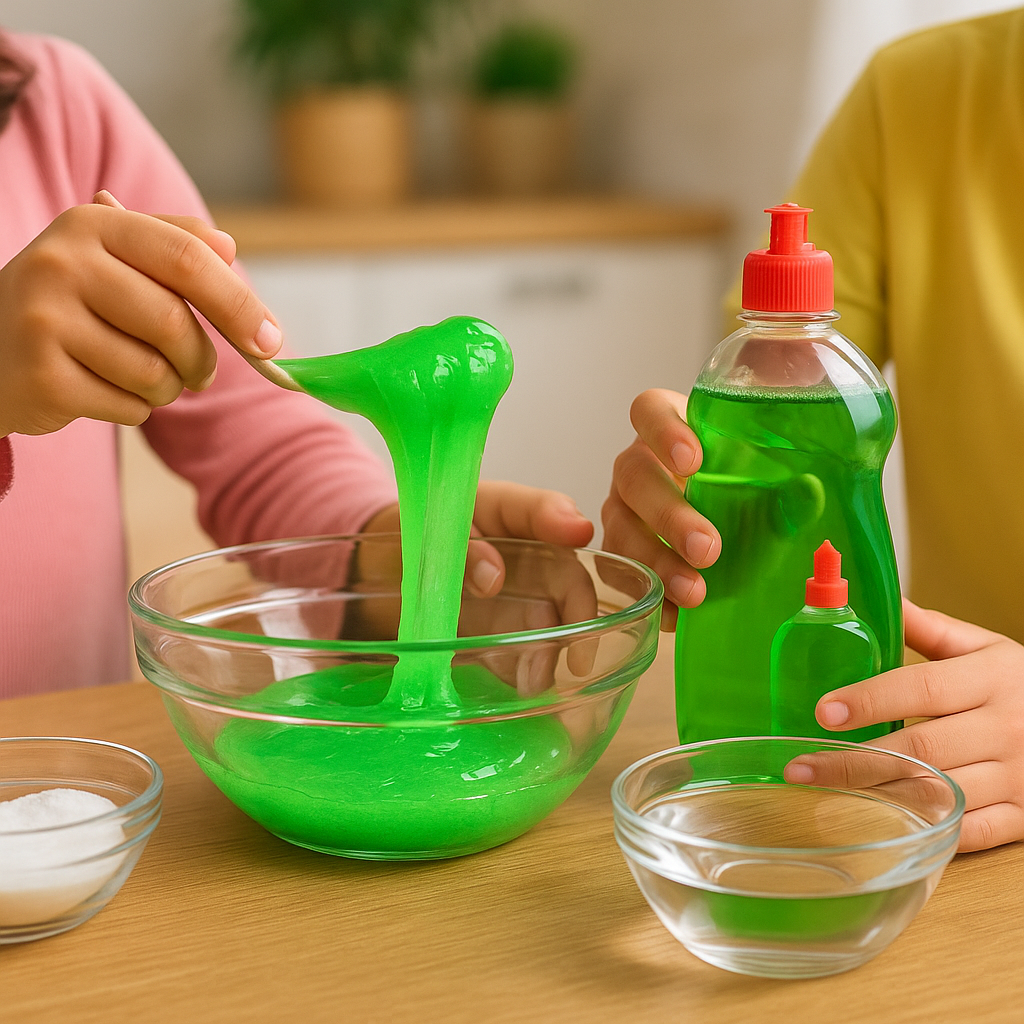

Step-by-step guide to make dish soap slime
How To Make Flubber Soap Slime with Karina Garcia
Step 1
Wash your hands with soap and water so they are clean before you start.
Step 2
Lay a tray or mat on the table to protect the surface.
Step 3
Place your mixing bowl and spoon on the mat so everything is ready.
Step 4
Measure 1 cup of cornstarch and pour it into the mixing bowl.
Step 5
Measure 1/2 cup of dish soap and pour it into the bowl with the cornstarch.
Step 6
Add 2–3 drops of food coloring to the bowl if you want colored slime.
Step 7
Stir the mixture slowly with the spoon until it becomes thick and hard to stir.
Step 8
If the mixture is crumbly add 1 tablespoon of water and stir; if it is sticky add 1 tablespoon of cornstarch and stir.
Step 9
Use your hands to knead the mixture for 1–2 minutes until it feels smooth and stretchy.
Step 10
Stretch the slime slowly to see how far it goes and poke it to explore its texture.
Step 11
Put your slime into an airtight container to keep it fresh when you are done playing.
Step 12
Wash your hands with soap and water after handling the slime.
Step 13
Take a photo or write about your stretchy dish soap slime and share your finished creation on DIY.org
Help!?
What can we use if we don't have cornstarch, dish soap, or food coloring?
If you can't find cornstarch try cornflour (same ingredient in many countries), use a thick gel hand soap or liquid castile soap instead of dish soap, and substitute washable paint or colored toothpaste for the 2–3 drops of food coloring while storing the slime in any clean plastic container if you don't have an airtight one.
My mixture is either crumbly or too sticky—what should I do?
Follow the instructions' troubleshooting: if the mixture is crumbly add 1 tablespoon of water and stir, and if it's sticky add 1 tablespoon of cornstarch, then knead the mixture for 1–2 minutes until it feels smooth and stretchy.
How can I adapt this activity for younger or older kids?
For preschoolers, have an adult pre-measure the 1 cup cornstarch and 1/2 cup dish soap and supervise kneading and hand-washing, while older kids can safely experiment with extra food coloring drops, different soap brands, or ratio changes and record results to share on DIY.org.
How can we make the slime more special or extend the activity?
Personalize the slime by adding glitter, sequins, or a drop of scented oil when you add the food coloring, press small safe toys into the slime during the stretching step, and keep the finished slime in the airtight container before photographing and sharing your creation.
Watch videos on how to make dish soap slime
How to make quick and easy slime at home! | Science experiments for kids | #doitwithdiy
4 Videos
How to make quick and easy slime at home! | Science experiments for kids | #doitwithdiy
How To Make Homemade Soap | Crafts for Kids
How to Make Slime | Science Project
How to make SLIME!
Facts about kitchen chemistry for kids
🧪 Oobleck acts like a solid if you hit it quickly and like a liquid when you move slowly—it's a classic non-Newtonian mixture kids make with cornstarch and water.
🌽 Cornstarch is made from the starchy endosperm of corn kernels and is a common thickener in cooking and crafts.
🧼 Dish soap can change the texture and stretchiness of DIY slime—choose a gentle, kid-safe brand and never let kids eat the slime.
🤯 Small recipe tweaks make big differences: more cornstarch → firmer, more solid-like; more water → runnier and slipperier.
🧤 Slime play is a sensory activity that can be calming and focus-boosting—always wash hands after play and throw slime in the trash, not down the sink.
How do you make dish soap slime?
What materials do I need for dish soap slime?
What ages is this dish soap slime activity suitable for?
What are the safety tips for making and playing with dish soap slime?
